Push to open style kitchens
Seamless and innovative.
Push To Open Style Kitchens
A UK focused guide to push to open kitchen doors and drawers. Clear advice on hardware, layout, cost and how this route differs from true handleless rails and J pull fronts.
Use this page before you order a handle free kitchen with touch opening. You will know which questions to ask and where this style suits daily life.
- Doors and drawers open with a light push on the front.
- Hardware sits behind the front, so faces stay completely flat.
- Available in mechanical spring units and powered drive systems.
- Often paired with German frameless cabinets in UK showrooms.
Separate pages on this site explain true handleless rail systems and J pull doors. Link visitors across so they compare each route before booking design time.
Push To Open Kitchen Guide
This structure follows the way most UK homeowners think through a push to open layout. Definition, hardware, style ideas, appliances, benefits, limits and planning checks.
What Is A Push To Open Kitchen
Push to open kitchens use touch latches or powered drives behind doors and drawers. A light push on the front releases a catch. The front then moves outward so you grip the edge or continue the motion.
The cabinet stays frameless, in line with German furniture practice. Hinges and runners carry the weight. Extra components handle the push and release. No rail, groove or handle sits on the front, so faces look smooth from floor to ceiling.
UK retailers often place push to open options inside a wider handleless offer. Displays sit alongside true handleless rail systems and J pull doors. Sales material sometimes uses single phrases for all three. Clear language during design avoids confusion.
When you read a quote, look for direct words around hardware. Touch latches, mechanical push to open or servo drives. You stay in control when these details appear in writing instead of sitting under a general handleless label.
Hardware Types For Push To Open Kitchens
Leading hardware makers supply two main routes. Mechanical push units and powered systems. A few product lines mix touch opening and soft close damping in one runner or hinge.
Mechanical push latches
Mechanical systems sit behind the front. A spring and latch hold the door or drawer shut. A gentle press within the trigger zone releases the catch and the front moves forward. Adjustment screws control projection and effort.
Drawer runners and hinges from German suppliers often include this function in dedicated ranges with full extension, high load ratings and soft close action.
Powered servo drives
Powered systems use a motor unit linked to runners or hinges. A small touch sends a signal to a drive unit. This pushes the front open in a smooth controlled movement. Heavy waste drawers and tall pull outs feel light even with full loads.
Many drive units sit behind plinths or inside cabinets. Low voltage transformers supply power, with one feed serving groups of drawers or doors.
Push to open with soft close
Some runners combine touch opening and soft close damping in one package. You press to open, then push the drawer closed and a damper slows the last section. This gives a modern feel without handles and still protects crockery from slamming.
Higher grade sets offer three or four way adjustment so gaps stay even along the run.
Standard kitchen drawers often sit in a load band from around ten to forty kilograms. Deeper pull outs, internal drawers with stone above and tall waste units need runners at the upper end of this range or twin sets in line with hardware guidance.
Kitchen Styles For Push To Open Layouts
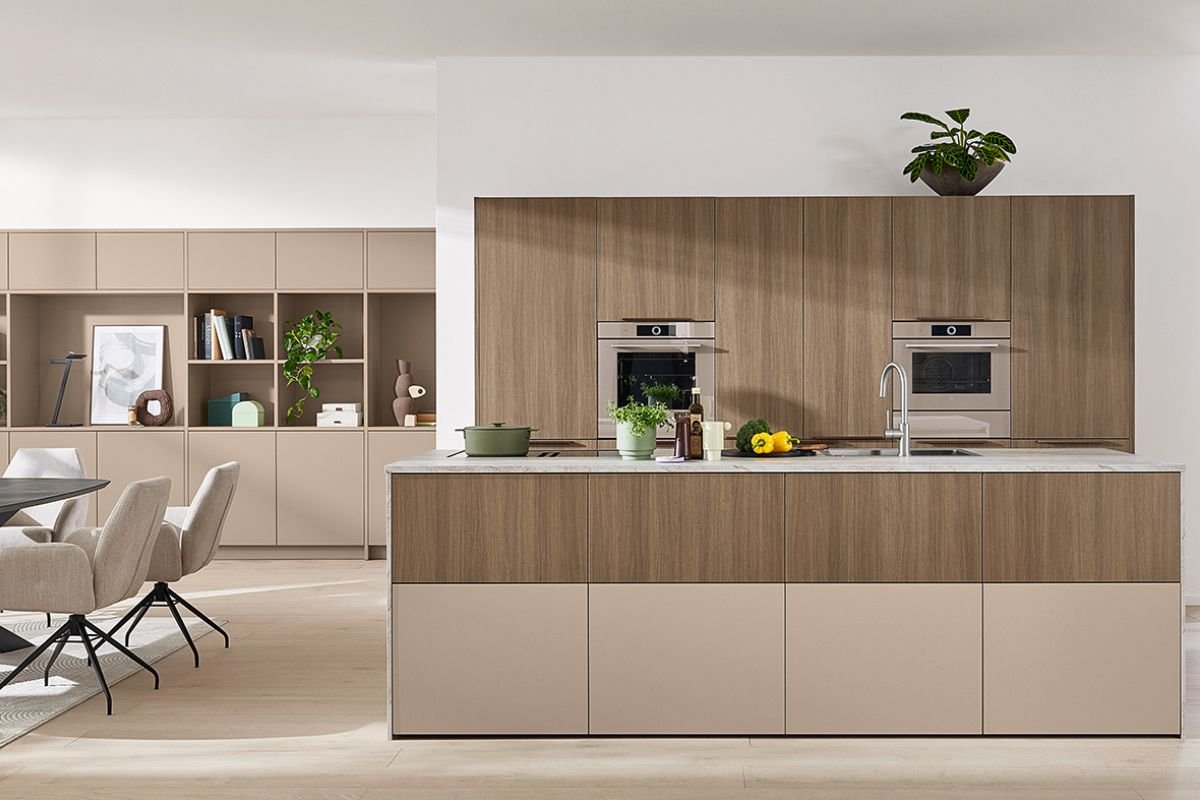
Push to open hardware hides behind the door, so it suits many slab and lightly detailed fronts. Certain combinations deliver stronger results in real rooms.
Minimal matt slabs
Matt lacquer or matt laminate slabs pair well with touch opening. You gain a calm surface with low reflection. Many UK buyers choose warm neutrals or deep charcoal tones for this route.
High gloss city kitchens
Gloss surfaces bounce light and help smaller spaces feel brighter. Push to open avoids handle shadows and metal highlights. Tower runs resemble simple panels rather than kitchen furniture, which suits open plan flats.
Mixed material layouts
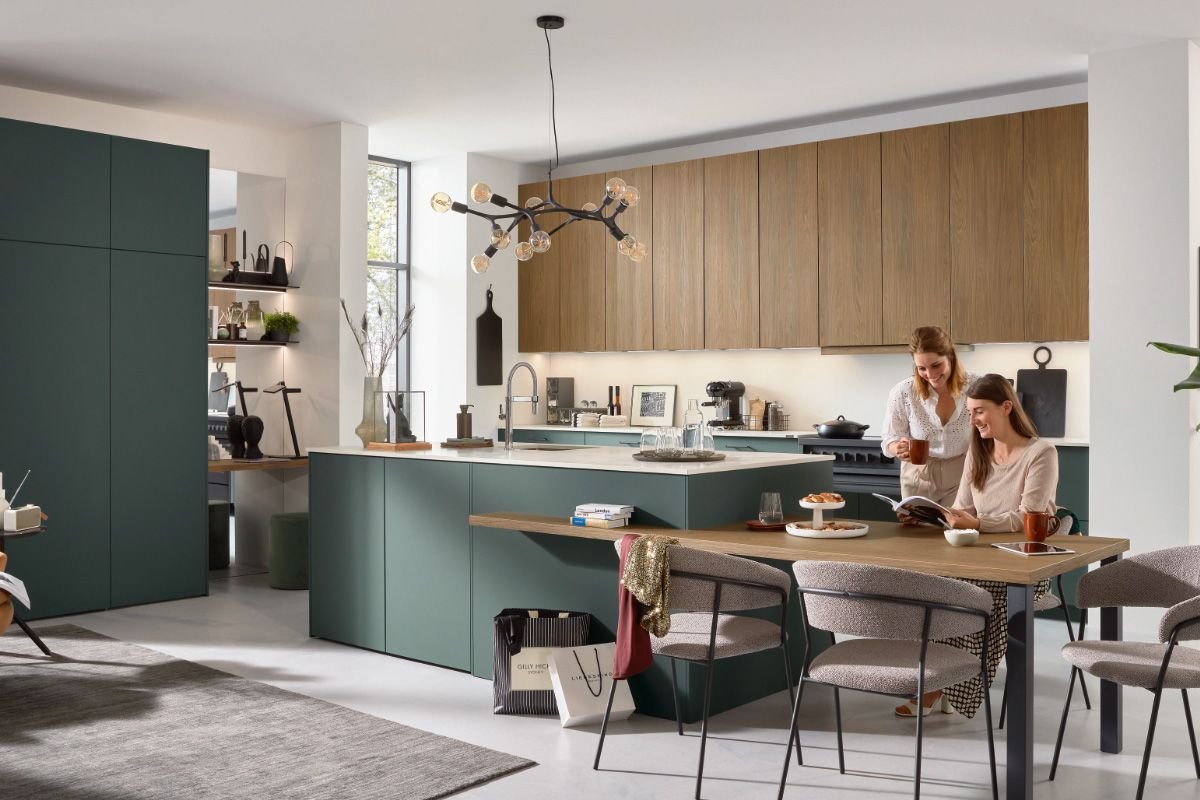
Mixing matt lacquer with woodgrain, stone effect or ceramic style doors works well with touch opening. Faces stay quiet. Interest comes from texture and tone. The absence of handles keeps each material in balance.
Feature zones only
Some households prefer push to open in selected areas. For example on tall larder doors, sideboard units or media furniture. Main kitchen runs then use true handleless or J pull doors, which gives a clearer pull point near cooking.
Push To Open And Integrated Appliances
Modern appliances support handle free layouts through knock or touch opening doors. Planning work at design stage keeps cabinet hardware and appliance functions in step.
Refrigeration
Integrated fridge freezers at higher price levels use motor assist on the door. A light push or knock starts the opening action. Door seals stay strong, yet the first movement requires little effort. This fits a flat fronted kitchen with no rail line.
Dishwashers
Several built in dishwashers support touch opening. Once you press, the door moves to a partially open position ready for loading. Fronts stay handle free and align with surrounding doors.
Ovens and compact appliances
Some ovens and microwave combinations use touch latches or soft push bars rather than large handles. Safety sensors keep the appliance safe during opening. Sight lines across tower units remain simple and consistent.
Wine coolers and feature drawers
Wine cooling drawers and drinks units sometimes use push opening with strong seals and guided runners. A single push opens the front to a set distance so you grip the edge without difficulty.
Appliance makers design their own touch or knock systems. Cabinet hardware suppliers design push to open latches and runners. Your designer aligns both so door clearances, power feeds and safety functions work together.
Push to Open doors
Push to Open doors
Benefits And Limits Of Push To Open Kitchens
Push to open suits many modern UK projects. It also introduces extra hardware, extra set up and a different feel in daily use.
Key benefits
- Completely flat fronts without rails, grooves or handles.
- No handles in walkways, so more free space in tight galley layouts.
- Light touch opening helps users with reduced grip strength.
- Simple styling in open plan spaces where kitchen, dining and living sit together.
- Clear upgrade path into powered systems for large waste units or deep drawers.
Points to weigh up
- Hardware and fitting cost sit above standard handled layouts.
- Installation requires careful set up of trigger zones and gaps on every front.
- Frequent pressure on the same points leaves marks faster on high gloss doors.
- Accidental opening happens when someone leans on tall runs or children press lower fronts.
- Visitors need a short introduction the first time they use the kitchen.
Many households mix hardware. For example push to open larders and sideboard units, with true handleless or J pull doors on the main cooking run. This approach keeps strong style with clear grip points where you move quickly.
Push To Open Vs True Handleless And J Pull
Handle free kitchens in the UK usually fall into three groups. Push to open hardware, rail based true handleless systems and routed J pull doors. Separate pages on this site explore rails and J pull in more depth. This table gives a quick overview.
| Aspect | Push to open | True handleless rail | J pull door |
|---|---|---|---|
| Opening method | Press on the front to release a latch or drive. | Hook fingers behind a metal rail between doors and worktop. | Hook fingers into a routed groove at the top or bottom of the front. |
| Front appearance | Flat faces with no rail lines and no grooves. | Flat faces with clear horizontal or vertical shadow gaps. | Visible groove lines across doors and drawers. |
| Ease for guests | Needs a brief explanation as there is no obvious pull point. | Grip point looks clear once visitors see the rail gap. | Groove line guides hands towards the pull area. |
| Risk of accidental opening | Leaning or pressing in key spots triggers opening on some layouts. | Rails need a grip, so accidental opening happens less often. | Grooves also resist accidental opening. |
| Typical cost level | Higher than simple handled layouts, powered systems sit near the top of the range. | Often similar to strong push to open layouts in the same brand. | Often used where a handle free look sits near the top of the wish list but furniture spend needs more control. |
| Best fit | Projects which target a very calm, flat look and high design impact. | Projects where continuous lines and rail details suit the scheme. | Projects where a handle free look matters, yet a visible grip point still feels helpful. |
When you shortlist layouts, ask each showroom to price one scheme in push to open, one in true handleless and one in J pull, using the same cabinet quality and appliances. Side by side drawings and totals support clear decisions.
Technical And Installation Points
Weight and hardware choice
Touch latches and push runners rely on accurate alignment. Heavy drawers, internal pull outs and pull out tables need runners with higher load ratings and stable fixing into cabinet sides. Designers match hardware to use, not only width.
Retrofitting into older kitchens
Retrofitting into existing units works in some cases. Success depends on cabinet quality and squareness. Old boxes with thin sides, swollen panels or loose backs often sit outside the ideal range for precise push opening.
Power supplies for servo units
Powered systems need low voltage transformers, discreet cabling and access for service. Early planning places sockets in sensible positions and avoids crowded voids behind appliances. Fitters route cables behind plinths or inside tall housings.
Cabinet construction
Push hardware performs best on rigid 18 mm cabinets with secure fixing points. Strong backs and thick sides reduce movement and preserve gaps through seasons. Many German brands supply this style of box as standard.
Care And Longevity
Cleaning and surface protection
Clean touch zones with a soft cloth and mild cleaner suited to the finish. Avoid abrasive pads and strong solvents on edges and corners. This approach protects lacquer, foil and laminate over time.
Adjustment over time
Hinges and runners settle during use. Many push to open components include multi way adjustment for projection and trigger strength. A short service visit every year or two keeps gaps even and action consistent.
Hardware life
Quality components from recognised suppliers offer long cycle testing and spare parts. Ask showrooms which brands they use and how future support works. Simple answers here often reflect wider service levels.
Is Push To Open Right For You
Push to open suits homeowners who want a very clean look, strong visual impact and fronts without rails or grooves. It links well with German cabinet systems and modern integrated appliances.
Think about cooking habits, number of users and how often guests use the kitchen. Families with young children often keep touch opening for tall larders, islands or sideboard units and choose rails or J pull doors for the busiest runs near hobs and sinks.
A good next step is a showroom visit. Test drawers at different loads, try a powered waste unit and compare push to open with true handleless and J pull displays. You will feel which route matches your household within a few minutes.
