
Ten door styles.
One clear guide.
The door style is the single most visible design decision in a kitchen. It sets the tone for the entire room before any other element comes into play. German kitchen manufacturers produce every major style, from fully flush handleless designs to traditional hand-crafted in-frame construction. Each style suits different property types, cooking habits, and household needs. This guide covers all ten with clear descriptions of what each one looks like in practice, what it costs to maintain, and which property types it suits.
The ten styles divide into four natural groups. Handleless styles favour clean geometry and minimal visual noise. Handled styles balance a contemporary look with the grip and tactility many homeowners prefer. Classic styles suit period properties and kitchens where warmth matters more than minimalism. Transitional styles occupy the middle ground, borrowing from both ends of the spectrum. Use the navigation above to jump to whichever group matches your starting point.
Handleless Styles
3 StylesHandleless kitchens remove all visible hardware from the door face. The result is a flat, uninterrupted surface across the entire run of units. All three styles below achieve this, but they use different mechanisms and produce a different feel at close range and in daily use.
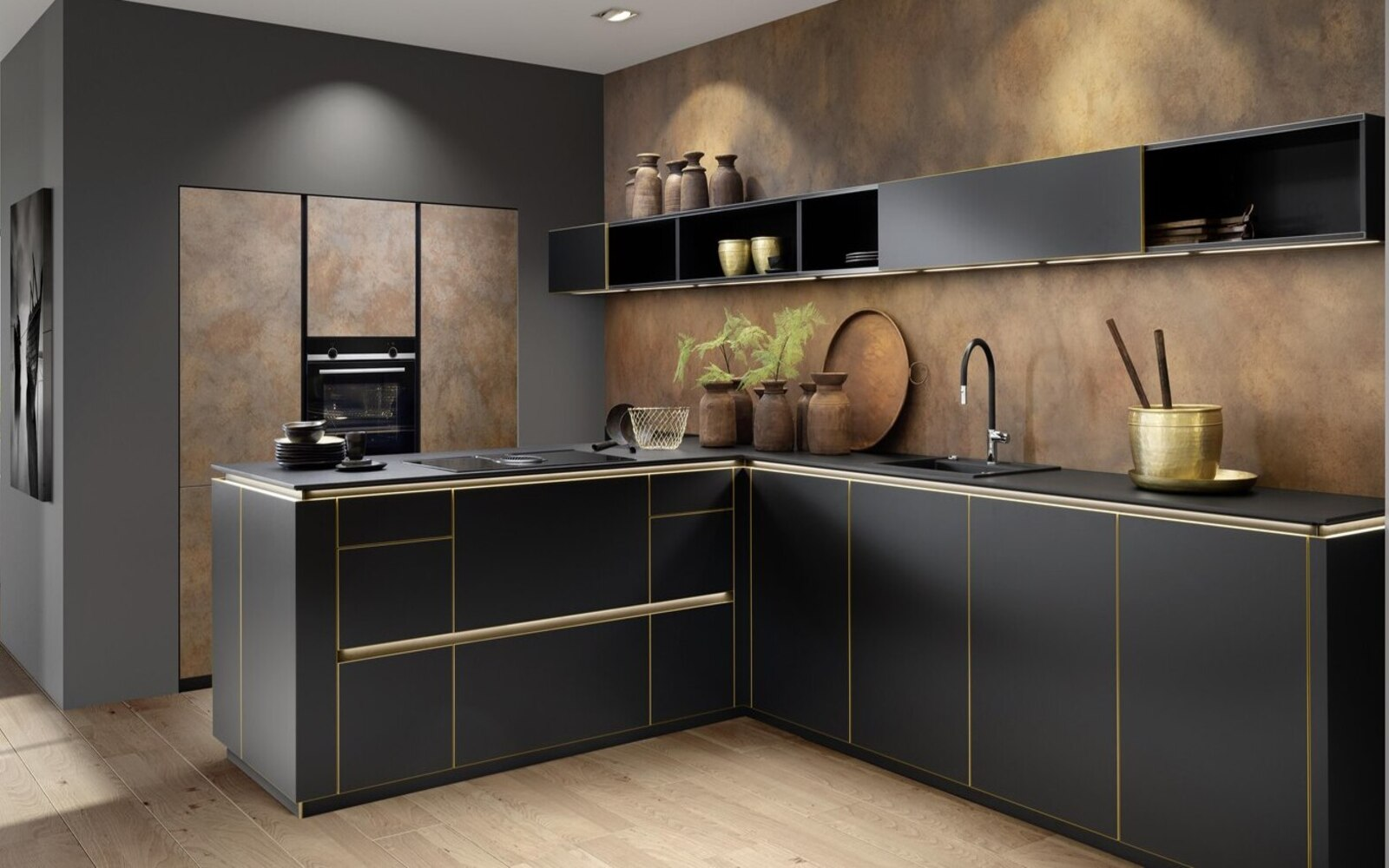
A continuous aluminium rail recessed into the cabinet behind shortened door fronts. From the front, the surface is completely flat. The rail shadow gap is only visible at worktop level. The cleanest handleless visual available and the most precisely engineered of the three routes.
Read the Guide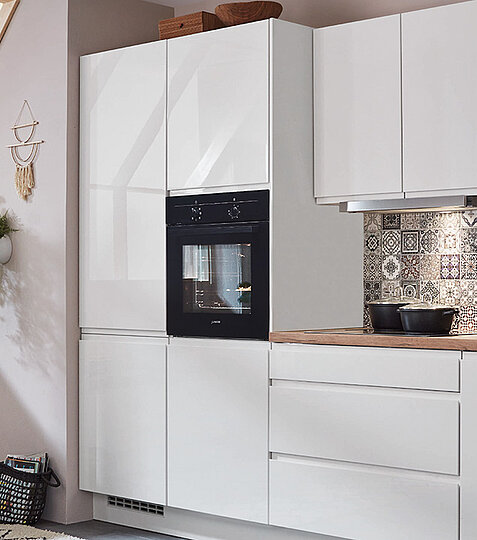
A curved groove routed into the top edge of each door front creates a natural grip without any separate rail or hardware. Less engineering complexity than true handleless but more accessible for everyday use, particularly on base units where the top-edge grip sits at a natural hand height.
Read the Guide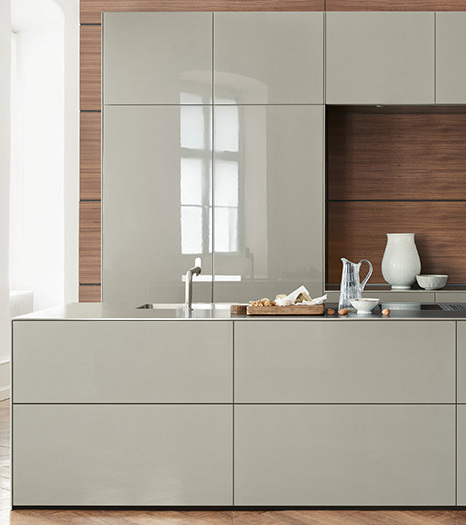
No rail, no J profile, no grip of any kind. A touch mechanism behind the door releases it when pressed. The door face is entirely flat. The most minimal option of the three, available in mechanical spring-latch and powered servo-drive versions depending on load and budget.
Read the GuideHandled Styles
2 StylesHandled kitchens use hardware to open doors. Either a visible bar handle, knob, or cup pull on the door face, or a discreet profile grip built into the door edge. They suit households where grip and tactility matter in daily use and where a contemporary but not fully minimal aesthetic fits the home and the users.
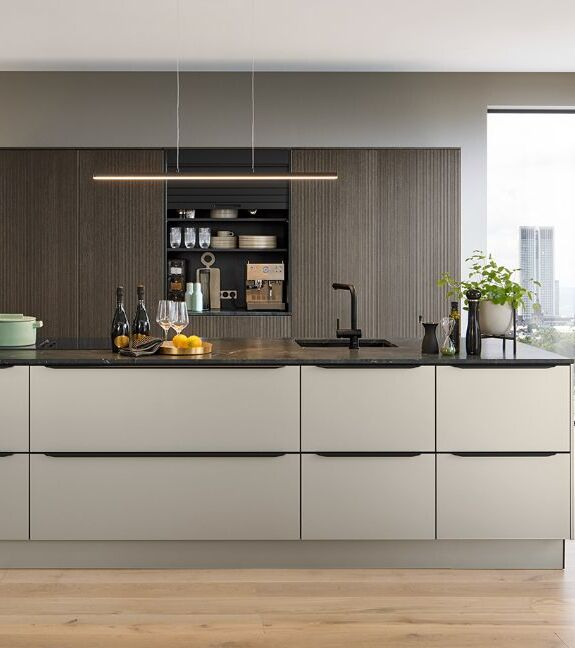
An integrated profile on the door edge provides the grip. From the front the door appears completely flat. The profile is visible at arm's reach but not from across the room. A clear, confident grip point for anyone who finds true handleless mechanisms unintuitive but wants hardware off the door face.
Read the Guide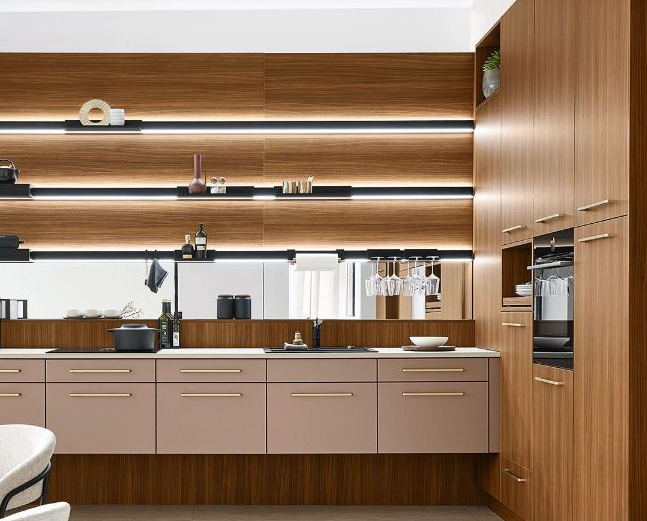
Bar handles, cup handles, and knobs fixed to the door face. The most durable and immediately intuitive opening mechanism available. German manufacturers produce bar handles in aluminium, stainless steel, and brass. The handle choice shapes the character of the kitchen as much as the door colour does.
Read the GuideClassic Styles
3 StylesClassic door styles draw from furniture-making traditions that predate the modern fitted kitchen. They suit Victorian, Edwardian, and Georgian properties where a flat slab door looks out of place, and any home where warmth, texture, and visible craftsmanship matter more than minimalism.
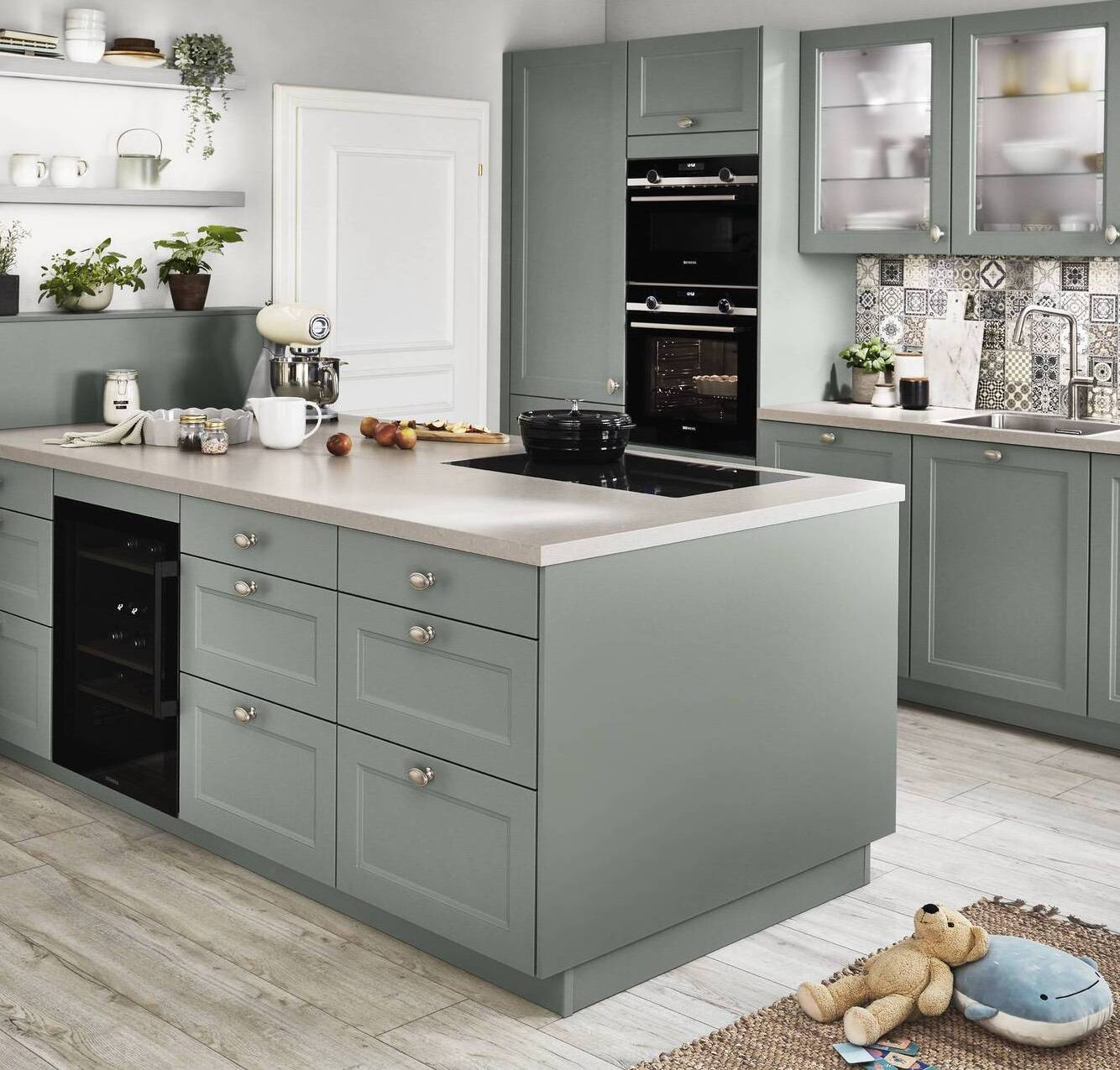
A flat recessed panel set within a square-profiled frame. The defining kitchen door style in the UK market — consistently the most-specified style across British kitchen retailers for over a decade. Works in almost any property type from Georgian townhouse to new build, depending on the colour and finish chosen.
Read the Guide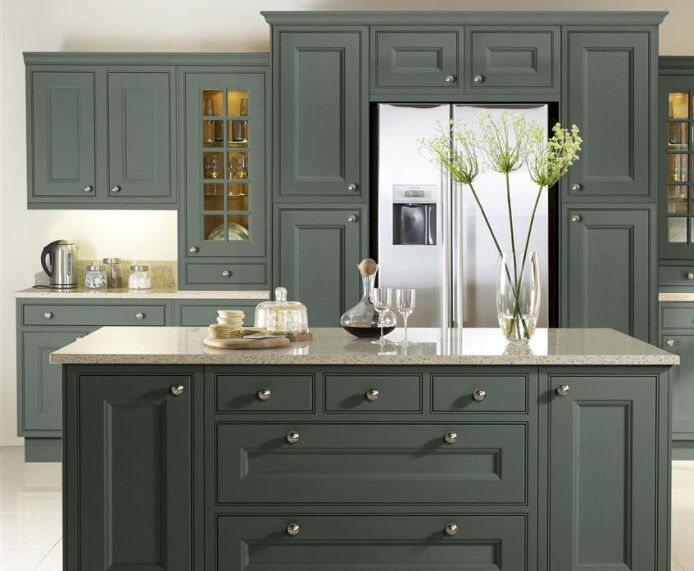
A structural face frame is built onto each cabinet and the door sits within it, visible as a border around every opening. The most traditionally crafted kitchen construction method. More material, more labour, and a premium price. The shadow depth it produces is not achievable by any other style.
Read the Guide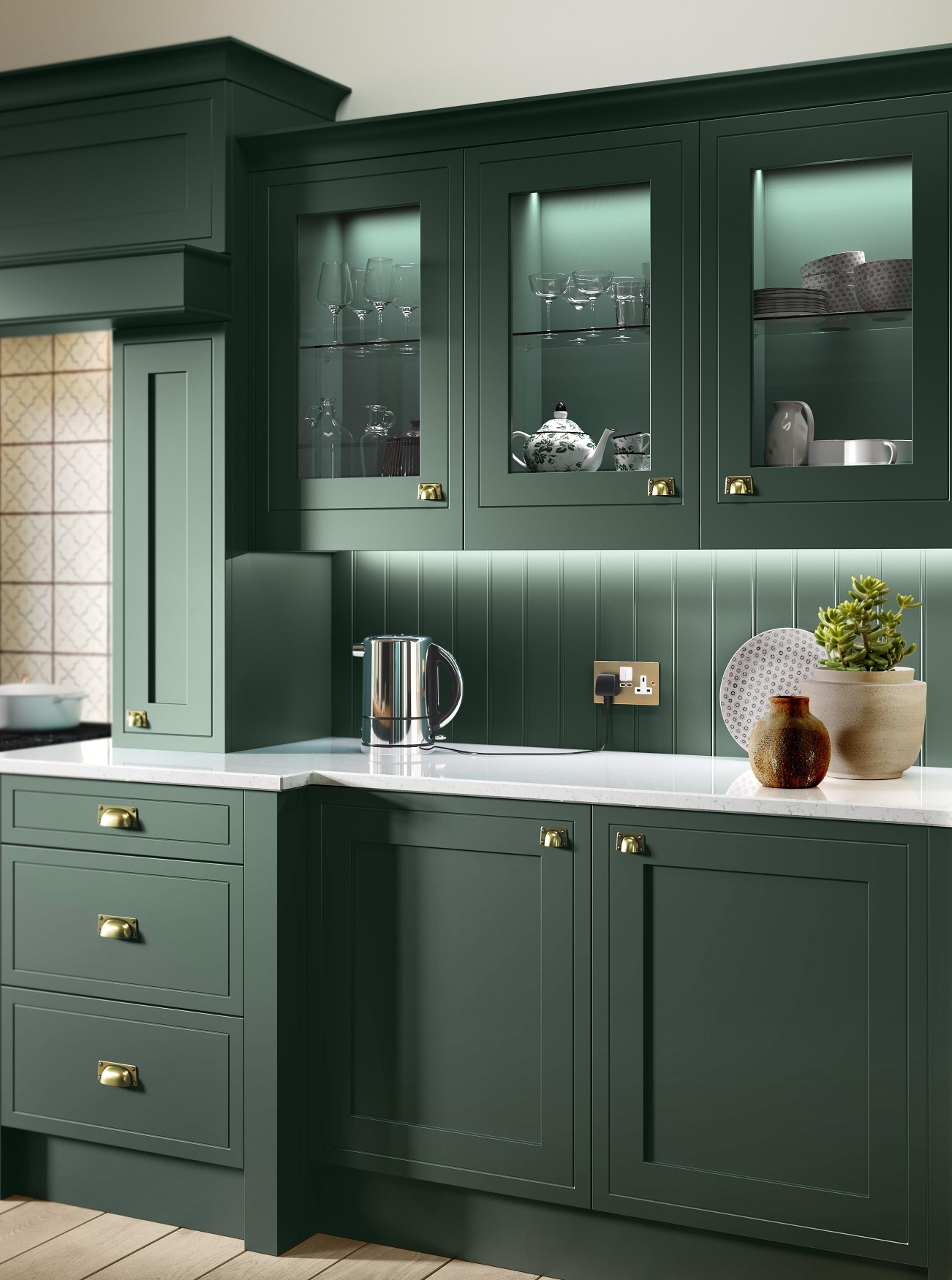
Applied profiles on a standard frameless carcass create the appearance of a structural face frame without the manufacturing cost or the access penalty. The in-frame look at a significantly lower price point. Shadow depth is shallower at close range but from a metre away most buyers cannot distinguish between the two.
Read the GuideTransitional Styles
2 StylesTransitional styles borrow from both ends of the spectrum. They carry the structure and shadow line of a classic kitchen but strip back the detail to suit a more contemporary interior. Both styles below have grown significantly in specification over the past three years as quieter, more considered aesthetics have taken hold in UK kitchen design.
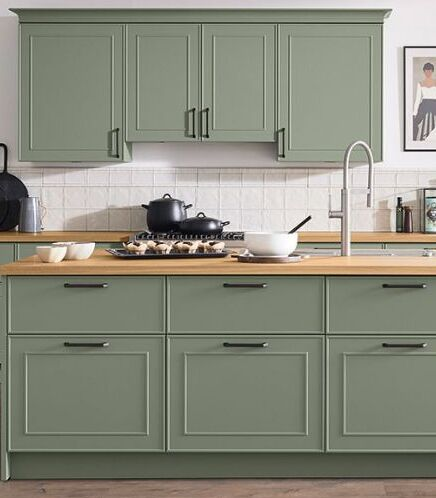
A standard Shaker door with a significantly narrower frame profile, typically 40mm instead of the traditional 70mm or more. The inner panel is larger, the border is thinner. The result is a door with classical structure but a noticeably lighter, more contemporary feel that suits both period and modern properties.
Read the Guide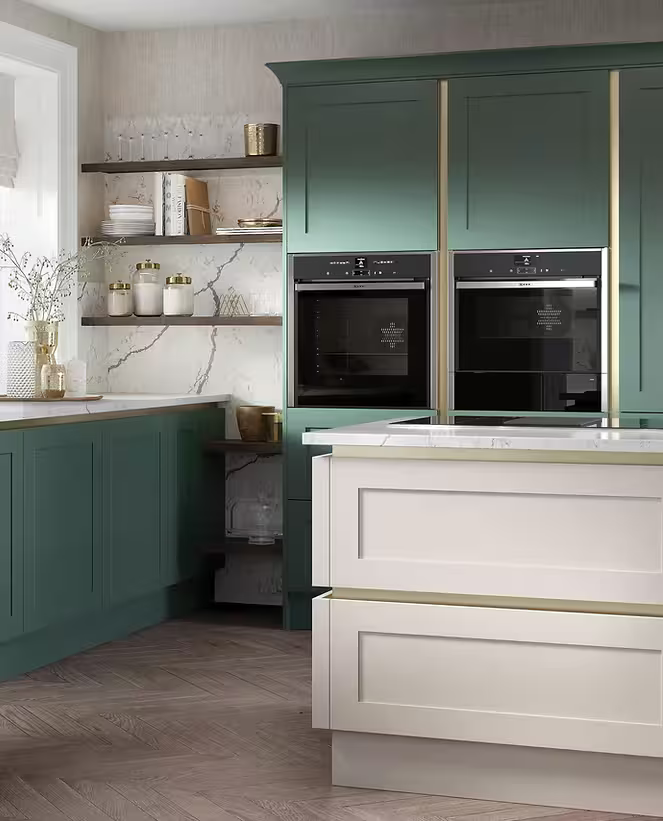
A Shaker-profiled door with a J-pull or recessed grip built into the frame rather than a surface-mounted handle. Keeps the structured frame and shadow line of a Shaker but removes the visible hardware entirely. A practical choice for homeowners who want classic Shaker architecture without bar handles breaking the visual rhythm of the room.
Read the GuideNot sure which category fits?
The four questions below are the ones most UK homeowners use to narrow down their choice. Work through them in order and you will arrive at a category within a few minutes.
Each style page covers the opening mechanism in detail, the German brands producing it, the price bracket it sits in, and the property types it suits best. If you are early in the process, start with the handleless versus handled question. This is the decision with the most practical implications for daily use and the one most homeowners settle first before narrowing down to a specific profile.