
True Handleless Kitchens.
Rail systems explained.
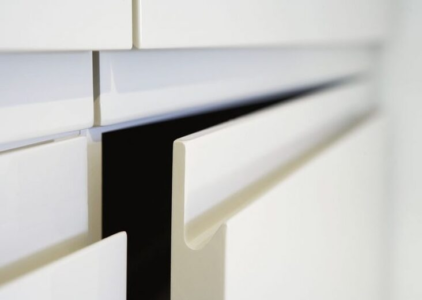
In a true handleless kitchen the grip does not sit on the door front. An aluminium rail fixes to the cabinet carcass, and door and drawer fronts shorten slightly so fingers reach into this channel. The face of the kitchen stays completely flat. No visible hardware. No projecting fittings.
German manufacturers use rail systems across many ranges. The term appears in brochures as G profile, Gola rail, or grip ledge. In every case the principle is the same. A metal profile at cabinet level replaces the visible handle.
In the UK the word handleless appears on many showroom displays. Some use rails. Others use J-pull routed doors or push-to-open fittings on standard carcasses. Knowing which route you are looking at before you compare protects your decision and avoids disappointment after installation.
This guide covers the rail system in detail, from profile types and ergonomics through to planning checks, design ideas, and how true handleless compares to J-pull. Separate pages on this site cover J-pull handleless and push-to-open layouts.
What is a true handleless kitchen?
The defining feature of a true handleless kitchen is where the grip lives. On a standard kitchen the handle bolts to the door face. On a J-pull kitchen the groove is routed into the door edge. On a true handleless kitchen, neither of those things happen. The grip is a separate aluminium rail fixed to the cabinet carcass itself. The door front passes in front of it, shortened at the top to leave a finger channel between the door and the worktop or wall unit above.
Walk down a run of true handleless base units and you see a continuous shadow gap at the same height along the full length. No hardware. No breaks. The worktop sits above this line and the doors below it. The visual effect is a kitchen with strong, uninterrupted horizontal lines running from one end of the room to the other.
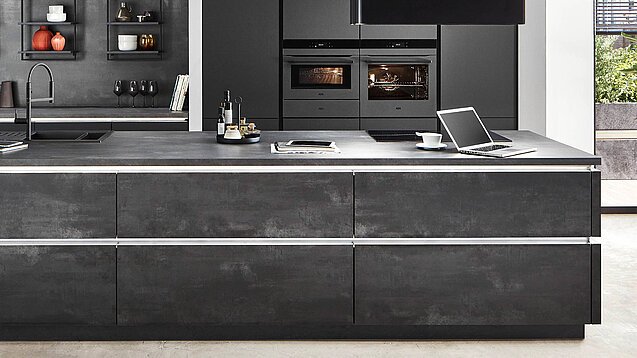
On base units the main rail sits between the worktop and the top drawer or door. Where the design uses a stack of drawers, a second rail sits lower so every front has a grip point. The gap above each front remains even across the run. On tall housings the rail runs vertically beside ovens, fridge freezers, and larder units. Wall units use a lower rail which aligns with the fronts below or follows an agreed height.
Doors and drawers still run on standard hinges and soft-close runners. The rail is an addition to the carcass, not a modification of it. Service and repair work after installation is straightforward for any fitter familiar with German kitchen carcasses.
True handleless vs push-to-open. Some retailers describe flat slab doors on touch latches as true handleless. Push-to-open has no rail at all. A light push opens the door via a magnetic or hydraulic latch. Both routes deliver a hardware-free face. This page covers rail-based systems only. The push-to-open guide on this site explains magnets, dampers, and maintenance in depth.
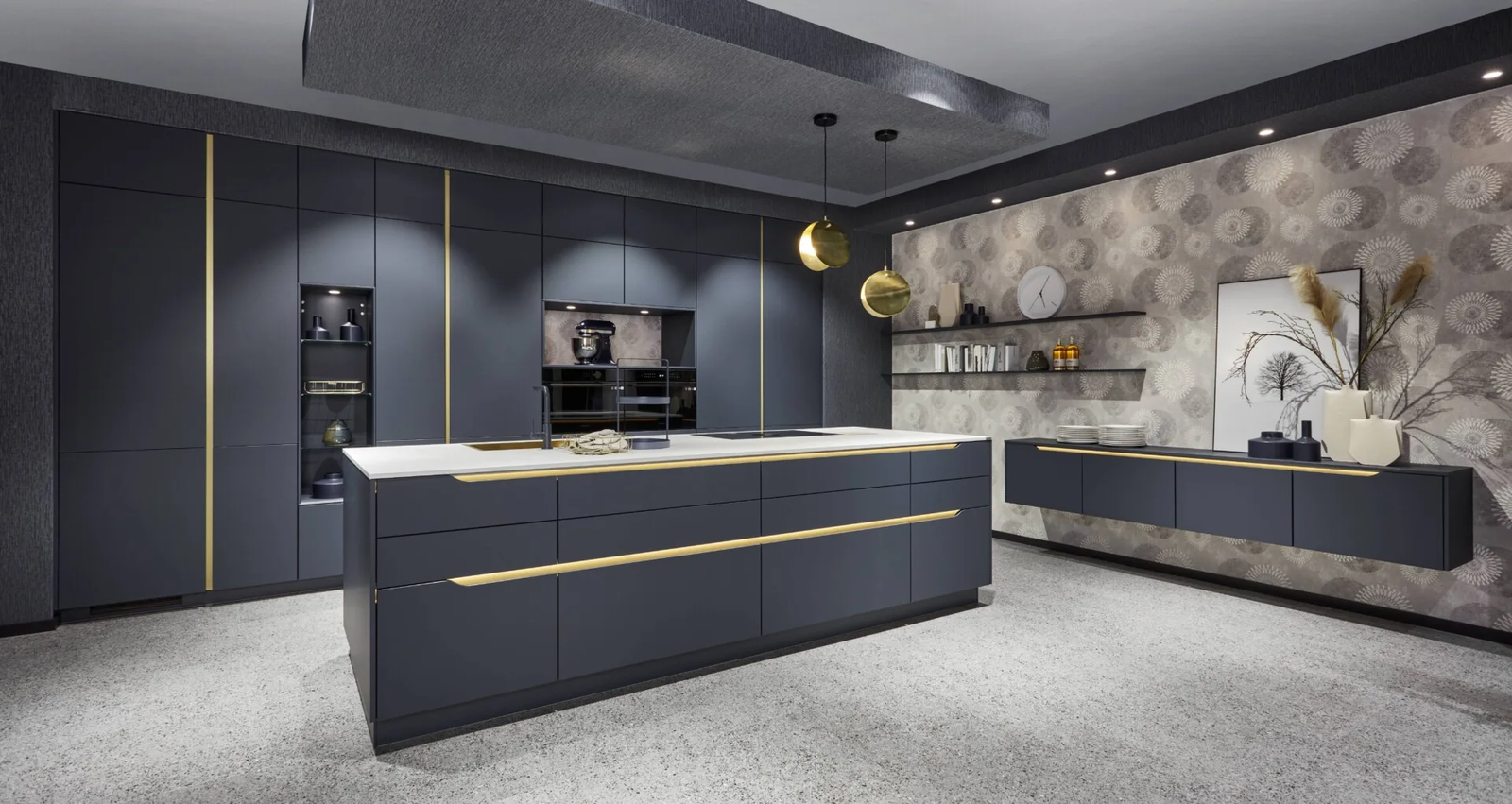
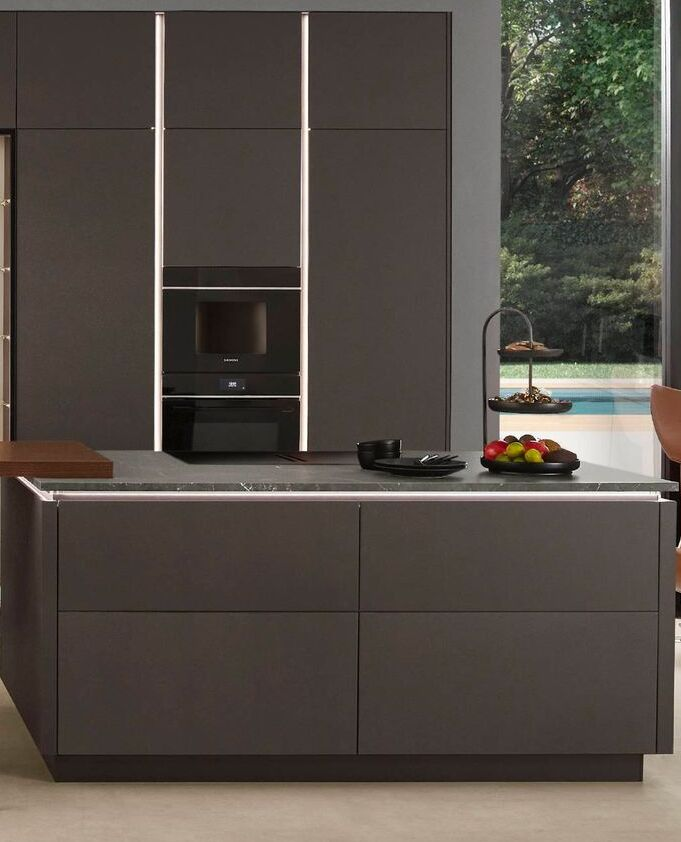
Continuous rail at base unit height. Doors shorten to create the grip channel. No visible hardware on any front.
How the rail system works.
Rail choice affects grip comfort, cleaning ease, visual alignment, and the way light plays along the kitchen. Good German systems combine a strong aluminium profile with accurate carcass drilling and precise fitting on site.
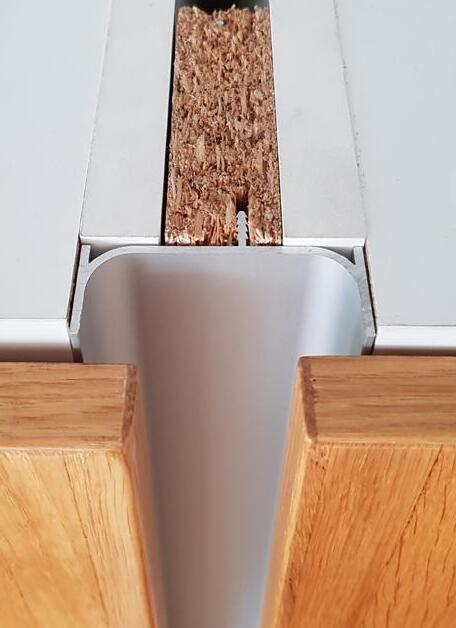
The rail fixes to the front face of the frameless carcass, either sitting on top of the box or recessed into a shallow groove depending on the profile design and manufacturer. Doors and drawer fronts then align with the rail face while hinges and runners control the opening action independently of the rail.
Think of the rail as a continuous built-in handle running behind the fronts rather than a fitting screwed to them. The pulling force travels through the rail and back into the carcass rather than through a thinned section of door edge. This is why experienced fitters report strong long-term performance from rail systems, especially from established German brands.
Integration with frameless carcasses is a key advantage of German kitchen rail systems. German frameless carcasses use full-height side panels and precise drilling patterns that are designed around the rail. The rail, the carcass, and the front are specified together at the factory stage, not retrofitted or adapted on site.
Opening feel on a well-installed system is consistent even on heavy integrated fridges and freezers. Soft-close runners reduce effort and keep motion smooth. Where drawers reach extra width or depth, many German brands offer mechanical assist or electric opening to maintain comfort at an additional cost.
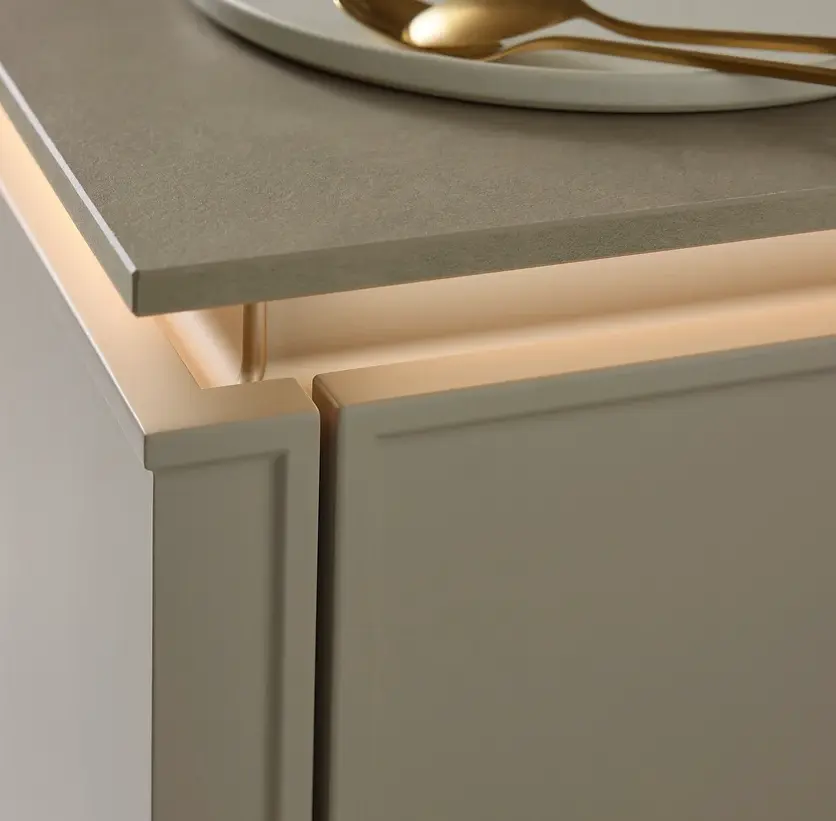
Rail fixed to the carcass face. Door front shortened above. The pull force goes through the rail into the carcass, not through the door edge.
Visit a showroom with loose rail samples. Run fingers along the channel, open a tall fridge door, and open a deep pan drawer. Ask whether the grip feels secure when you move quickly or carry shopping. A rail profile that feels comfortable on a small door feels different on a 2m tall larder.
Horizontal and vertical profiles.
With optional integrated lighting.
True handleless systems use two profile orientations. The horizontal profile runs along the top of base unit runs, creating the continuous grip line at worktop level. The vertical profile runs alongside tall units, oven banks, and larder columns. Both are available with or without integrated LED lighting.
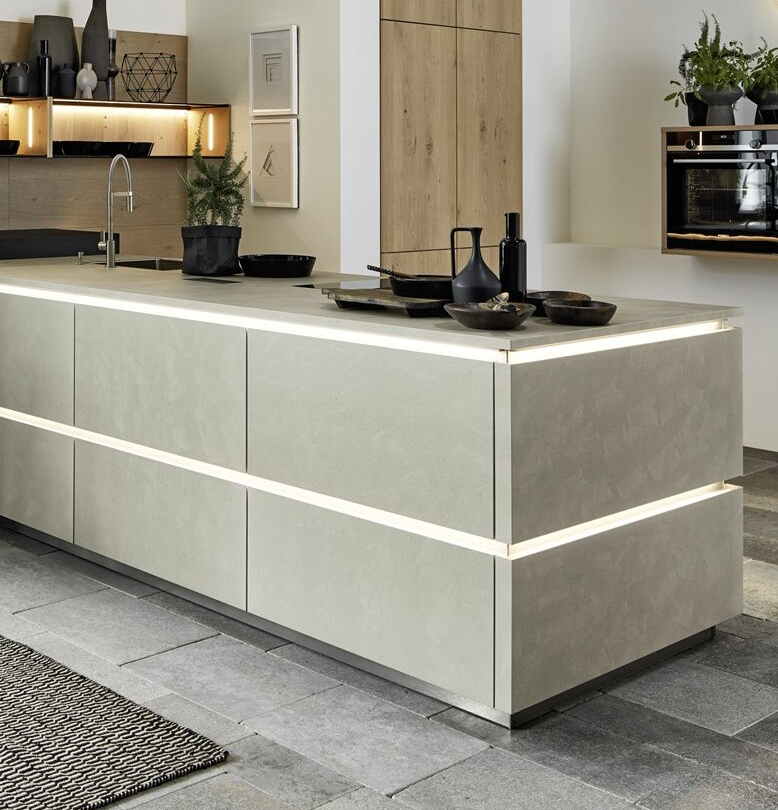
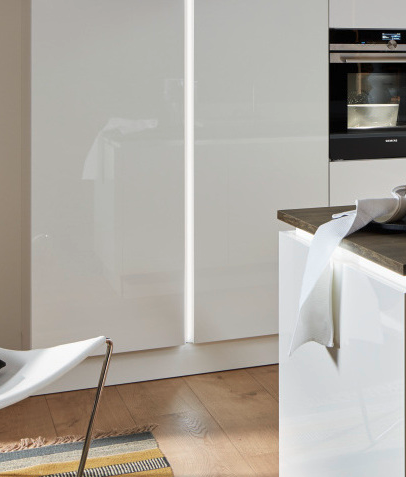
Profile finish options. Brushed aluminium, stainless look, black, and colour-matched lacquer on premium ranges.
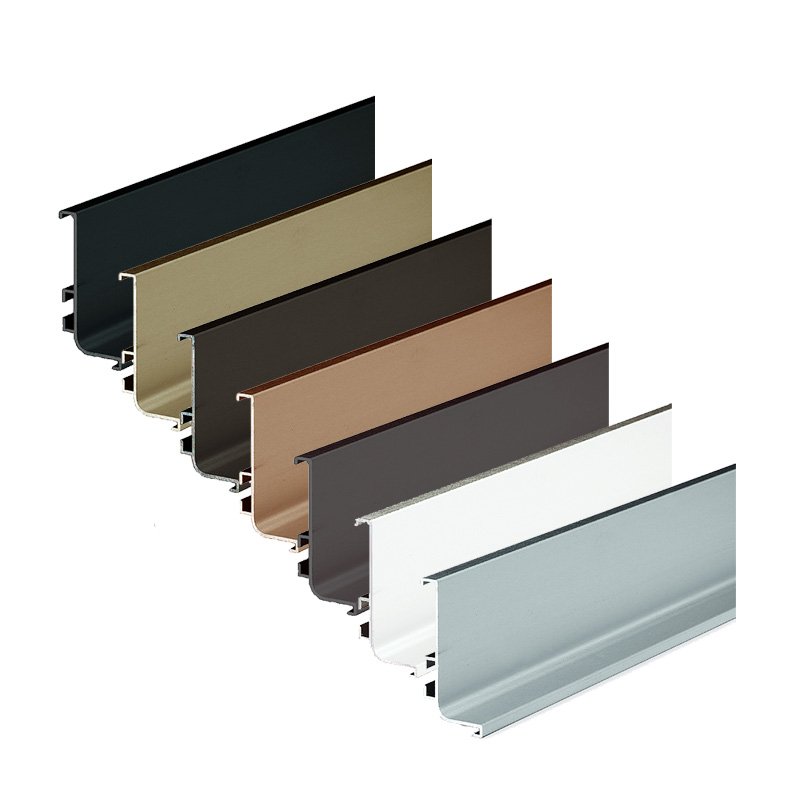
Rail colour choices. Brushed aluminium under white feels light. A dark rail under deep matt fronts strengthens the outline.
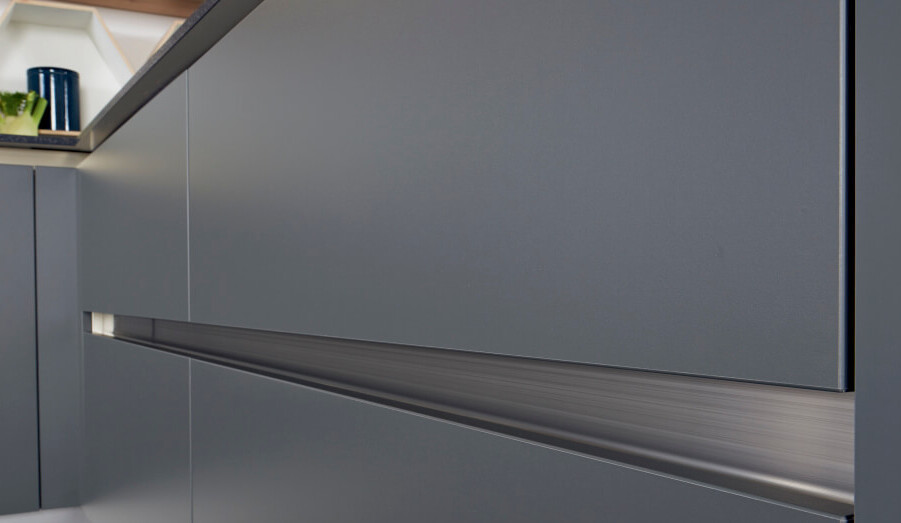
The profile shape. L or C form gives a smooth edge for fingers. The door front aligns flush with the rail face.
Profile shape and finish. Profiles follow an L or C shape which gives a smooth edge for fingers. Popular finishes include brushed aluminium, stainless look, and black. Premium ranges often offer colour-matched lacquer on the rail for an even softer visual line where the rail recedes and the worktop or floor takes more focus.
Benefits and trade-offs
for UK homes.
True handleless kitchens suit many British extensions and open-plan spaces. They also carry a higher price position and require more care around specific zones. Understanding both sides helps you make the comparison honestly.
- Flat fronts with no visible handles support a calm, modern look which suits open-plan living and kitchen-diners where the kitchen is on display from the room.
- No handles in walkways. Hips and pockets avoid catching on corners and islands. Particularly useful in narrower UK galley kitchens where passage is tight.
- Smooth faces with few recesses mean grease and dust have fewer places to sit. A wipe along the rail line keeps edges clean.
- Continuous horizontal lines across base units, tall housings, and appliance banks help a room read as wider and more cohesive.
- German handleless ranges offer laminates, lacquers, and veneers in wide colour programmes. The style works from soft matt to bold gloss to timber-effect.
- Optional integrated LED in the profile turns the rail into a lighting feature. Particularly effective in open-plan rooms where the kitchen is visible from the living area.
- Furniture pricing often sits above equivalent handled or J-pull ranges because of the rail hardware and additional machining required at the factory.
- Top drawers and pull-outs lose a little internal height where the rail runs in front of the cabinet opening.
- Rails beside sinks and hobs receive steam and splashes and need regular wiping to stay clean and dry.
- Some users with long nails or reduced grip strength prefer a visible handle and feel more confident with that route.
Installer feedback from the UK market. Experienced fitters report strong long-term performance from rail-based systems, particularly from established German brands. The pulling force travels through the rail into the carcass rather than through a thinned section of door edge. This reduces stress on joints and finishes over the life of the kitchen.
Planning checks
before you order.
True handleless kitchens reward careful planning. Use the checks below with your designer before signing an order in any UK showroom. Issues identified at planning stage cost nothing to fix. The same issues found during installation cost time and money on both sides.
Ask your designer to talk through one full elevation from floor to ceiling. Plinth, base units, rail, worktop, wall units, top line. Many small issues emerge at this walkthrough stage rather than during fitting. This review costs nothing and takes fifteen minutes.
Design and lighting ideas.
Rail lines draw the eye through the room. Treat them as a design tool linked with colour, lighting, and layout. The decisions you make about the rail are part of the overall design, not a technical afterthought.
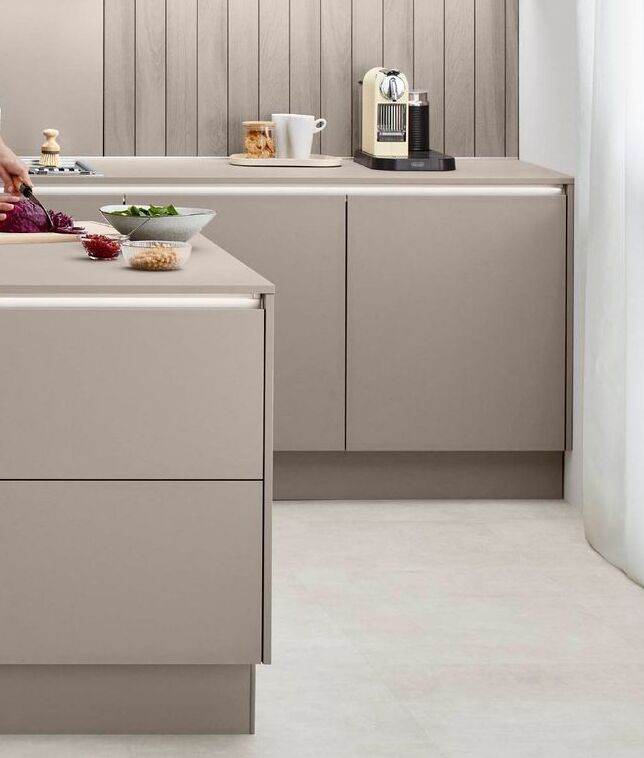
LED strip inside the horizontal profile washes light down door fronts. Warm white suits family spaces. Cooler whites give a sharper, architectural look.
Rail colour strategy. A brushed aluminium rail under white fronts feels light and crisp. A dark rail under deep matt fronts strengthens the outline and suits bold islands. Where the rail matches the fronts in colour, the line recedes and the worktop, flooring, or splashback becomes the focus instead.
LED lighting near rails. Slim LED strips inside the horizontal profile wash light down doors and drawers. Vertical strips beside tall rails frame oven banks and draw the eye upward. Warm white at 2700K to 3000K suits family spaces and open-plan dining. Cooler whites at 4000K support a sharper, more architectural look.
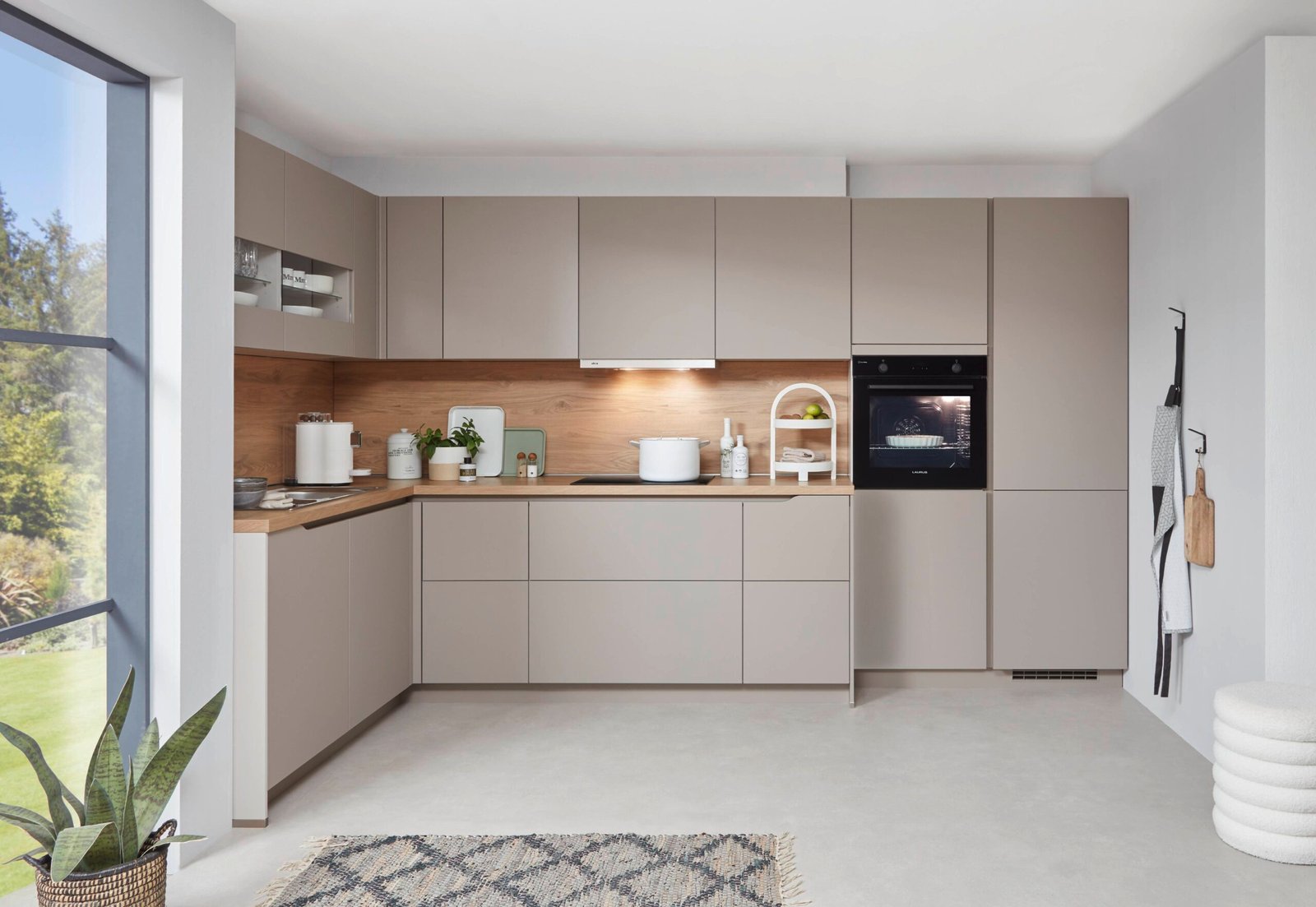
Layouts which show rails clearly. Long straight runs, strong L shapes, and island layouts show rail lines at their best. Short or broken runs work, though the visual impact softens once lines split into many small sections. If the kitchen layout allows it, extending the rail across the full length of a wall produces the strongest visual result.
Horizontal profile from above. The channel depth determines grip comfort on heavy doors.
Vertical profile alongside tall unit. Full-length grip on oven doors and larder columns.
Continuous rail line in a contemporary open-plan layout. The horizontal runs from one end of the room to the other.
True handleless vs J-pull.
Same look, different approach.
Both routes deliver a hardware-free face. One relies on a rail fixed to the carcass. The other relies on a groove routed into the door edge. The visual result is similar. The structural approach, grip experience, and price position are different. The table below gives a direct comparison for visitors who start here. The J-pull guide on this site covers the routed groove approach in full detail.
| Aspect | True handleless rail system | J-pull routed front |
|---|---|---|
| Grip method | Continuous aluminium rail recessed into the carcass behind the shortened fronts. Fingers hook into the channel between rail and door. | J-shaped groove cut into the door or drawer front. Fingers hook into the profile routed directly from the front material. |
| Appearance | Flat slab faces with a shadow gap only where the rail sits. No detail on the door surface itself. | Visible groove line across each front. Introduces a horizontal detail that reads from across the room. |
| Edge and door strength | Door edges remain full thickness. The rail takes the pulling force, not the door material. | Material removed from the grip area. Pulling pressure travels through a thinned section of the front. |
| Heavy appliance doors | Strong grip along the full rail suits integrated fridges, freezers, and tall larders where the door is heavy. | Comfortable on standard-weight doors. Some users feel less supported on tall or particularly heavy fronts. |
| Typical price position | Often placed in a higher price band because of the separate rail hardware, additional machining, and extra fitting time. | Frequently used where a handle-free look is needed with closer control of furniture spend. |
| Best match | Projects aiming for strong continuous lines, long runs, integrated appliances, and German carcass engineering. | Projects where a handle-free aesthetic is the priority and the budget requires compromise on furniture tier. |
Ask the showroom to price your layout in both routes. Use the same carcass quality and the same appliances on both quotes. Review the drawings side by side. The difference in visual result is often smaller than the difference in price. The right choice depends on which version suits your household better in daily use.
Costs and budgeting.
Exact figures vary by room size, appliance pack, worktop material, and building work around the kitchen. The points below help you read quotes in a structured way rather than comparing totals in isolation.
Working within a fixed figure. If you have a clear ceiling price, ask your designer for two options: one in a true handleless range and one in a good handled or J-pull range using the same carcass quality. Review where each version asks for compromise and where it adds value in daily use. The difference is clearer when the comparison is like-for-like.
Is a true handleless kitchen
right for you?
- You prefer clean, modern interiors where the kitchen links smoothly with a dining or living area and hardware-free faces keep that transition uninterrupted.
- You like long runs, tall housings, and islands with clear, unbroken horizontal lines running from one end of the room to the other.
- You want a specification which reflects German carcass engineering. The rail and the carcass are designed together, not combined on site.
- You have integrated appliances and want a full-length grip on heavy fridge, freezer, and larder doors that gives a consistent feel across the whole kitchen.
- You want to use integrated LED lighting in the profile as a design feature, creating a lit line across the run that is visible from the room.
- You prefer a more traditional framed look where visible handles are part of the design character rather than something to remove.
- You are working to a tighter furniture budget and prefer to prioritise appliances, a stone worktop, or other elements of the project.
- A member of the household finds a visible handle more secure, for example where grip strength is limited or fine motor control is a consideration.
- The kitchen layout involves short, broken runs where the rail line has limited visual distance to run and the effect is less pronounced.
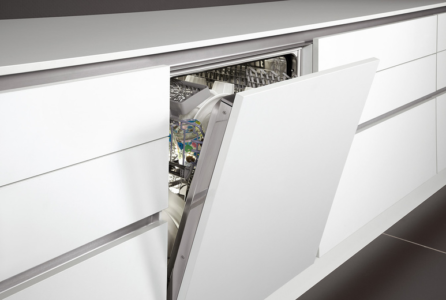
Plan visits to at least two showrooms with true handleless displays. Open and close a fridge, dishwasher, oven, and deep drawer in each. The way the kitchen feels in your hands often settles the question faster than any photograph. Pay attention to the grip on the tall unit doors in particular. These are the heaviest pieces and the ones most users open most frequently.