
Choosing the right hob.
Nine types. One clear guide.
The hob is the most used appliance in any kitchen. It shapes the cooking experience every day, affects the ventilation strategy, determines where services need to run, and has a significant influence on the visual result of the worktop zone. Choosing a hob type before you finalise the kitchen layout is the correct order of decisions. The hob drives the worktop cutout, the extraction specification, and in some cases the electrical load plan. Getting the sequence right avoids costly changes later.
Kitchen Selections does not sell appliances. These guides cover each hob type independently: how the technology works, what it delivers in a real UK kitchen, which households benefit most, and what the installation and running-cost implications are. Nine hob types are covered across four categories. Use the navigation above to jump to the category that matches your starting point, or use the decision section at the bottom of this page to work through the right questions before reading the individual guides.
Induction
2 Hob TypesInduction hobs use electromagnetic fields to heat cookware directly rather than heating a surface first. No heat is lost to the surrounding area, which makes induction the most energy-efficient domestic cooking technology available. The surface stays cool unless a compatible pan is in contact with it. Both hob types below use induction technology, but they differ in how extraction is handled.
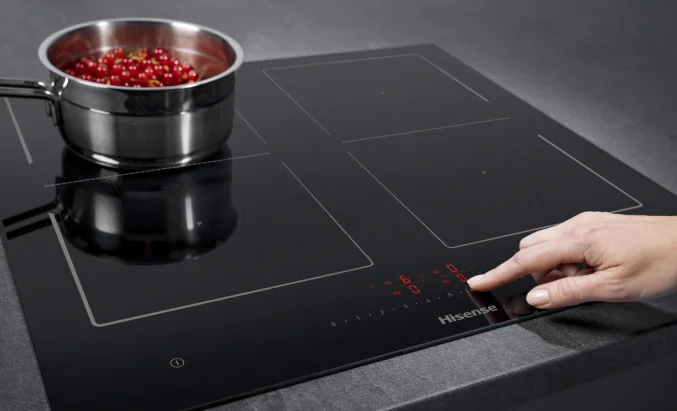
Electromagnetic coils beneath the glass surface heat compatible pans directly. The fastest domestic cooking technology available and the most energy-efficient. The glass surface only warms from residual pan heat, not from the hob itself. Works with a ceiling or wall extractor and suits any kitchen layout.
Read the Guide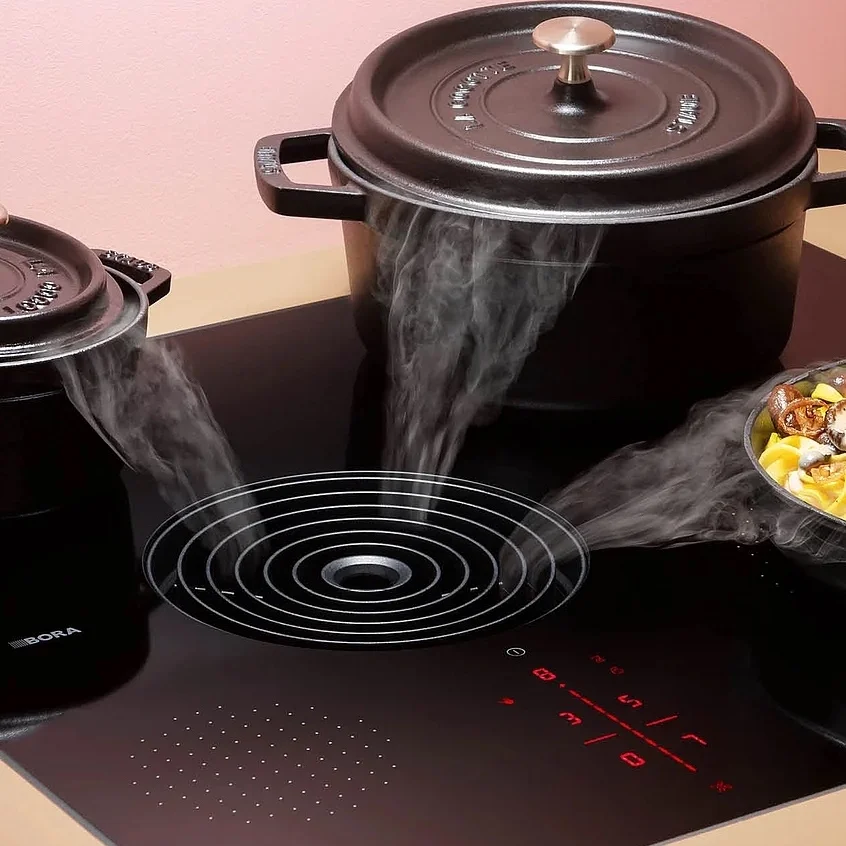
An induction hob with integrated downdraft extraction built into the hob unit itself. Steam and cooking fumes are drawn down and away at worktop level rather than rising to a ceiling extractor. Removes the need for an overhead extractor entirely, which transforms the visual design of an island or open kitchen.
Read the GuideGas and Dual Fuel
2 Hob TypesGas hobs provide instant, visible, continuously variable heat. The flame responds immediately to any adjustment and performs reliably across all cookware types without compatibility requirements. Both hob types below use gas as the primary cooking heat source. Note that from 2026, new UK property builds will not support gas connections. Gas hobs remain fully specifiable in existing properties and renovations, but confirm your gas supply availability early in the planning process.
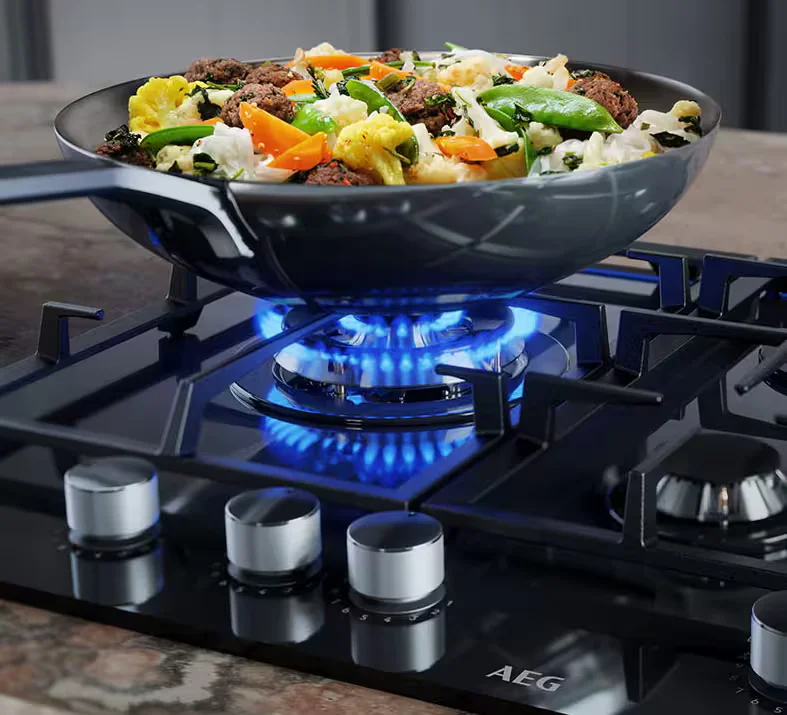
Open flame burners with cast iron pan supports and continuous heat control from a simmer to a full boil. Works with all cookware materials and performs during power cuts. Preferred by many experienced cooks for the immediate visual and tactile feedback the flame provides during cooking. Requires a gas connection and compatible extraction.
Read the Guide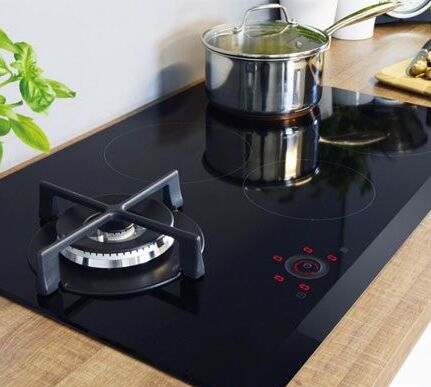
Gas burners and induction zones combined in a single hob unit. A practical middle ground for households where some cooks prefer gas and others prefer induction, or where specific cooking tasks suit one technology better than the other. Requires both a gas connection and a dedicated electrical supply.
Read the GuideElectric and Ceramic
2 Hob TypesElectric and ceramic hobs use resistive heating elements beneath a smooth glass or solid plate surface. They work with all cookware types and require no gas connection. Both are significantly slower to heat and cool than induction, which means more heat is produced in the kitchen environment during cooking and cleaning requires more care due to baked-on residue. Both sit at the accessible end of the hob price spectrum.
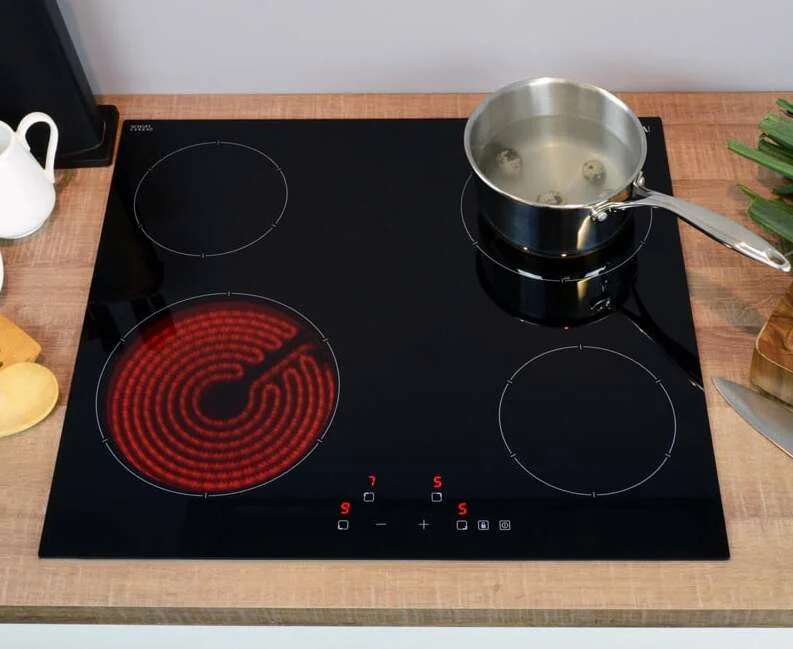
Radiant heating elements beneath a smooth ceramic glass surface. A flat, easily cleaned surface with no zones raised above the worktop level. The most common electric hob in UK kitchens due to its low entry cost and straightforward installation. Slower to heat than induction but works with all cookware without compatibility requirements.
Read the Guide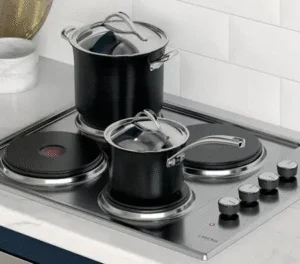
Sealed solid electric plates that heat through direct contact with the pan base. The simplest electric hob design and the lowest entry-cost option. Suited to utility kitchens, starter homes, and secondary cooking areas where budget is the primary consideration and cooking intensity is low.
Read the GuideSpecialist and Modular
3 Hob TypesSpecialist hobs serve specific cooking methods or layout requirements. All four below are available as standalone units or, more commonly, as domino-format modules combined with other hob types on a single worktop run. They suit households with defined cooking habits who want to add a specialist capability alongside their primary hob, and projects where the worktop zone is designed to serve a specific cooking style.
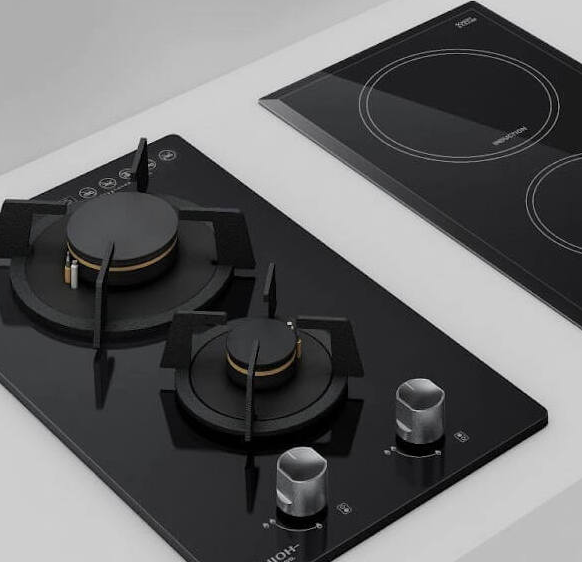
A 30cm modular hob unit designed to sit alongside other domino modules in a combined worktop configuration. Available in induction, gas, teppanyaki, grill, and wok burner variants. Suits kitchens where a bespoke cooking zone is the brief — including households who need high-output wok heat alongside a standard hob.
Read the Guide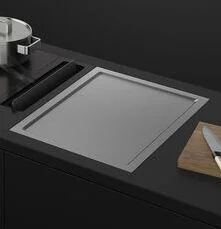
A large flat steel cooking plate heated uniformly across its entire surface. Food is cooked directly on the plate rather than in a pan. Suited to households who cook at the hob as a social experience — multiple people cooking and serving from the same surface. Also suited to pancakes, flatbreads, and large-quantity searing.
Read the Guide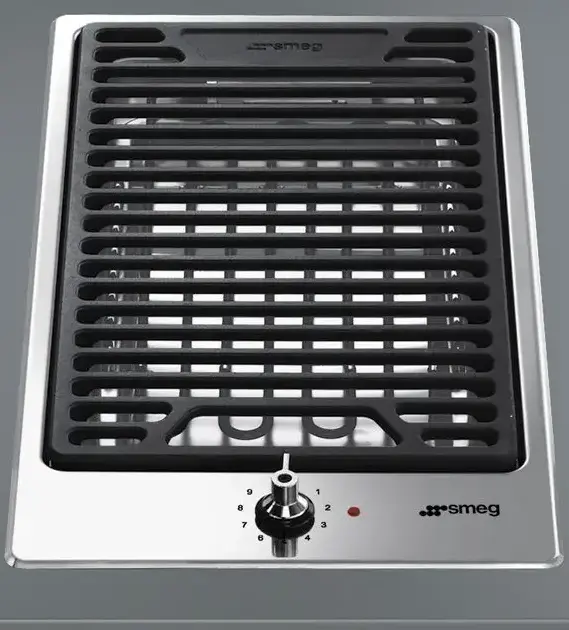
A ridged cast iron or steel grill plate that produces char marks and high-heat searing on meat, fish, and vegetables. Replicates the result of an outdoor barbecue grill at the kitchen hob. Produces significant smoke during use, so extraction specification is particularly important with this module.
Read the GuideNot sure which hob suits your household?
Work through these four questions before reading any individual guide. They narrow the choice to one or two relevant types faster than any specification comparison.
All Kitchen Selections hob guides are written independently. No appliance manufacturer or retailer has reviewed or approved any content before publication. Specifications are verified against manufacturer technical documentation. Kitchen Selections does not sell appliances. The guides exist to help you make a better-informed decision before approaching a retailer or kitchen designer.