
Vented hobs.
Integrated extraction. No overhead hood.
A vented hob combines an induction or gas cooking surface with a built-in extraction system in a single appliance. Steam, grease, and cooking odours are drawn down into the hob at worktop level rather than rising to a ceiling-mounted extractor hood. The result is a cooking zone that needs no overhead canopy, chimney, or ceiling hood — which transforms the visual and spatial character of an island kitchen or any position where a hanging hood is unwanted.
The technology behind vented extraction is straightforward: the extraction motor draws air at approximately 5 metres per second across the cooking surface and into the vent inlet. Steam rises at roughly 1 metre per second. The significantly higher extraction speed captures vapour, grease, and odour before they disperse into the room. The vent position — centre, back, or rear flap — determines how much of the cooking surface is affected by the inlet and how the hob looks when not in use.
This guide covers how vented hobs work, the three vent positions, induction versus gas vented hobs, the different format types available in the UK market, ducting versus recirculation, installation, and the practical buying and maintenance considerations. Use it before visiting a showroom or finalising your kitchen plan.
How vented hobs work.
All vented hobs use the same fundamental physics. Steam and cooking vapour rise at approximately 1 metre per second. The extraction motor inside the hob draws air through the vent inlet at approximately 5 metres per second. The crossflow speed substantially exceeds the upward movement of steam, so vapour, grease particles, and odour are drawn into the inlet before they disperse across the room.
The motor and fan assembly sit beneath the hob surface within the cabinet. Air is drawn through the inlet grill on the hob surface, passes through a grease filter to trap fat particles, and then either travels through a carbon filter and returns to the room through the plinth (recirculation mode) or exits through ductwork in the cabinet and floor to outside (ducted mode).
The extraction starts immediately when a zone is activated on most models, or automatically ramps up in response to heat detected by sensors. Many systems include automatic extraction mode: the motor speed adjusts to the heat level being produced rather than requiring manual adjustment during cooking.
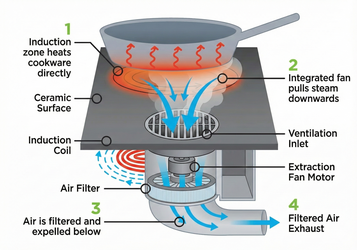
Steam rises at 1 m/s. The extraction motor pulls air at 5 m/s through the vent inlet. The higher extraction speed captures vapour before it reaches eye level and disperses into the room.
Vent positions.
Where the extraction inlet sits determines everything.
The position of the vent inlet on the hob surface is one of the most important and least discussed specification decisions on a vented hob. It determines how much of the cooking surface is interrupted by the extraction grill, how the hob looks when not in use, and how effectively it captures steam from different pan positions. There are three distinct approaches in the UK market.

- Extraction equally close to all zones
- The grill is visible across the full surface when not in use
- Suits 60cm to 90cm hob widths
- Available from Neff, Bosch, Siemens, Elica, and others
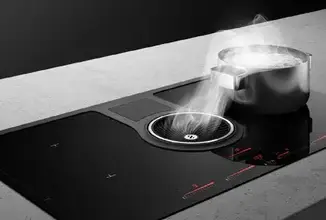
- Cleaner visual integration than standard centre-grill designs
- Extraction path and zone layout designed together
- Typically available on mid to premium models
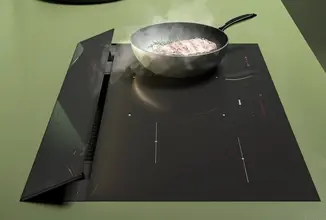
- Completely flat, uninterrupted glass surface when flap is closed
- Flap opens automatically at cooking start
- Not the same as a rising tower: the flap stays at worktop level
- Suits kitchens where the hob appearance when not in use matters as much as when cooking

- Flap opens to extract during cooking and closes automatically afterwards
- Worktop area around the hob remains fully visible at all times
- See the Falmec Brera product page for full specification
Vent position affects pan placement. On a centre-vent hob, very large pans (fish kettles, stockpots with a wide base) may partially cover the inlet grill, which reduces extraction performance. On a rear-flap hob this problem does not arise because the extraction is at the edge. If you regularly use oversized cookware, the vent position should be a specification priority, not an afterthought.
Vented induction
vs vented gas.
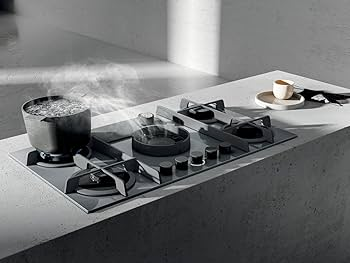
The majority of vented hobs in the UK market use induction as the heat source. Vented gas hobs exist as a specialist option for households with an active gas connection who prefer cooking with a visible flame but want the integrated extraction advantage of a vented appliance. The two heat sources produce different cooking experiences and have different installation requirements.
| Aspect | Vented induction | Vented gas |
|---|---|---|
| Heat source | Electromagnetic coils heat the pan base directly. Glass surface stays cool except from residual pan heat. | Open gas flame beneath cast iron pan supports. Visible flame with continuous analogue control. |
| Energy efficiency | 85–90% efficiency. Almost all energy goes into the pan. Less ambient heat in the kitchen. | 40–55% efficiency. Significant heat escapes around the pan and into the kitchen environment. |
| Cooking control | Digital precision with consistent low-heat settings. No visual flame feedback. | Visible flame with immediate response to adjustment. Preferred by many experienced cooks for tactile control. |
| Cleaning | Flat glass wipes clean. No burners or pan supports to scrub. | Burners, caps, and cast iron pan supports require regular detailed cleaning. |
| Cookware | Induction-compatible pans only. Magnetic base required. | All cookware types compatible. No compatibility requirement. |
| Services | Dedicated electrical circuit (32 amp minimum). No gas connection required. | Gas connection required. Electrical supply also needed for controls and extraction motor. Gas Safe engineer for installation. |
| UK availability | Available in all property types including new builds. | Available in properties with existing gas connections. Not available in new UK builds from 2026. |
Specialist formats
available in the UK market.
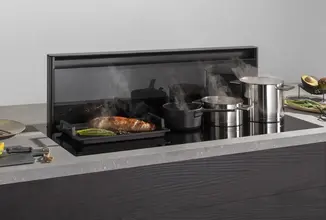
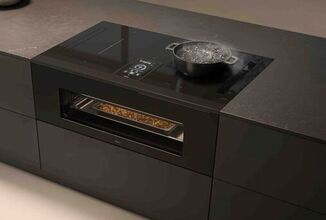
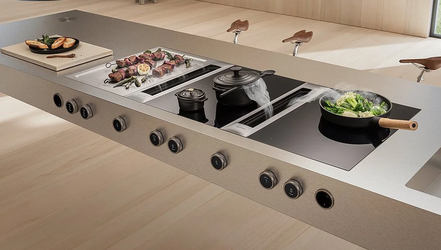
Beyond the standard vented induction hob, the UK market now offers three additional formats. Each addresses a specific layout or cooking requirement. The right format depends on worktop length, cooking habits, and whether the project includes building work that allows duct routing.
Ducted or recirculating.
Decide before you plan the floor.
Every vented hob follows one of two airflow routes. Ducted extraction removes air from the building entirely. Recirculation filters the air and returns it to the room. The choice affects installation complexity, running cost, and performance — and it needs to be confirmed before floor or wall work begins, because adding duct routes after the kitchen is built is significantly more disruptive.
- Strongest moisture and odour removal
- No carbon filter replacement schedule
- Requires planning of floor channels, joist penetrations, and wall grille during the build
- More complex to retrofit in an existing kitchen
- No external duct route required. Simpler installation.
- Room heat stays indoors — useful during winter
- Carbon filters need replacement every 6–12 months depending on cooking frequency
- Lower moisture removal than ducted. Not ideal for very steam-heavy cooking
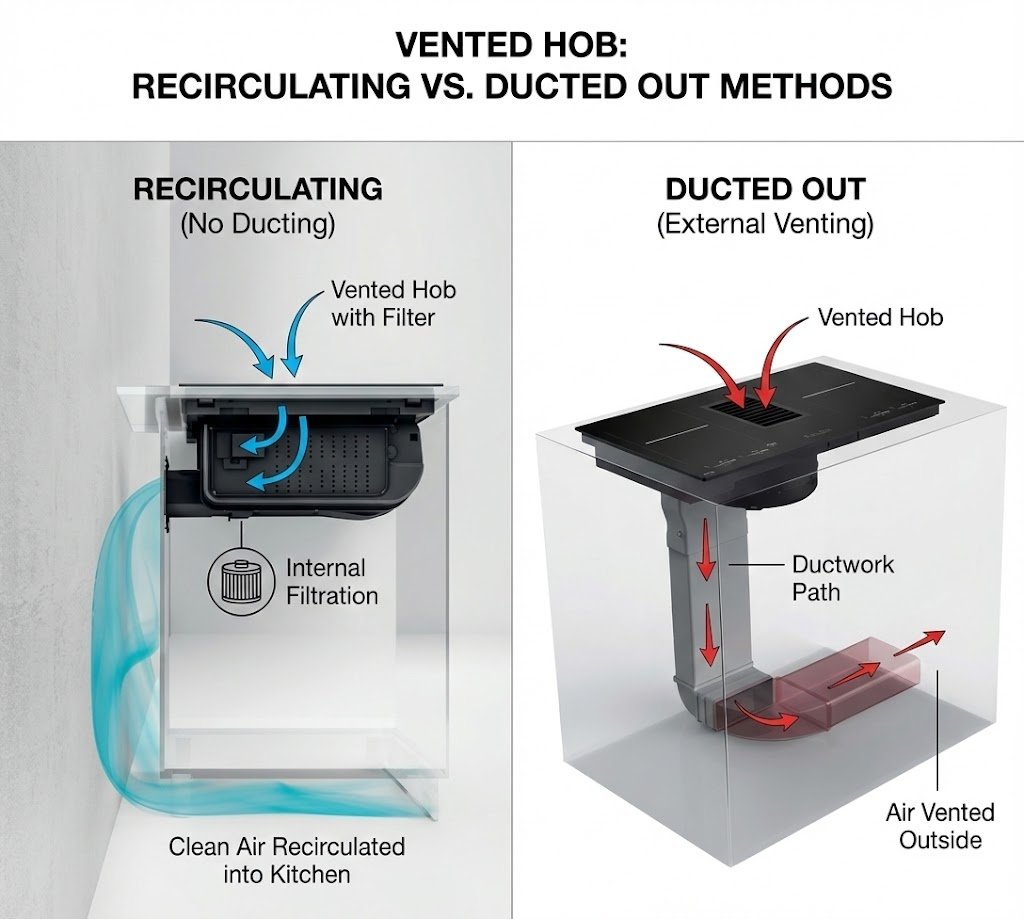
Ducted (left) removes air outside through floor or wall ductwork. Recirculation (right) filters and returns air into the room through the plinth. Confirm the duct route availability before the worktop is cut.
Confirm your duct route before ordering the hob. A vented hob specified as ducted needs a clear path from the motor under the hob to an external grille. This runs through the cabinet base, across the floor, and through the wall or up a riser. If the floor is concrete, floor channels need cutting. If joists are timber, penetrations need planning. Discovering the duct route is not viable after the kitchen is installed means converting to recirculation — which requires a different filter configuration and may not be achievable on all hob models.
Vented hob vs
downdraft extractor.
The terms are often used interchangeably but describe two different products with different installation approaches and different levels of flexibility.
A vented hob is a single integrated appliance. The extraction system is built into the hob unit. You order one product and receive a matched set of electronics, glass surface, and extraction motor designed to work together. There is one cutout in the worktop, one control interface, and one manufacturer responsible for the whole system.
A downdraft extractor is a separate unit that sits behind or beside an independently chosen hob. The most common format raises a slim extraction tower above the worktop level when cooking and retracts flush when not in use. The tower rises above the hob surface rather than extracting at worktop level — this is the key functional difference from a rear-flap vented hob like the Falmec Brera.
The practical distinction matters for buyers: a downdraft extractor allows complete freedom in hob brand and type selection. You choose the hob and the extractor separately and combine them. A vented hob locks the hob and the extraction system together from one manufacturer. Downdraft extractors have a separate guide on this site.
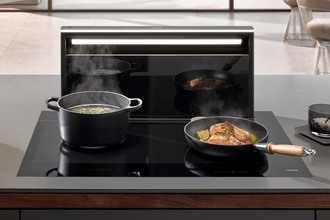
A downdraft extractor is a separate unit. The tower rises above the hob surface level. A vented hob integrates extraction within the hob itself and extracts at worktop level rather than above it.
The key distinction: A rear-flap vented hob (like Falmec Brera) opens a flap at the rear that stays at worktop level. A downdraft extractor raises a tower above the hob surface. Both remove the overhead hood. They are different products with different aesthetics, different installation requirements, and different performance characteristics. See the Domino Hob guide for modular hob combinations that pair with downdraft extractors.
Where vented hobs
work well and where they suit less.
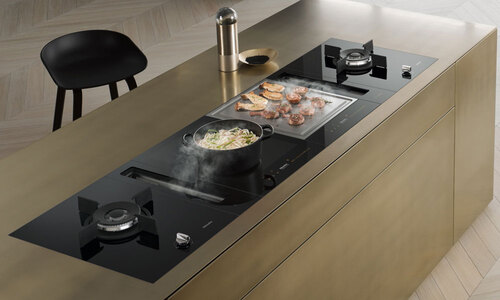
Island installation without an overhead hood. The vented hob keeps sightlines clear across the kitchen and living space. The island reads as furniture rather than a cooking equipment block.
- Kitchen islands. The most common position. The ceiling stays clear for pendants, skylights, or architectural detail with no hood obstructing the view.
- In front of windows. A wall hood would block light and outlook. A vented hob preserves the view.
- Under sloping or vaulted ceilings. Extensions, loft conversions, and barn builds where an overhead hood at a standard position is awkward or aesthetically poor.
- Open-plan living and dining. Social cooking where eye contact across the island matters and a metal box at head height interrupts the room.
- Over an oven or dishwasher. Most vented hobs need the full base unit depth for the motor and ducting. The three-in-one format (hob, oven, extractor) is the exception.
- Storage-critical kitchens. The top drawer under the hob is lost to the motor and duct path. If every drawer counts, a separate hood keeps the top drawer usable.
- Existing well-placed duct routes. Where a ceiling or wall duct already performs well and the aesthetic is acceptable, a new hood sometimes offers better value than a vented hob replacement.
Why vented hobs suit kitchen islands. The island often serves as both a social and preparation zone. Removing the overhead hood keeps sightlines between the cook and guests completely unobstructed. The island reads as a piece of furniture rather than a piece of kitchen equipment, which is the visual effect that drives most vented hob specifications in open-plan UK homes.
Installation.
Flush or top-mounted. Decide before templating.
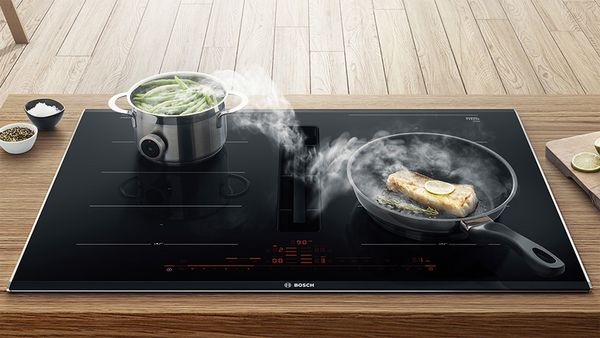
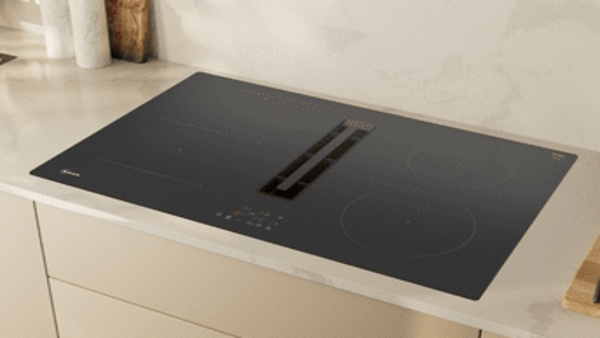
Confirm the installation method before the worktop is templated. Flush and top-mounted installations require different cutout dimensions. Tell the worktop company which method you are using before they visit to measure. Bring the hob installation instruction sheet to the template appointment. The fabricator needs the manufacturer's cutout drawing, not a verbal description. Changing method after the worktop is cut means cutting a new worktop.
The drawer space reality. Many buyers hear that all storage is lost under a vented hob. In practice the picture is more nuanced. The top drawer is occupied by the motor and duct components. Middle and lower drawers usually remain available, but the exact depth and configuration depends on the duct path and the specific hob model. Request a cross-section drawing from your kitchen designer showing the drawer layout under the specified hob unit before signing the order.
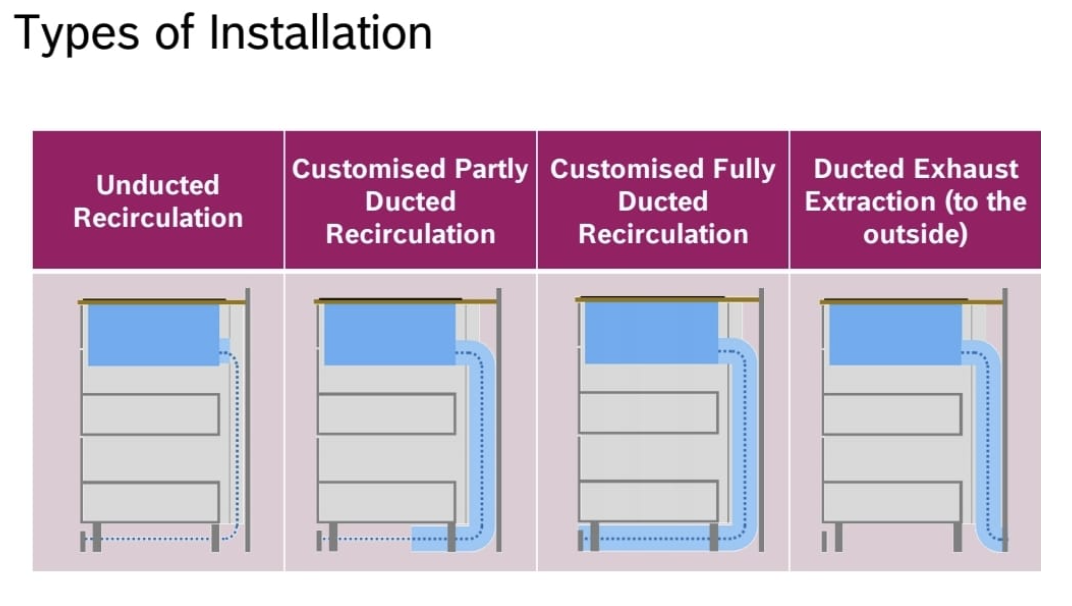
The motor and duct occupy the top drawer position. Middle and lower drawers typically remain usable depending on the duct route and hob model specification.
Benefits and limits.
- Design freedom. No bulky canopy above an island. The room reads lighter and more open. Ceiling height, architectural detail, and pendant lighting are all uncompromised.
- Better social cooking. Eye contact across the island during cooking. No metal box at head height interrupting the visual and physical connection between cook and guests.
- Odour and steam capture at source. Extraction at worktop level is closer to where steam and odour are generated than a ceiling-mounted hood. Capture happens before vapour disperses into the room.
- Simpler cleaning overhead. No high chimney or canopy to degrease. The hob surface and grease filter are the only extraction components that require regular cleaning.
- Suits difficult positions. Windows, vaulted ceilings, and structural constraints that prevent a conventional hood installation are all addressed by vented hob integration.
- Top drawer lost. The motor and ducting occupy the top drawer position under the hob. This is a fixed consequence of the design. Budget for the reduced storage capacity.
- Higher purchase price. Significantly more expensive than pairing a standard induction hob with a simple hood. The integration premium is real at all price points.
- Reduced surface area on centre-vent models. On 60cm and 70cm units the centre grill eats into usable cooking surface for large pans. Consider hob width carefully relative to your cooking habits.
- Spill management. Boil-overs and heavy spills move towards the vent inlet. A reservoir or collection tray catches liquid before it reaches the motor. The tray needs emptying when liquid accumulates.
- Duct route planning required early. Ducted extraction needs a clear path to outside confirmed before floor or structural work begins. Retrofitting duct routes after installation is disruptive and sometimes not viable.
Maintenance and care.
Metal grease filters. Most vented hob grease filters lift out from the hob surface and can go directly into the dishwasher. Monthly washing maintains extraction performance and prevents grease build-up that would reduce airflow over time. Check your model's specific guidance — some filters need air drying before reinsertion.
Carbon filters (recirculation only). If running in recirculation mode, carbon filters need replacement or regeneration on a schedule typically every 6–12 months depending on cooking frequency. Running a saturated carbon filter significantly degrades odour removal performance. Budget for replacement filters as a running cost.
Spill reservoir. Most vented hobs include a collection tray or reservoir that catches boil-over liquid and spills that travel towards the vent inlet. The capacity is typically 0.5–1 litre. The tray lifts out from the top for emptying and wiping. Check it regularly if you cook at high temperatures or with large volumes of liquid.
Glass surface. Daily care mirrors a standard induction hob. Use a soft cloth with dedicated hob cleaner once the surface cools below the residual heat indicator level. Avoid abrasive pads. Lift pans rather than sliding them to prevent surface scratching.
Pacemakers and implanted cardiac devices. Induction vented hobs generate electromagnetic fields during cooking. UK heart charities and NHS guidance advise a minimum distance of 60cm between the hob surface and an implanted cardiac device. Anyone with an implanted device must consult their cardiologist and device manufacturer before ordering an induction model.
Gas vented hobs: flame failure safety. Gas vented hobs include thermocouple flame failure devices. If a draught or spill extinguishes the flame, the thermocouple cools and triggers the gas valve to close, cutting the gas supply to that burner automatically. This is a standard safety requirement on all UK gas hobs.
Child locks. Most induction vented hobs include control lock functions that prevent unintended zone activation. Many also include automatic switch-off if all pans leave the zones for a specified period. Confirm these features are present on the specific model you choose.
UK cost guide.
These figures are indicative for 2025. They reflect hob unit cost only and do not include installation, electrical work, or duct routing. Actual project cost will be higher. Use them to understand relative positioning between product tiers before requesting quotes.
Budget separately for installation work. Ducted extraction requires duct routing through the floor and wall — this is building work, not appliance installation. Flush mounting requires specialist stone fabrication. A dedicated electrical circuit is required for most models. All three costs sit outside the hob purchase price and should be confirmed with your contractor before the kitchen order is placed.
Glass surface finish.
Gloss or matt. The honest difference.
All vented hobs use a glass-ceramic surface. The finish applied to that surface is either gloss or matt. This has been a gloss-only category for most of its history. Matt finish surfaces are a newer option now available on selected premium ranges. The choice affects how the hob looks every day — both when cooking and when the kitchen is at rest.
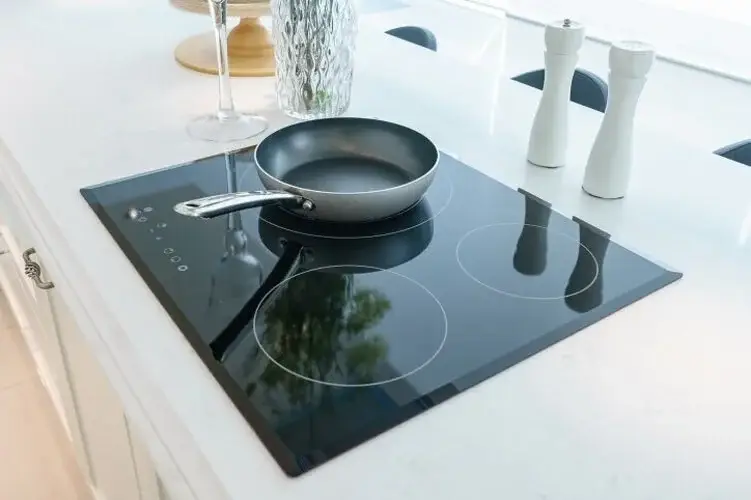
Scratches are present on any glass surface under daily use. On a gloss finish, scratches catch and reflect the light. Under strong pendant lighting above an island — which is the typical position for a vented hob — fine surface marks become visible relatively quickly, particularly as the surface is moved across and cleaned over time.
Fingerprints and smears show clearly under strong light and require daily wiping with a microfibre cloth to keep the surface looking presentable.
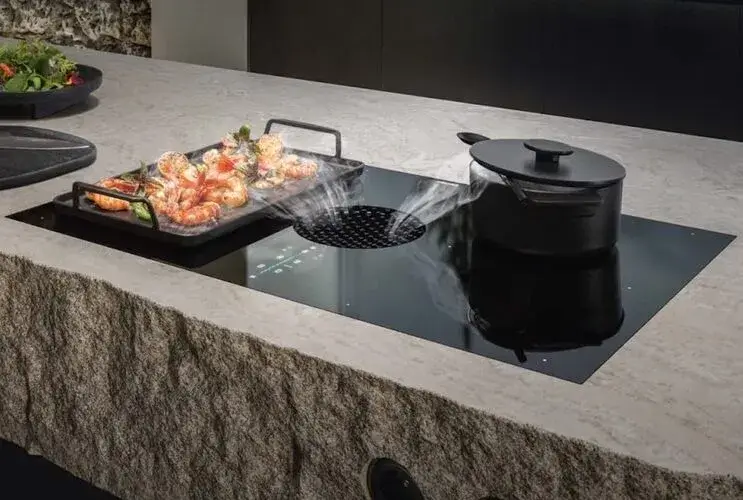
A matt finish scratches at exactly the same rate as gloss under identical use. The surface is not more scratch-resistant. The key difference is visibility: scratches on a matt surface do not catch the light the way they do on gloss. The same marks are present but they do not show. For an island kitchen under strong pendant or skylight lighting, this makes a meaningful practical difference over a 10-year kitchen life.
Fingerprints are significantly less visible on a matt surface. Daily cleaning is easier because marks do not show under the same lighting conditions that make a gloss surface demand constant attention.
Both finishes scratch. The difference is whether you see it. This is the only meaningful technical distinction between the two surfaces. A matt finish does not prevent scratching — it prevents the visual consequences of scratching. On an island kitchen where the hob sits directly under pendant lighting and is viewed from multiple angles throughout the day, the visibility difference between the two surfaces is significant. On a wall-run hob with overhead lighting at an angle, the difference is less pronounced. View both options in a showroom under lighting conditions similar to your own kitchen before deciding.
Which vented hob
suits your project?
- The hob sits on an island or peninsula and you want an open view across the kitchen and living space.
- The project budget comfortably supports a mid-to-high appliance specification.
- Floor or screed work already forms part of the build, so duct routes can be planned and cut without disruption.
- An overhead hood is not practical due to a window, vaulted ceiling, or structural constraint.
- The hob sits on a wall run with a straightforward route for a chimney or canopy hood, and there is no reason to remove the hood.
- Full-depth drawers under the hob are a storage priority and you cannot afford to lose the top drawer.
- The appliance budget is tight and the premium for vented integration would be better allocated to ovens or refrigeration.
- No viable duct route to outside exists and you are not willing to use recirculation mode.
Return to the Hobs guide to compare vented hobs against all other hob types. The Induction Hob guide covers the induction technology specification in full detail. The Gas Hob guide covers the considerations for households with an existing gas connection.