
Hidden Handle Kitchens.
A clear grip. No visible hardware.
Hidden handle kitchens use integrated pull profiles on the top or side edge of each door and drawer front. The grip sits close to the edge of the panel so you always have a clear, confident hold. From a step back, the door surface reads as plain and calm. From arm's reach, the fine lip or recess of the profile is exactly where your hand expects it.
This places hidden handle kitchens in a distinct position within the handle-free family. They are not fully handleless. A profile is present and visible at close range. But they carry none of the visual weight of a projecting bar handle across the door face, and the grip point is always unambiguous. Users of any age and experience find the kitchen intuitive from the first use.
In German kitchen ranges this layout appears as profile handles or integrated pulls. Aluminium trims or routed recesses sit on the door edge. The form varies: an L-shaped lip that wraps over the top edge, a continuous trim running the full width of each front, or a channel routed into the rear of the panel so fingers reach from below. All three routes keep the door face clean while giving a firm, dependable grip.
This guide covers the engineering options, ergonomics, design styles, benefits and limits, and how hidden handles sit alongside true handleless, J-pull, push-to-open, and fully handled kitchens.
What is a hidden handle kitchen?
In the German kitchen market, hidden handle kitchens are specified with profile handles or integrated pulls. These are aluminium or lacquered profiles that fix to the top or side edge of each door and drawer front. The profile wraps over the edge and forms a slim lip. Fingers hook behind this lip or into a shallow recess to pull the front open.
The door face is untouched. From a distance the kitchen reads as clean and minimal. From arm's reach, the profile line at the top of each front is clearly visible as the grip point. This is the defining characteristic of hidden handles: they are discreet, not invisible. Anyone approaching the kitchen for the first time understands immediately where to grip without needing to be told.
Hidden handles are distinct from the other handle-free routes. In a true handleless rail system, a separate metal rail fixes to the carcass and the door front shortens to create a finger gap. In a J-pull kitchen, a groove is routed into the door face. In a push-to-open kitchen, a latch behind the door replaces the grip entirely. Hidden handle profiles are part of the door, not the cabinet, and they sit on the edge rather than the face or behind it.
On quotes and kitchen plans, look for the terms: profile handle, integrated handle, recessed pull, or hidden handle. Ask the designer to show a physical sample before you commit to an order. The feel of a profile in your hand, on an actual door in a showroom, tells you more than any drawing.
Ask for a sample in the showroom. Profile handles vary significantly in grip depth, lip shape, and edge radius between manufacturers. A profile with a generous radius feels very different to a sharp-edged section. The difference only becomes apparent when you try them both on an actual door, not when you look at a specification sheet.
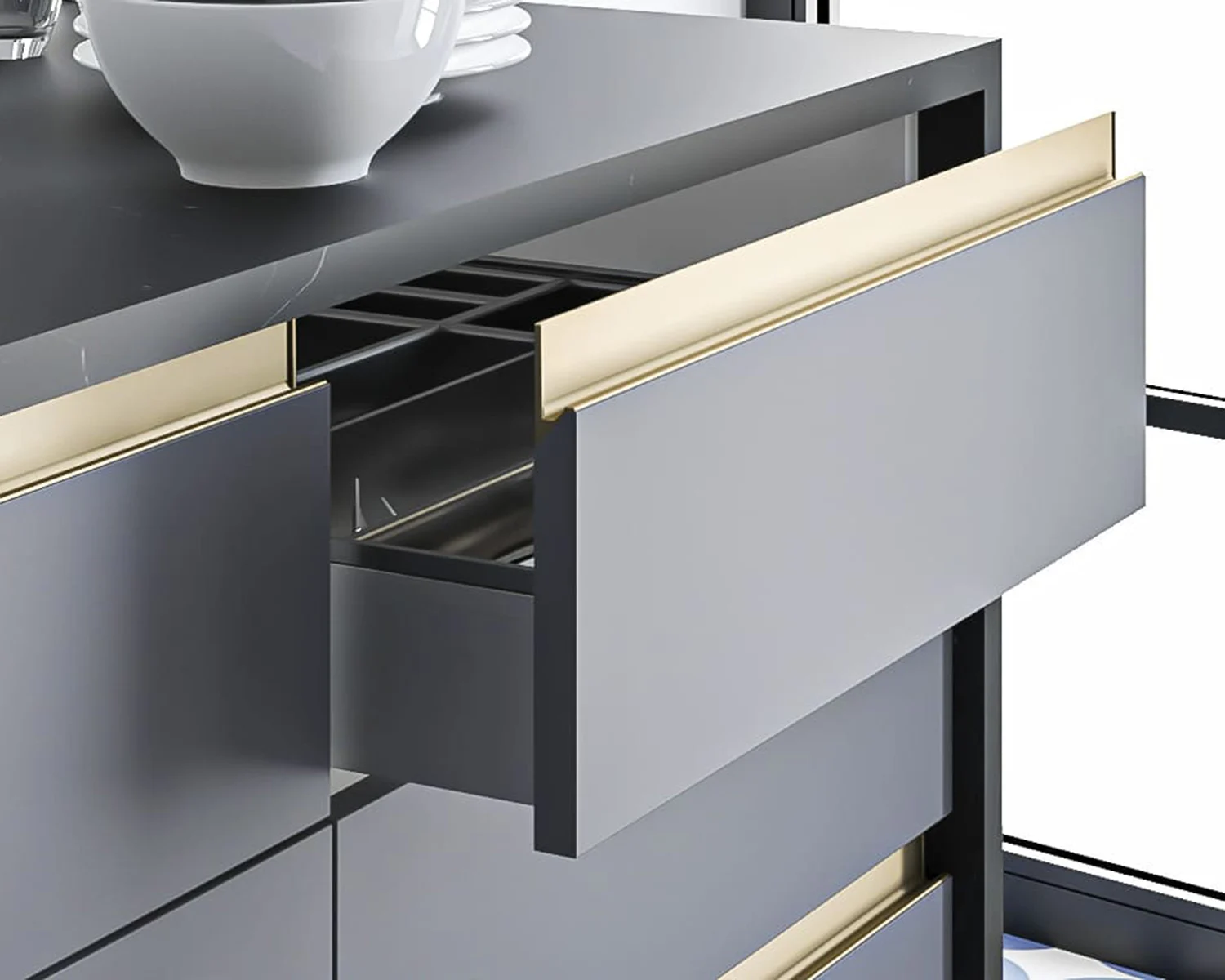
Profile handle specification sheet. Grip depth typically 12–20mm. Width 15–25mm. Edge radius determines comfort in daily use.
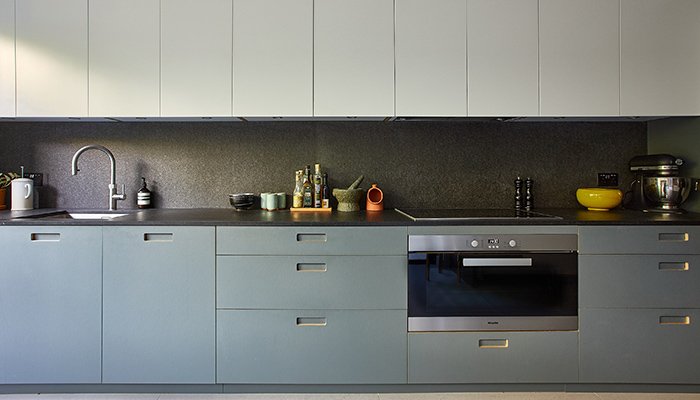
Grooved pull routed along the top edge of the panel. Door face stays completely flat. The grip channel is visible only at close range.
Hidden handle options
in German kitchens.
Hidden handle layouts use three main engineering routes. All work with standard German frameless carcasses and fit onto doors in the 18mm to 22mm range. The choice between them affects the visual detail, grip depth, and the finish options available.
Hidden handle fronts fit onto standard soft-close hinges and drawer runners. No specialist carcass modification is required. Service and replacement work is straightforward for any fitter familiar with German kitchen hardware.
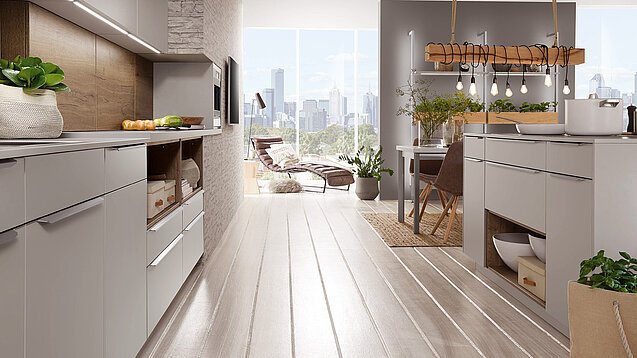
Applied profile. A slim metal lip wraps over the top edge. Profile available in aluminium, black, and stainless look.
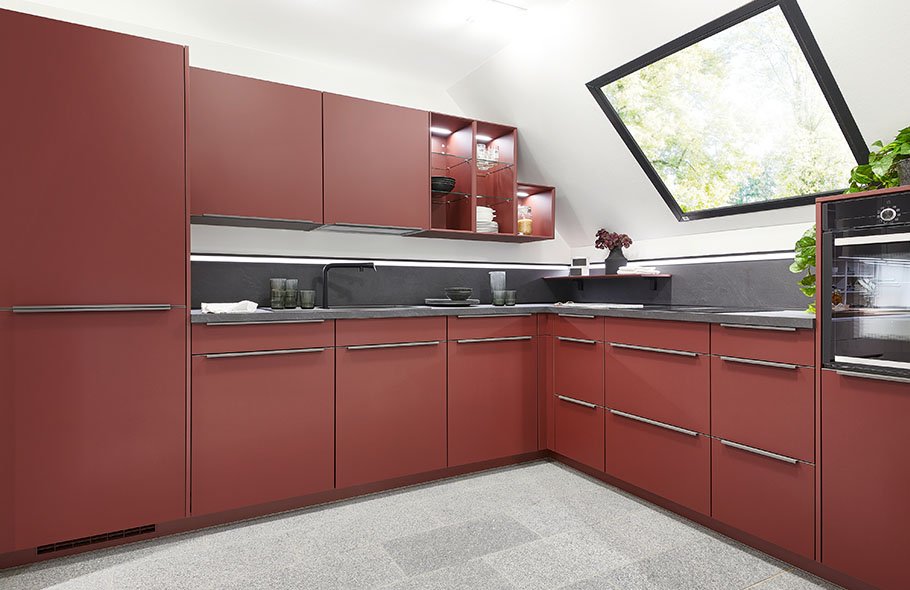
Integrated pull at worktop level on a contemporary layout. The profile line aligns across all base units and drawers in the run.
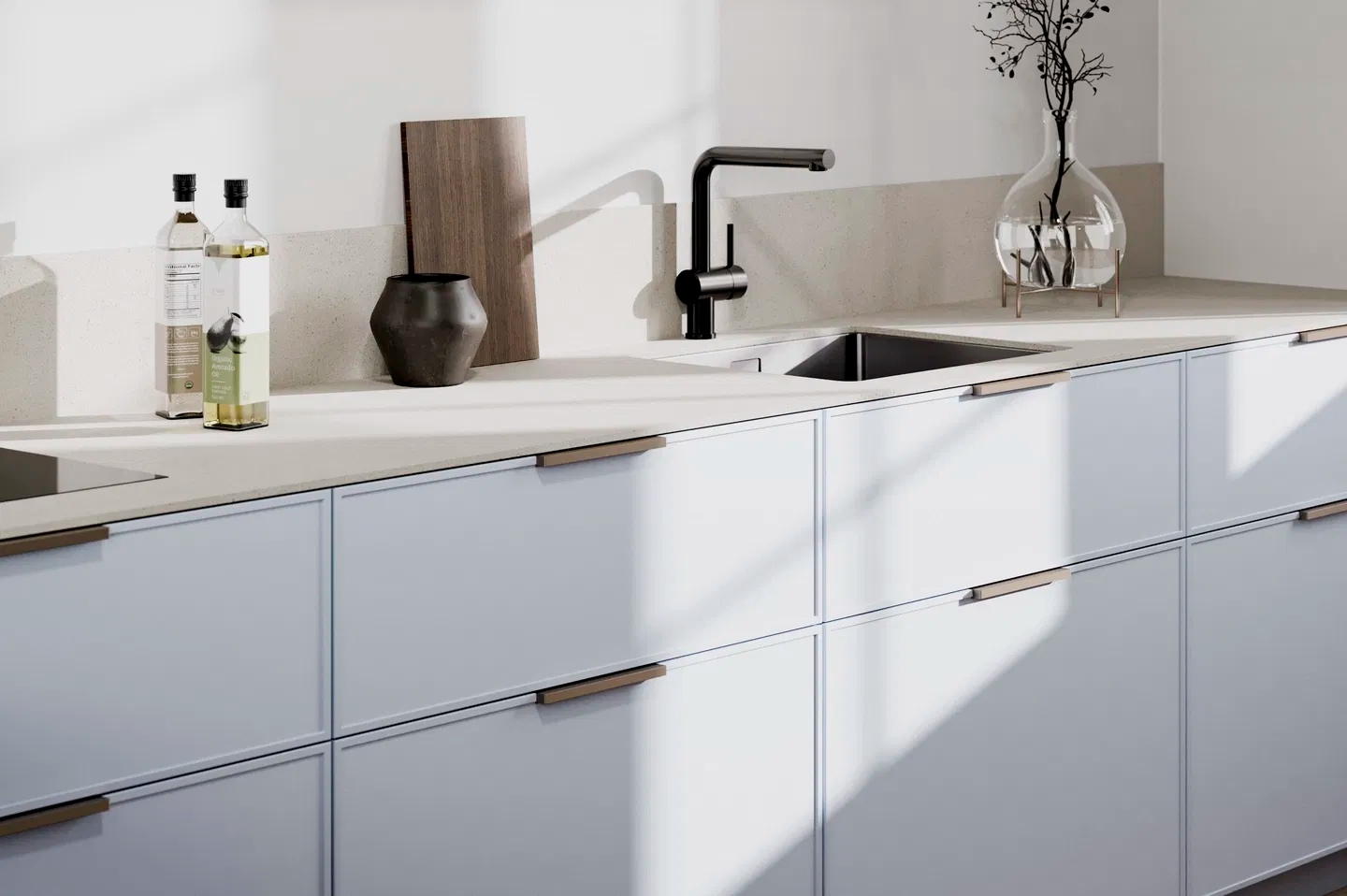
Slim profile handles on tall housings and base units. The handle line carries from floor-height drawers to full-height larder doors.
Comfort and daily use.
Daily comfort matters as much as appearance. Grip depth, edge shape, and handle position all influence how a hidden handle kitchen feels in practice. A profile that looks elegant in a showroom photograph needs to also feel secure when you are pulling a heavy pan drawer at speed or opening a tall integrated fridge one-handed while carrying shopping.
Grip depth and comfort. Most integrated pulls give space for one or two finger joints inside the lip or recess. This depth suits most adult hands and keeps the door panel structurally sound. In a showroom test both top-edge and side-edge grips. Check that your fingers do not scrape the door face or the worktop underside when pulling. A grip that requires unusual hand positioning causes fatigue over thousands of uses.
Handle position on tall units. On tall larder housings and integrated fridge freezers, the handle position influences effort and comfort significantly. A horizontal pull positioned around mid-height on a tall door often feels easier than a small pull at the very top. Good German designs position the grip where your hand naturally reaches rather than where the engineering is simplest to execute. Ask the designer to confirm handle height on tall units on the elevation drawing before the order is placed.
Family kitchens and multiple users. Integrated handles give a definite grip point that works for children, guests, and older users without instruction. Doors are straightforward to open and there are no corners projecting into walkways at hip height. This makes hidden handle kitchens a practical choice for busy households where a wide range of people use the kitchen daily.
Handle position on tall units determines comfort. A grip at mid-height on a full-height larder door reduces effort compared to a pull right at the top.
Test in the showroom at the right height. Open a tall integrated fridge door and a full-height larder in the same visit. The position and depth of the profile on these units matters far more than on a standard base drawer. If the showroom does not have tall units on display with the hidden handle profile you are considering, ask to see the elevation drawing with the handle height marked.
Design styles
for hidden handle kitchens.
Hidden handles occupy the middle ground between fully handled and handleless layouts. Many UK homes sit precisely in this position. Full handleless feels too sharp or too cold. Busy bar handles feel too prominent or too fussy. Hidden handle profiles give the visual restraint of the handleless aesthetic without the design commitment that true handleless or push-to-open demands.
Benefits and limits.
- Clean, modern fronts with less visual clutter than bar handles across the door face. The profile is present but subordinate.
- Clear grip points that are immediately intuitive for guests, children, and older users. No introduction required.
- No hardware projecting into walkways. Practical in narrow UK galley kitchens where bar handles catch clothing at hip height.
- Strong match with German frameless cabinet engineering and grid-based layout systems.
- Profile handles protect door edges from repeated fingernail contact. Reduces wear on lacquered and laminate finishes over the life of the kitchen.
- Wide choice of profile finishes. Brushed aluminium, black, stainless look, and brass allow the handle to connect with taps, worktop edges, and appliance trims.
- Integrated handle profiles sit above entry level in most German brand price lists. The profile hardware and accurate fitting add to the furniture cost.
- Very slim profiles feel less comfortable for users with larger hands. Profile selection matters and should be confirmed with a physical sample.
- Routed pulls remove material from the door edge. This places the grip area under more stress than a full-thickness panel and requires careful sealing to prevent moisture ingress at the channel edge.
- Grease and crumbs collect inside profiles and require regular wiping. More cleaning effort than a projecting bar handle where the underside is open and accessible.
- Retrofit work on existing doors is limited and receives little or no support from German hardware suppliers. This is a new-kitchen specification, not an upgrade to an existing one.
Many layouts specify hidden handles on base and tall units while wall units use push-to-open or a small pull in a matching finish. This mix keeps the overall run visually tidy while adding variation where the design benefits from it.
Hidden handles versus
handled and handleless kitchens.
Hidden handles sit between visible bar handles and full handleless systems. The table below gives a direct comparison across the four main handle routes. Dedicated pages on this site cover true handleless rail, J-pull, and push-to-open kitchens in full detail.
| Aspect | Hidden handle | Handled kitchen | True handleless rail |
|---|---|---|---|
| Opening method | Fingers hook behind an integrated profile on the top or side edge of the door front. | Grip a bar, knob, or pull handle fixed to the door face. | Fingers hook behind a continuous aluminium rail recessed into the carcass behind shortened door fronts. |
| Front appearance | Mostly flat door faces with a fine profile line visible at close range on the edge. | Handles project from the door face as a visible design feature. Bold visual contribution to the kitchen look. | Completely flat door faces with consistent horizontal or vertical shadow gaps at rail level. |
| Clarity for guests | Grip point becomes clear immediately when a visitor tries one door. The profile edge is tactile and obvious at arm's reach. | Immediate understanding. Handles project proud of the face and are visible from across the room. | Easy to follow once someone points out the rail gap. Less obvious to a first-time visitor than a physical handle or profile. |
| Risk of catching clothing | Low. Profiles sit close to the front surface and do not project into the room. | Higher, particularly with deeper bar handles in tight galley runs or around island corners. | Very low. No projections into the room from any surface. |
| Cleaning effort | Regular wiping inside the profile channel to clear grease and crumbs. A soft brush helps with corners. | Handles need wiping but the underside is open and accessible. Fewer hidden corners than a profile. | Quick wipe along the rail channel. Similar effort to a hidden handle profile. |
| Budget position | Mid to upper-mid within most German brand ranges. | Wide spread, from entry-level knobs to premium architectural bar handles. | Often comparable to or above hidden handles, due to the rail hardware and extra fitting precision required. |
| Best match | Homes wanting a modern, restrained look with an intuitive, unambiguous grip. Works in traditional and contemporary settings. | Homes where handles are a deliberate design feature and the visual contribution of hardware is part of the overall look. | Homes where strong continuous rail lines across long runs and integrated appliances are a design priority. |
Technical details
and sizing.
Care and longevity.
Cleaning profiles and grooves. Wipe inside profiles on a regular schedule with a soft cloth and a mild cleaner that is appropriate for the door finish. This clears grease, crumbs, and dust before they build up. A small soft brush lifts dirt from internal corners without scratching the profile surface or the door edge finish. This is a short routine when done regularly. Left for weeks it becomes a longer cleaning task and may require a stronger product that carries more risk to the finish.
Protecting edges. The door edge around a hidden handle profile is the most vulnerable surface in the kitchen. It is contacted far more frequently than the door face. Avoid abrasive pads and harsh solvents at the profile edge. Quality German systems use strong coatings and precision edge banding that hold up well with gentle care. The same area cleaned aggressively degrades quickly and the damage is difficult to repair on a lacquered surface.
Expected lifespan. Integrated handle profiles contain no moving parts beyond the fixing screws that hold them to the door edge. The profile itself does not wear out in normal use. With sensible cleaning and occasional screw tightening where needed, the profile lifespan matches the door and the carcass in most households. German profile hardware from recognised suppliers uses anodised or coated aluminium that resists tarnishing and discolouration over many years of use.
Routed pull maintenance. Routed channels in the door edge need the same regular wiping as applied profiles. The sealed edge of a routed channel is the most important area to keep clean and dry. Moisture at the cut edge of a lacquered or laminate door causes swelling and delamination over time if the sealing is insufficient or if moisture is allowed to sit. A quick wipe after cooking sessions and a weekly clean of the channel with a dry cloth keeps the routing in good condition.
Profile replacement. Applied profile handles are replaceable individually if a single section is damaged. This is easier than replacing a door on a fully frameless handled kitchen where the handle is the door's only closing mechanism. Confirm with your retailer whether the specific profile you are ordering will remain available for individual replacement over the warranty period. German hardware suppliers generally support their catalogue products for a minimum period, but confirm this in writing before the order.
The most practical maintenance reminder. Clean inside the profiles once or twice a week as part of the regular kitchen clean. Do not let grease accumulate in the channel. The product required to remove fresh grease is far gentler than the product required to remove weeks of accumulated grease. The former protects the finish. The latter degrades it.
Is a hidden handle kitchen
right for you?
- You want a modern, restrained kitchen look without committing to the full discipline of true handleless or push-to-open. Clean fronts with a clear grip point.
- The kitchen is used by a wide range of people: children, older users, guests. An unambiguous grip that works without instruction is the priority.
- The property has a mix of period features and contemporary fittings. Hidden handles work in traditional and modern settings without looking out of place in either.
- Walkway and passage space is tight. Removing projecting handles from hip height makes a meaningful difference in a narrow galley or a kitchen with a peninsula layout.
- You like the idea of handleless but prefer a visible grip confirmation rather than a rail gap or push mechanism that first-time users find unintuitive.
- You want the very strongest visual of the handleless family. True handleless rail delivers stronger continuous lines on long runs. Push-to-open delivers completely unmarked door faces.
- Handles are part of the design intent. A bold architectural bar handle, a decorative knob, or a period-appropriate pull contributes to the look of a handled kitchen in a way a hidden profile does not.
- You are not prepared to clean inside the profile channel regularly. Grease accumulation inside a narrow channel is harder to address than grease on a projecting bar handle where the surfaces are open.
- You have a very tight furniture budget. Hidden handle profiles sit above entry-level pricing in most German ranges and the accurate fitting adds to the installation cost.
Visit a showroom with multiple handle styles on display. Try a hidden handle profile on a base drawer and a tall unit. Then try a bar handle on the same units, a true handleless rail, and a push-to-open front. The comparison takes less than ten minutes and tells you far more than any guide. Also see the true handleless, J-pull, and push-to-open guides on this site before you book a design appointment.