Ovens. Choose the size and features that suit how you cook.

Kitchen Appliance Guides

Ovens.
Find your setup.

An oven looks simple until you start comparing models. Size, capacity, heating modes, and cleaning systems all change the day-to-day experience. Your kitchen layout matters too. A tall housing column suits a single oven, a compact oven stack, or an appliance tower. An under-worktop run often suits a built-under single or double oven.

Start with the oven type. Single ovens suit most households and fit the standard 60cm built-in space. Double ovens add two simultaneous temperatures in one appliance. Compact ovens save height and often combine with microwave or steam functions in a tower. Steam ovens add moisture control that changes the quality of reheating, fish, vegetables, and bread — available in both full-size 60cm and compact 45cm formats.

Then check the practical details. Look at usable cavity dimensions rather than headline litres alone, shelf positions, control style, and cleaning system. Confirm the electrical setup before ordering. Most built-in ovens need hardwiring to a dedicated circuit. Some connect on a 13-amp plug. Measure the housing niche and ventilation gaps before you choose the model.

Where to start
Pick the format first. Single, double, compact, or tower. The format determines the cabinet space required and what features are realistically available.
Measure the niche before ordering. Cutout height, width, depth, and ventilation clearances are in the installation guide, not the product sales page.
Check cavity dimensions against your trays. Litre figures mislead. Compare the internal width, depth, and shelf height against your largest roasting tin.
Confirm the electrical connection early. Hardwired cooker circuit or 13-amp plug. Know which applies before the kitchen installation date.
Oven type guides
Single, double, compact,
and steam.

Each guide covers everything you need for that oven type: sizes, installation, heating modes, cleaning systems, finishes, UK costs, and the pre-purchase checklist.
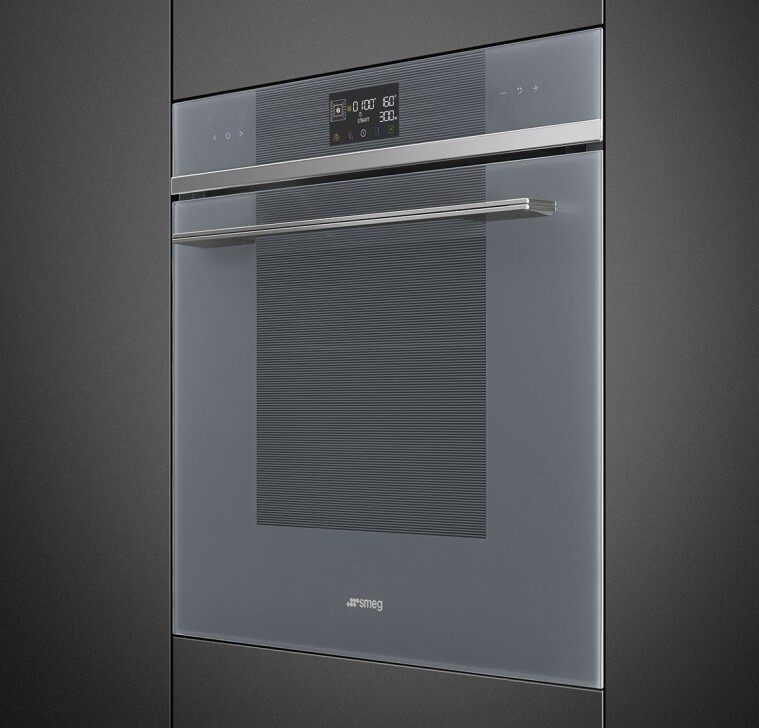
SMEG single oven showing the standard 60cm built-in format with stainless steel finish and large main cavity door
Most popular
Single oven
One large cavity. The mainstream UK choice. Widest selection of models, cleaning systems, and cooking modes across all price points. Fits the standard 60cm housing. The best base for an appliance tower.
Read the guide
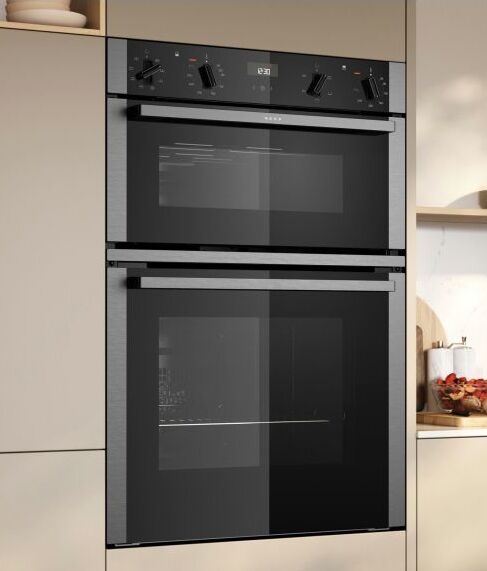
Neff double oven showing the two-cavity built-in format with a smaller top cavity for grilling and a larger main cavity below
Two temperatures at once
Double oven
Two separate cavities in one appliance. Each runs independently at a different temperature. The grill sits in the top cavity while the main cavity cooks at a different setting simultaneously.
Read the guide
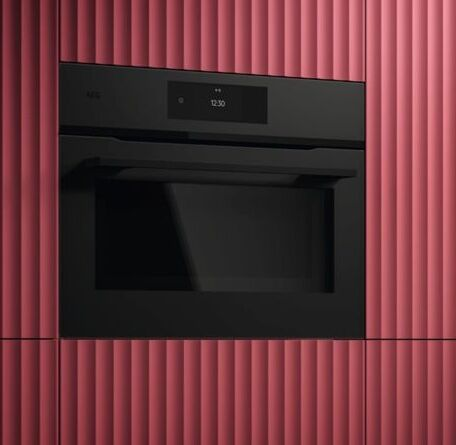
AEG compact oven in the 45cm format showing the eye-level position in an appliance tower with a clean front panel and compact door design
Second oven in a tower
Compact oven
45cm height. Stacks in an appliance tower above or below a 60cm single oven. Standard compact oven for baking and side dishes. Microwave combination versions add flatbed microwave functionality in the same niche.
Read the guide
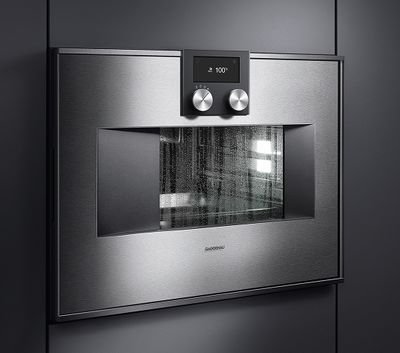
Steam oven showing the built-in format with steam functionality available in both full-size 60cm and compact 45cm niche heights for UK kitchen appliance towers
Steam, combi steam, regeneration
Steam oven
Available in full-size 60cm and compact 45cm formats. Full steam, steam plus hot air, and regeneration reheating modes alongside standard dry oven functions. Transforms reheating quality and produces better results for fish, vegetables, and bread.
Read the guide
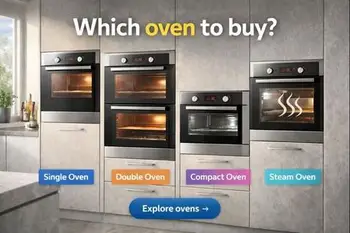
Which oven to buy guide image showing an appliance tower comparison with different oven format options for UK kitchen planning
Decision guide
Which oven?
Not sure which format suits your kitchen and cooking style? A five-question decision tool, six household scenarios with recommendations, appliance tower configurations, a budget guide, and a pre-purchase checklist.
Read the guide
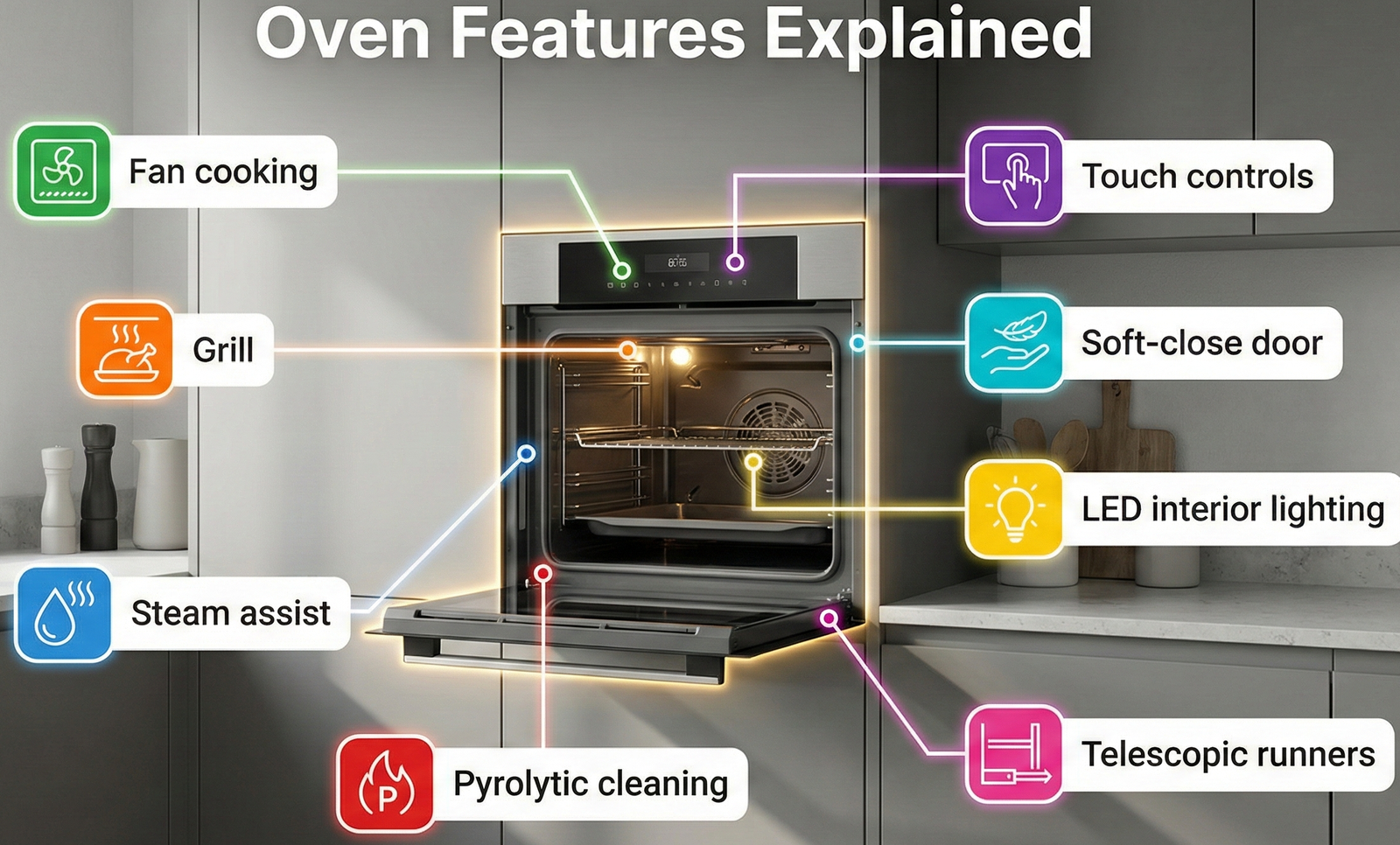
Oven features guide image showing the key specifications and cooking functions available across different built-in oven types for UK kitchens
Features reference
Oven features
Heating modes, cleaning systems, controls, and accessories explained. Understand what each feature does before shortlisting models. Covers fan, pyrolytic, catalytic, steam clean, telescopic rails, meat probes, and timers.
Read the guide
Also in this section
Warming drawers
Warming drawers hold food at serving temperature, warm plates before serving, and prove bread dough at low heat. They fit a 14–29cm niche in any appliance tower column. Most households who install a tower find a warming drawer more useful than it initially appears. The guide covers sizes, temperatures, installation, and which tower configurations they suit best.
Read the warming drawer guide
How to choose
Four steps to the
right oven.

Follow these four steps in order. Most buying mistakes happen when step one or two is skipped.

01
Fix the format
Single oven, double oven, or appliance tower. This is determined by your cabinet space and whether you need two temperatures simultaneously. Pick the format before looking at models. The format dictates what features are available and what price points you are operating in.
02
Measure the niche
Height, width, and depth of the housing niche from the installation guide, not the product sales page. Built-in and built-under double ovens are not interchangeable. Measure before ordering. Returning a built-in oven because it does not fit the niche is one of the most common and avoidable installation problems.
03
Check cavity dimensions
Compare the internal width, depth, and shelf height against your largest roasting tin, baking tray, and casserole dish. Litre figures alone mislead. A double oven with 100 litres total often has a main cavity smaller than a 75-litre single oven. What matters is whether your largest tin fits.
04
Confirm the electrics
Check whether the oven connects on a 13-amp plug or requires a dedicated hardwired cooker circuit. Confirm this before ordering and include any electrician costs in the total budget. A hardwired oven arriving on fitting day with no circuit in place means the oven cannot be connected.

The Which Oven? guide covers all four formats in a single comparison, a five-question decision tool, and appliance tower configurations for every combination. Read it before shortlisting models if you are still deciding between formats.