
The Complete Guide to Compact Ovens
Compact ovens suit modern UK kitchens where you want cooking at eye level. This guide covers sizes, types, features, cleaning, and the checks that prevent fitting mistakes.
What is a compact oven
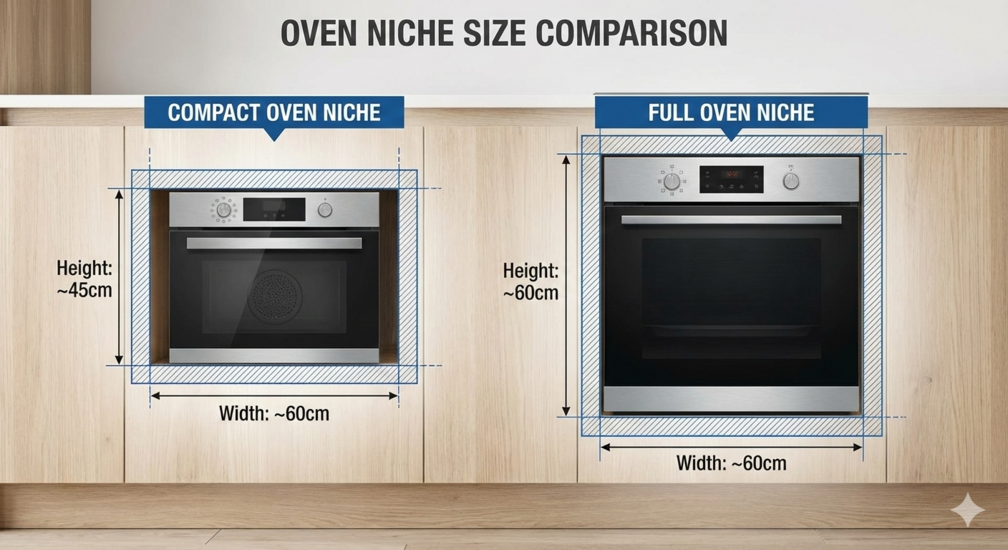
A compact oven is a shorter built-in oven designed for a 45cm tall appliance niche. A full size single oven uses a 60cm niche. This difference lets you stack appliances in a tall housing, such as a compact oven above a full size oven, or beside a warming drawer or coffee machine.
Compact ovens focus on convenience. You load trays at eye level, you check food faster, and you lift hot dishes with better control.
Good to know
Retailers often use the phrase combination oven for compact models that include microwave or steam. A standard compact oven uses the same core oven functions in a smaller cavity.
Quick choice guide
Choose a standard compact oven if
You already own a worktop microwave. You bake, roast, and grill in normal routines. You want the lowest purchase price.
Choose a compact oven with microwave if
You want microwave at eye level. You want one built-in unit instead of two appliances. You reheat often and cook smaller portions.
Choose a compact steam combination oven if
You reheat food and want it moist. You cook fish and vegetables often. You want better roast results with added humidity.
A compact oven will frustrate you if
You bake two large trays at once most days. You use extra wide roasting tins. You cook big family meals in one cavity.
Types of compact ovens
Compact ovens fall into three common types. The right one depends on your cooking habits and the space you want to save.
Standard compact oven
This is a conventional oven in a 45cm niche. You get fan cooking, conventional heat, grill, and defrost on most models. It suits couples, smaller households, and anyone adding a second oven in a larger kitchen.
Compact oven with microwave
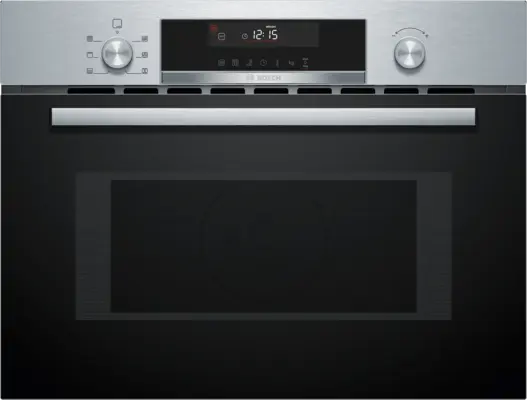
This type combines oven functions and microwave heating in one built-in unit. You use microwave only for reheating, oven only for baking, or a combined mode on selected programmes.
Some models use a flatbed design. Others use a turntable. Flatbed gives a clear floor space and easier wiping. Turntable designs still work well for everyday reheating.
Also worth knowing
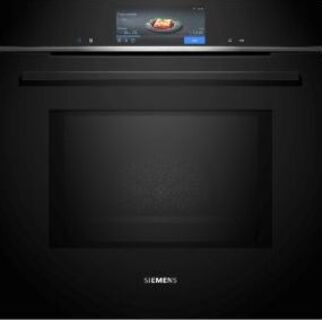
Some full size single ovens also include a microwave function. They use a 60cm niche, so you get more oven space than a compact combi. Example: Siemens iQ700 HM776G1B1B, SMEG SO6402M2B etc.
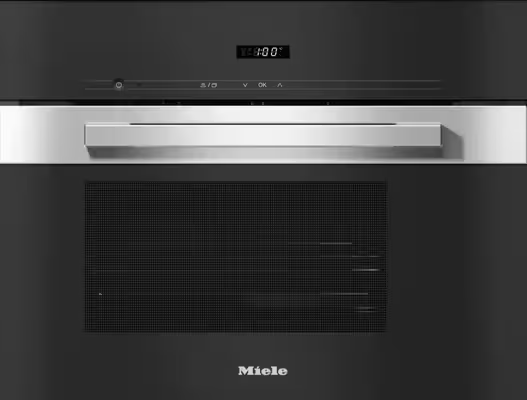
Compact oven with steam
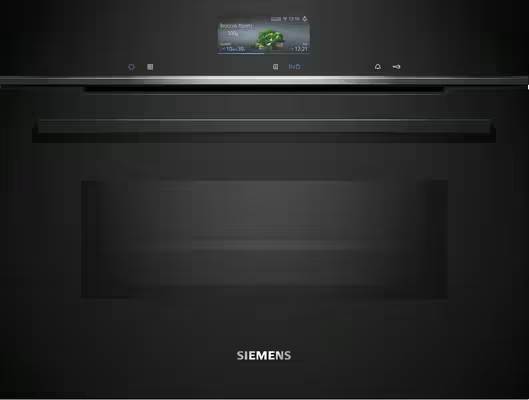
This type adds steam to oven cooking. Steam helps food stay moist. It also improves reheating because it reduces drying.
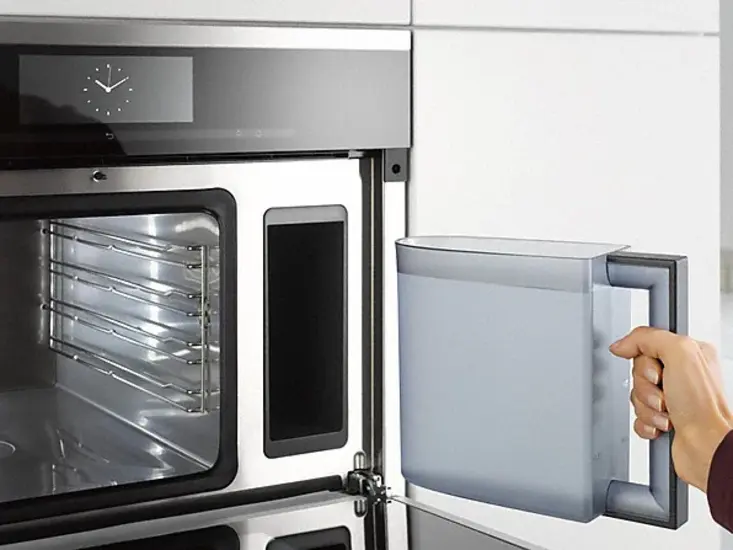
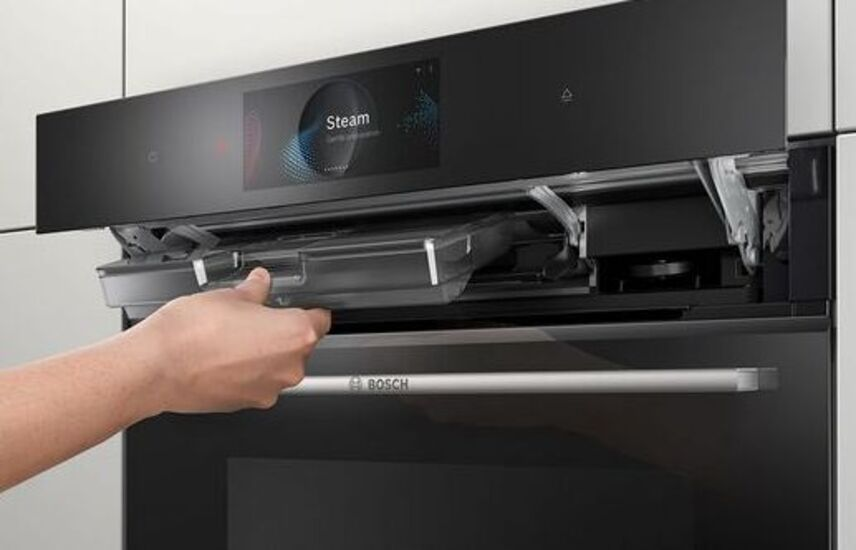
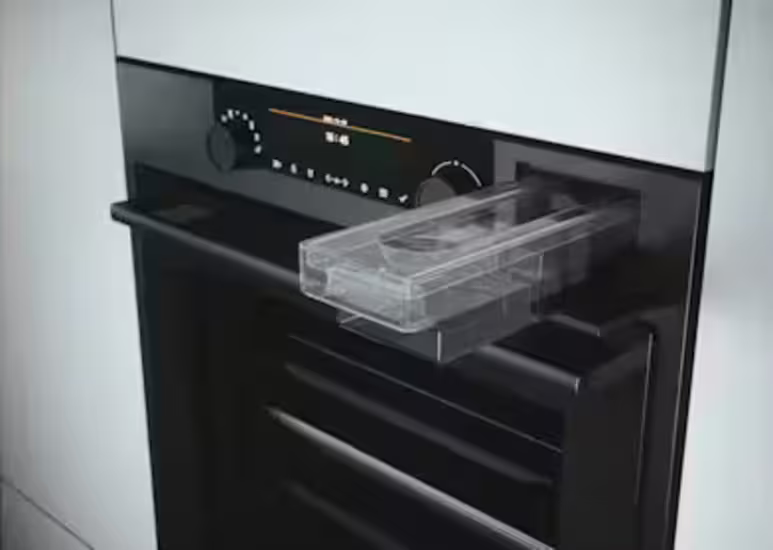
Most UK homes pick a tank model. You fill a removable water tank before cooking. Plumbed models suit frequent steam use but need planning during the kitchen build.
Recommendation
If you want one compact unit to cover oven and microwave, choose a compact combi microwave. If you want better reheating and moist cooking, choose steam. If you want simple value, choose a standard compact oven.
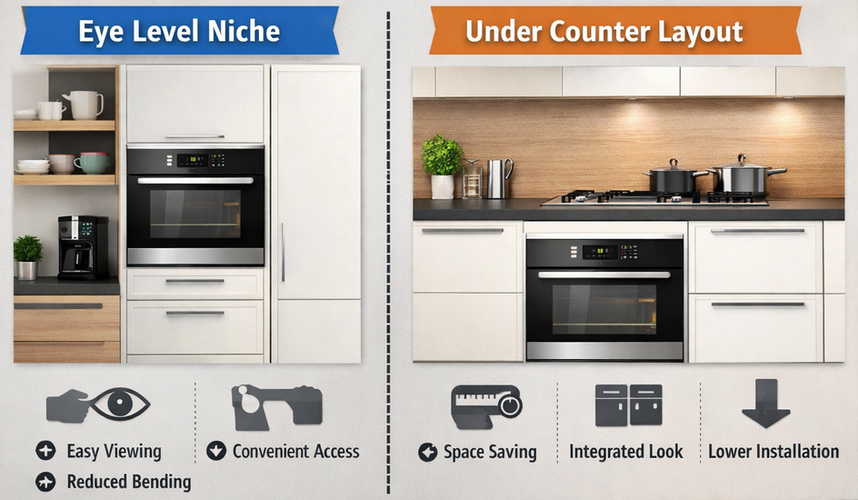
Built-in vs built-under
Compact ovens are built-in appliances first. Most 45cm models are designed for a tall unit at eye level. Built-under installation applies mainly to 60cm ovens under a worktop.
| Feature | Built-in (Eye level) | Built-under (Under worktop) |
|---|---|---|
| Typical use | Standard for 45cm compact ovens | Common for 60cm ovens. Limited options for 45cm models |
| Access | Easy loading and viewing | More bending and reaching |
| Best for | Appliance towers, safer lifting, faster checking | Traditional layouts with an oven under the hob |
| Planning risk | Lower when you follow the 45cm niche spec | Higher. You must match the exact model and furniture requirements |
Common mistake
People order a 45cm oven and assume it fits under a worktop. Check the installation diagram before you buy. The cabinet, ventilation, and door clearances differ by model.
Sizes, niche, and capacity
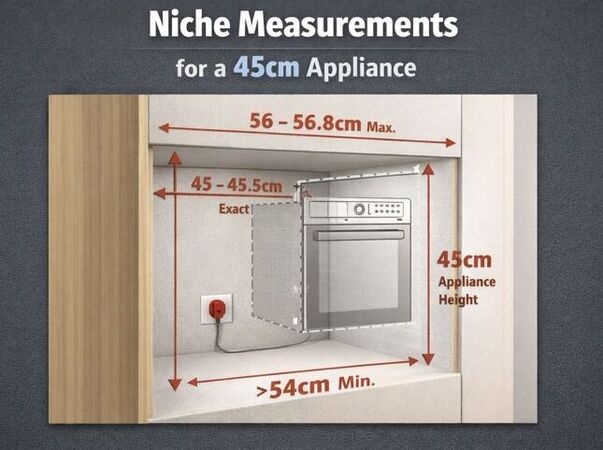
Buyers often mix up three measurements. Appliance niche, appliance outer size, and internal capacity. You need all three for a smooth install and useful cooking space.
| What you measure | Typical for compact ovens | Why it matters |
|---|---|---|
| Appliance niche (housing cut out) | H 450mm × W 560mm × D 550mm | Kitchen units are built to this. Check the exact diagram for tolerances. |
| Appliance front height | About 455mm to 460mm | The trim and door must clear shelves, worktops, and adjacent handles. |
| Appliance depth | About 545mm to 570mm | Depth affects how far the oven sits forward. Cable and plug need space behind. |
| Internal capacity | Often 35 to 50 litres | Capacity alone does not guarantee your trays fit. Check internal dimensions. |
Fit check you should do
Download the installation diagram and check niche tolerances. Then check depth allowance for the plug. If the plug sits directly behind the oven, it can stop the oven sliding fully into place.
What fits inside
Capacity in litres is hard to picture. Use tray sizes and shelf levels instead. This gives a clearer view of real day to day use.
Roasting tins
Many compact ovens suit a medium roasting tin. Measure your favourite tin first. Check internal width and shelf runner spacing.
Pizza and baking trays
Check the supplied tray size in the product spec. Some compact ovens use smaller trays than full size ovens.
Batch baking
Look at the number of shelf positions. More positions give better flexibility for multi shelf cooking.
Tall dishes
Check the distance between shelves. Some compact ovens feel tight for tall dishes and covered casseroles.
A simple check
Measure your largest roasting tin width and depth. Compare it with the internal dimensions in the product sheet. Do not rely on litres.
Fan cooking names
Brands use different names for fan cooking systems. You will see terms like 2D, 3D, or 4D. Treat these as brand labels, not a fixed standard.
| What you will see | What it means in practice | Who benefits most |
|---|---|---|
| Standard fan cooking | A rear fan and heater circulate hot air for even results | Most households. Roasting, baking, everyday cooking |
| Enhanced fan systems | Refined airflow design to reduce hot spots across shelves | People who bake across more than one shelf often |
Buying tip
Look for wording like even results on multiple shelves in the spec sheet. Then check how many shelf levels the cavity offers.
Key features to look for
These features change everyday use. Focus on the items that reduce effort and reduce mistakes.
Telescopic rails
Rails let you pull a shelf out smoothly. This helps when you baste, check baking, or lift heavy dishes. Look for rails on more than one level if you switch shelves often.
Keep warm and plate warming
A keep warm mode holds serving temperature without pushing food too far. Plate warming helps with timing and reduces heat loss at the table.
Full and half grill
Half grill suits small portions and uses less power. Fan assisted grill gives more even browning on thicker items.
App control
Apps offer timers, alerts, guided programmes, and remote monitoring on many systems. Check what the app does before you pay extra.
Combi microwave cavity style
Some models use a flatbed. Others use a turntable. Flatbed gives easier cleaning and more usable floor area.
Automatic programmes
Programmes reduce guesswork. You pick a food type and weight. The oven sets heat and time. This helps new cooks build confidence.
Beginner friendly features
Look for clear icons, a child lock if you have young children, and a food probe if you roast often.
Cleaning options
Cleaning affects how your oven looks and how it performs over time. Pick a method that matches your habits.
Pyrolytic self cleaning
Pyrolytic cleaning heats the oven to about 400 to 500°C and turns residue into ash. After cooling, you wipe the ash away. Cycles often run for 1 to 3 hours.
Catalytic liners
Catalytic liners absorb grease during cooking. Heat breaks it down over time. Liners do not clean the door glass or the oven floor.
Steam or vapour clean
Steam cleaning loosens residue. You add water to a tray, run a short cycle, then wipe the cavity. Best for light to medium dirt.
Easy clean enamel
Enamel interiors wipe clean more easily than rough surfaces. You still need routine wiping and occasional deeper cleaning.
A reality check on pyrolytic
Pyrolytic cycles use a lot of electricity in a short period. Steam cleaning suits regular upkeep.
Installation requirements
Three things decide the install plan. Power rating, plug or fixed wiring setup, and ventilation requirements in the cabinet.
Electrical connection
UK mains power is 230V. A 13A connection supports up to about 3.0kW. Many compact ovens sit close to this point, so check the rating in the product spec and confirm whether the oven arrives with a fitted plug.
| What you might see | What it means | What to plan |
|---|---|---|
| Plug supplied | Designed to connect to a 13A plug in normal setups | Plan a socket or fused spur that stays accessible |
| No plug supplied | Often needs a fixed connection | Plan a fused connection unit and an isolation switch |
| Higher power rating | Some models draw more than a typical 13A connection supports | Plan a dedicated circuit. Common on some pyrolytic models |
Fit and safety check
Do not place a bulky plug directly behind the oven. It can stop the oven sliding into the niche and it can pinch the cable. Follow the installation diagram for socket location.
Steam ovens. Tank vs plumbed
Steam models need water management. Tank models need space to remove the tank and a routine for cleaning it. Plumbed models need pipe planning.
| Water supply | Advantages | What you must plan |
|---|---|---|
| Removable tank | No pipework. Flexible placement. Easy to fill with filtered water | Tank access. Tank cleaning. Descaling routine based on water hardness |
| Plumbed connection | No refilling during cooking | Pipework position. Access for servicing. Filtration in hard water areas |
Colour options
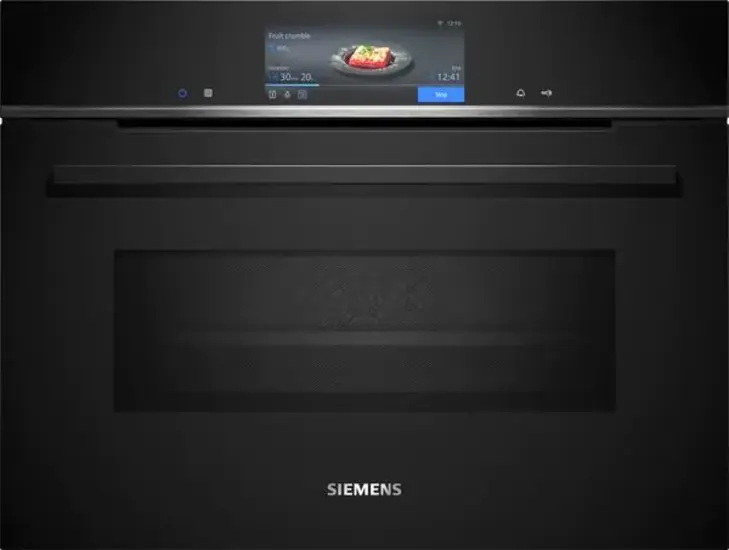
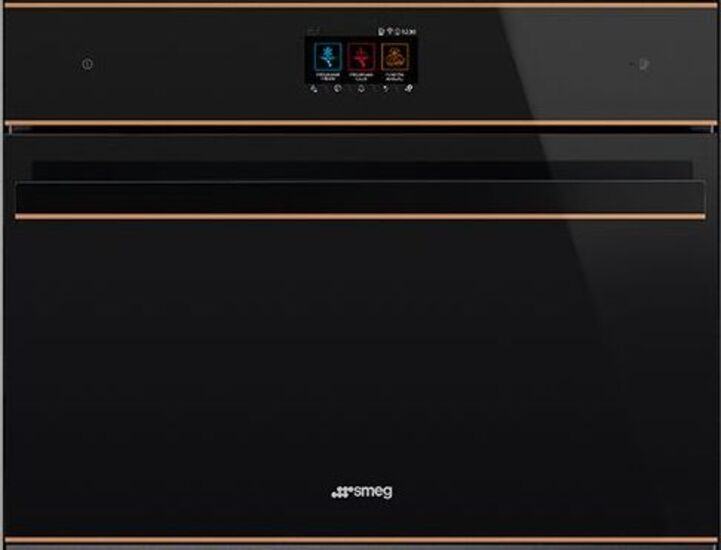
Most compact ovens come in a small set of finishes. Match the finish across your appliance tower for a clean built-in look.
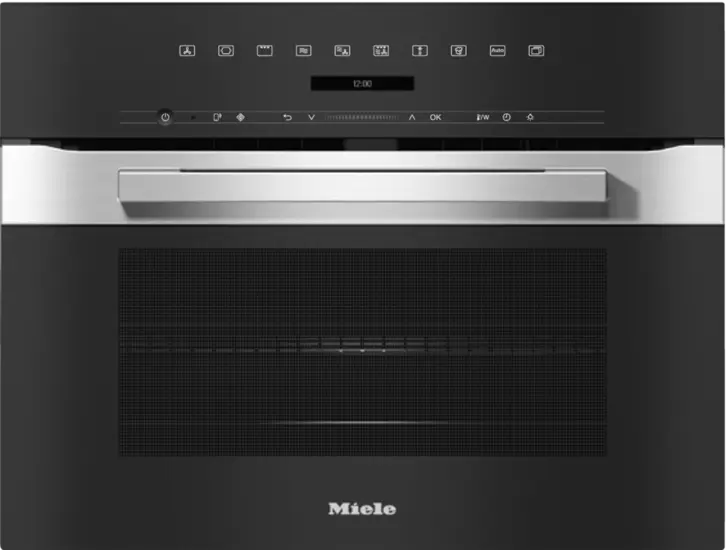
Stainless steel
Pairs well with other appliances. Look for anti fingerprint coatings if you want less wiping.
Black glass or black
Works well in dark cabinetry. Check sheen level under spotlights.
White
Brightens compact spaces. Availability is lower in premium ranges.
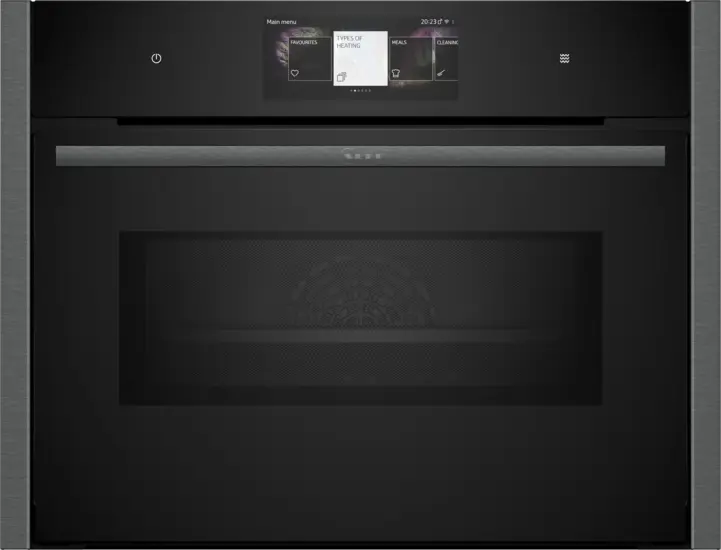
Grey tones
Names vary by brand. Compare samples before mixing brands in one tower.
Price guide
Price depends on type, build quality, cleaning system, and controls. Use these ranges as a simple starting point.
Budget
£250 to £450
Basic functions. Simple controls. Enamel interior. Best for light to moderate use.
Mid range
£450 to £900
Many combi microwave options sit here. Better screens. Guided programmes. Improved finish.
Premium
£900 to £2,500+
Many steam combination models sit here. Advanced airflow designs. Some pyrolytic cleaning. Higher grade materials.
Installation costs
Costs vary by wiring and access. Plug setups are usually simpler. Fixed wiring and new circuits cost more. Plumbed steam adds more work.
Buying checklist
Use this list before you buy. It prevents most fitting problems and buyer regret.
Explore other oven guides
Compare compact ovens with other oven types before you commit to a layout.
Continue your kitchen journey
Explore guides on hobs, extraction, worktops, and layouts to plan a kitchen that works day to day.