
The Complete Guide to Steam Compact Ovens
Steam compact ovens add steam to a 45cm built-in oven. You get gentle steaming, better reheating, and crisp roasts with a moist centre. This guide explains the modes, water options, limescale care, and the checks that prevent fitting problems.
What Is a Steam Compact Oven
A steam compact oven combines a compact built-in oven with a steam generator. It fits a 45cm appliance niche. Most models use standard oven heat, steam only cooking, and mixed steam plus hot air cooking.
People choose a steam compact oven for three reasons. Better reheating. Better texture in fish and vegetables. Better crust on bread and roasts.
Good to know
Brands use different names. You will see combi steam, steam combination, steam assisted, humidity, or added steam. The core idea stays the same. Steam adds moisture and control.
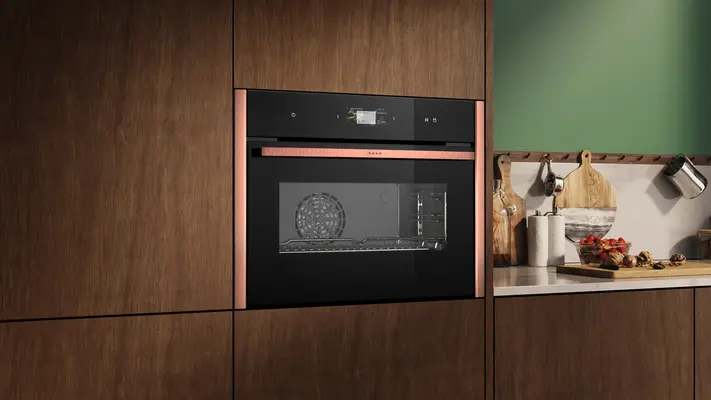
Quick Start Guide
Choose steam compact if
You want steam cooking without giving up your main oven space. You plan an appliance tower at eye level. You reheat food often and care about texture.
Choose full size steam if
You plan steam as your main oven for a busy household. You cook large trays often. You entertain and want one large cavity for steam use.
Tank or plumbed
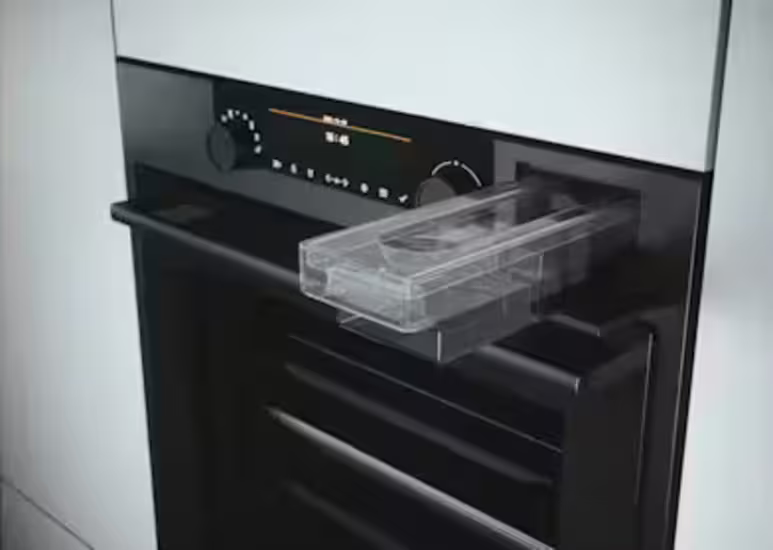
Tank suits most homes. It keeps the kitchen plan simple. Plumbed suits heavy steam use and needs plumbing planning during the build.
Best first meals
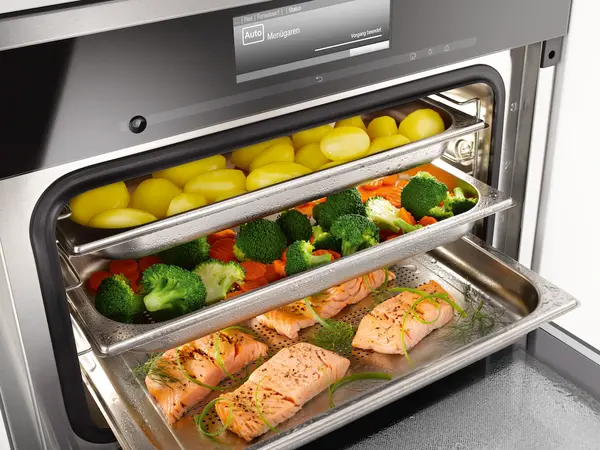
Steam vegetables. Steam salmon. Regenerate leftovers. Then try steam plus hot air on roast chicken and bread rolls.
Fast win
Use regeneration for leftovers. It delivers moist food and an even temperature without rubbery edges.
Food Quality Benefits
Steam cooking keeps food moist and gentle. It suits foods that dry out in a standard oven.
Moist texture
Steam reduces drying. Fish flakes better. Chicken breast stays juicy.
Better vegetables
Vegetables stay bright and tender. You keep more flavour than boiling in a pan.
Reheating that tastes fresh
Steam reheats food evenly. It avoids the dry edges many people dislike.
Roasts with better balance
Steam plus hot air helps crisp the outside while keeping the centre moist.
Best for
Fish, vegetables, rice, dumplings, reheating leftovers, bread rolls, and roast meats where you want moisture in the centre.
Steam Modes Explained
Steam ovens use a small set of core modes. Brand names vary. Results stay consistent.
Full steam
Often 40°C to 100°CSteam only cooking. It suits gentle cooking and precise reheating.
Steam plus hot air
Often 100°C to 230°CHot air browns the outside. Steam keeps the inside moist.
Regeneration
Often 80°C to 120°CA reheating mode designed for cooked food. It warms evenly and keeps moisture.
Dry oven modes
Often up to 230°C to 250°CFan cooking, conventional heat, grill, and defrost. You use these when steam adds no value.
Programme tip
Automatic programmes work well for beginners. Pick the food type and weight, then follow the tray and shelf prompts.
Full Size vs Compact
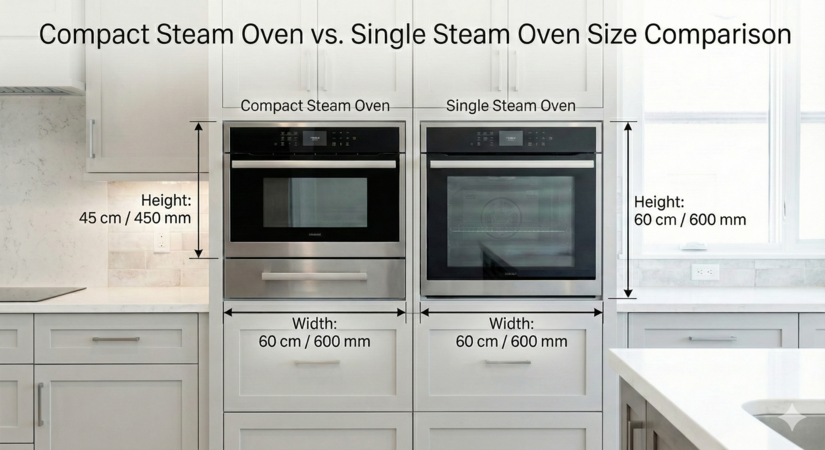
Both sizes cook the same foods. Capacity and layout decide the better match.
| Feature | Full Size Steam (60cm) | Steam Compact (45cm) |
|---|---|---|
| Height | About 60cm | About 45cm |
| Typical capacity | About 50 to 70 litres | About 30 to 45 litres |
| Best fit | Main steam oven for a busy household | Second oven or eye level steam in an appliance tower |
| Kitchen planning | Tall housing or under counter layout | Stacks easily with other compact appliances |
Water Supply. Tank vs Plumbed
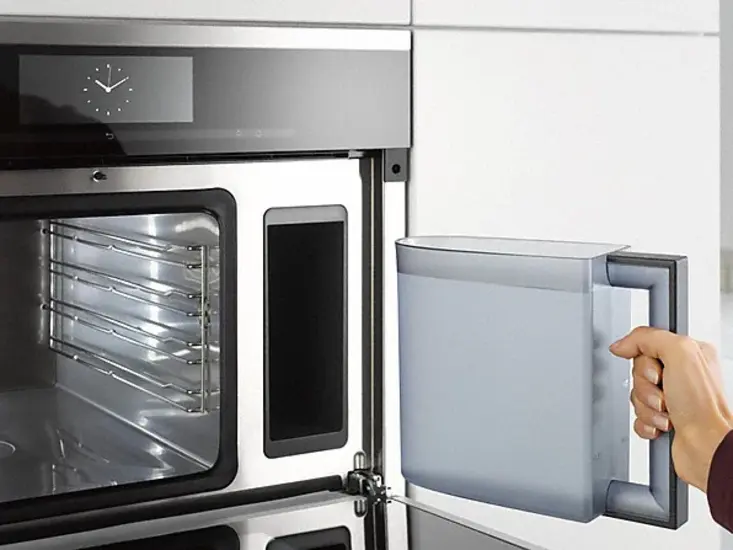
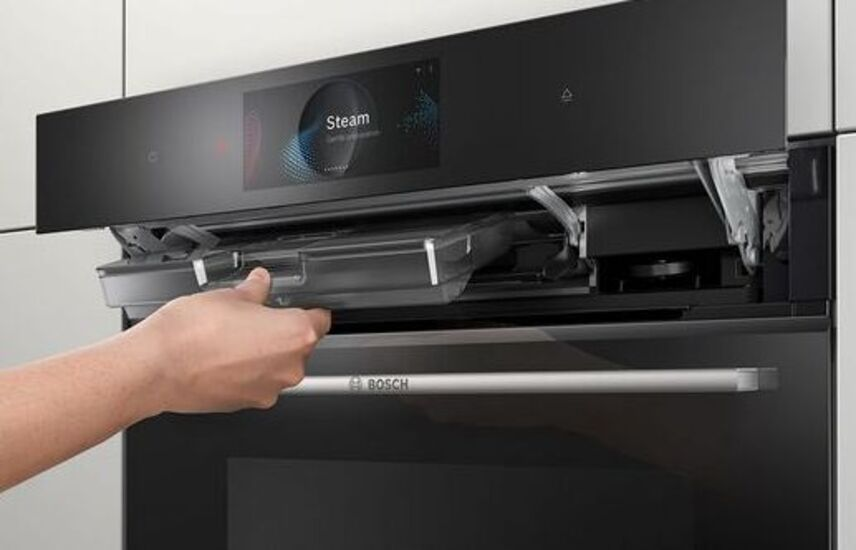
Steam ovens need water. Most homes choose a removable tank. Plumbed models suit heavy use and need planning.
Removable water tank
Common in UK homes
- Tank capacity often sits around 1.0 to 1.5 litres
- Fill at the sink before cooking
- No pipework required
- Flexible placement in your kitchen plan
- Easy choice in hard water areas with filtered water
Plumbed connection
Permanent water feed
- No refilling routine
- Fits heavy daily steam use
- Needs plumbing planning during the build
- Some models also manage waste water through a drain or collection system
- Water filtration often improves maintenance in hard water areas
Tank refill reality
A 1 litre tank often covers around 45 to 60 minutes of steady steam. Many everyday meals finish within that window.
Steam Safety
Steam burns skin fast. Treat the door opening like a kettle lid.
Open the door slowly
Crack the door first. Let steam rise. Then open fully.
Keep face and hands clear
Stand slightly to one side when you open the door. Use oven gloves for trays.
Mind nearby surfaces
Steam escapes when you open the door. Keep delicate surfaces away from the door opening zone.
Wipe after steam sessions
Condensation forms on the door and cavity. A quick wipe keeps seals cleaner.
Important
Do not place your head over the opening when you open the door after full steam or regeneration.
Steam for Better Bread
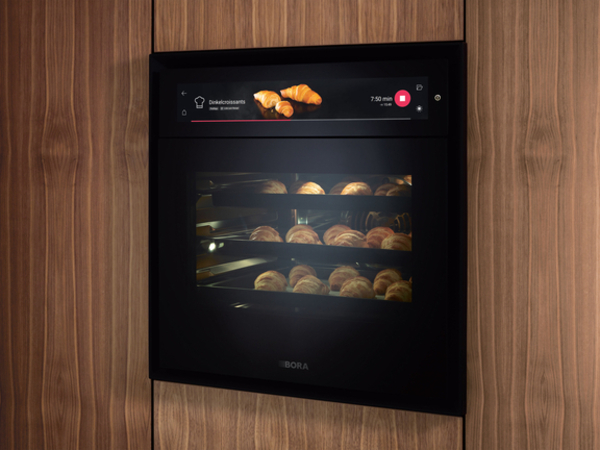
Steam at the start of baking keeps dough flexible. The loaf rises more. Then dry heat finishes the crust.
Start with steam
Use a steam burst at the start. It supports a bigger rise and a thinner crust layer.
Finish with dry heat
Reduce steam and finish with hot air. You get crispness and colour.
Use the bread programme
Many models include a bread programme that manages steam timing for you.
Start with rolls
Test steam baking with rolls and baguettes first. It builds confidence fast.
Bread baked with steam
Trays and Accessories
Steam ovens work best with the right trays. Most brands supply a starter set. Add a few extras for easier cooking.
Perforated tray
Steam reaches food from all sides. It suits vegetables, fish, and dumplings.
Solid tray
Use it for sauces and foods that release liquids. It also catches drips under a perforated tray.
Heatproof dishes
Use oven safe glass, ceramic, or metal. Avoid paper based containers in full steam.
Descaler and a filter jug
A filter jug reduces scale in hard water areas. Use a manufacturer approved descaler for the programme.
Simple tray setup
Put a solid tray under a perforated tray for fatty fish and meats. Cleaning stays easier and drips stay contained.
Limescale and Maintenance
Hard water leaves mineral deposits when it heats. Steam ovens heat water often, so scale builds faster than in a standard oven.
Use filtered water for tank models
Filtered water reduces the mineral load. It reduces scale buildup and keeps steam output steadier.
Run descaling programmes on time
Follow the oven prompts. In hard water areas, the schedule arrives sooner.
Empty the tank after cooking
Fresh water reduces odour and keeps the tank cleaner.
Wipe the cavity and door seal
A quick wipe removes condensation and prevents residue around the seal.
Important
Use a manufacturer approved descaler. Strong household acids risk damaging seals and internal parts.
Installation Requirements
Steam compact ovens fit a 45cm niche, like other compact appliances. Focus on electrical planning, rear clearance, and the door steam zone.
Electrical connection
Many models use a 13A plug. Some models need fixed wiring. Check the power rating in watts and confirm whether a plug comes fitted.
| Connection type | What it means | What you plan |
|---|---|---|
| 13A plug | Fits a standard UK socket setup when the model supplies a plug | Plan an accessible socket position that does not sit directly behind the oven body |
| Fixed wiring | Often used where the model ships without a plug or draws higher load | Plan a fused connection unit and an isolation switch in an accessible place |
Moisture and ventilation
Steam escapes when you open the door. Open the door slowly and stand to one side. Use good room ventilation during steam sessions.
Price Guide
Prices vary by brand, controls, and water system. Use these brackets as a planning guide.
| Level | Typical UK price | What you get |
|---|---|---|
| Entry | £800 to £1,200 | Core steam modes, tank system, smaller programme set |
| Mid | £1,200 to £1,800 | Broader programmes, stronger controls, better trays and rails on many models |
| Premium | £1,800 to £2,500+ | Advanced programmes, stronger build, app features on some models, plumbed options on selected ranges |
Ongoing costs
Plan for descaler, especially in hard water areas. Plan time for a wipe down routine after steam use.
Your Steam Compact Oven Buying Checklist
Use this list before you buy. It prevents the most common mistakes.
Essential checks
FAQ
Does a steam oven replace a microwave
Steam reheats with better texture. Microwave reheats faster. Many kitchens use both.
Does steam make the kitchen wet
Steam escapes when you open the door. Open slowly and use room ventilation during steam use.
Is a tank model enough
Tank models suit most homes. You refill before cooking and follow the low water alert.
What food shows the difference most
Leftovers, vegetables, salmon, roast chicken, bread rolls.
What maintenance matters most
Descaling on schedule and wiping the door seal area after steam cooking.
What is the biggest buying mistake
Ignoring the installation diagram. Socket placement and rear clearance cause most fitting issues.
Continue Your Kitchen Journey
Explore more guides on appliances, layouts, and planning details that shape daily use.