
Ceramic hobs.
The complete UK guide.
A ceramic hob uses electrical heating elements beneath a smooth glass-ceramic surface. When you activate a zone, the element heats up, transfers that heat through the glass, and the pan sitting on the glass warms from below. The glass surface becomes hot during cooking and remains hot for several minutes after the zone is switched off. The residual heat indicator light stays on until the surface cools to a safe temperature. Do not treat the surface as cool until the indicator clears.
Ceramic hobs look identical to induction hobs when both are switched off: a flat black glass surface with zone markings. The difference is the technology beneath. Induction uses electromagnetic coils that heat only compatible pans directly, leaving the glass cool. Ceramic uses radiant elements that heat the glass itself, which then heats the pan by conduction. This distinction has practical consequences for speed, safety, and energy efficiency that this guide covers in full.
The ceramic hob's main advantages are straightforward. It works with all cookware types, including copper, aluminium, glass, and ceramic pans that will not work on induction. It costs significantly less than an equivalent induction model. And it delivers the clean, modern flat-glass aesthetic of an upmarket kitchen at the accessible end of the price range. It is a valid choice for many UK households where induction's higher purchase price or cookware replacement cost is not justified.
How a ceramic hob works.
Beneath each cooking zone on a ceramic hob sits a heating element — most commonly a Hi-Light ribbon element — connected to the electrical supply. When you activate a zone and set the power level, electrical current flows through the element. The element heats up and radiates heat upward through the glass-ceramic surface. The glass conducts that heat to the base of the pan sitting on it.
The glass-ceramic material used for the hob surface is specifically chosen because it can withstand repeated thermal cycling — rapid heating and cooling — without cracking, and because it conducts heat effectively in the vertical direction while resisting lateral heat spread. This is why two adjacent zones can be at very different temperatures without one heating the other's pan.
The key practical consequence of this heat delivery method is thermal lag. Unlike induction, where energy transfer stops the moment the pan is lifted or the zone deactivated, a ceramic element remains physically hot after shutdown. The glass surface sitting above it retains that heat. A zone set to simmer and then turned off will continue to deliver heat to a pan left on it for several minutes. This residual heat is useful in some cooking techniques but demands attention to safety — particularly with children around.

A five-zone ceramic hob. The glass surface is identical in appearance to an induction hob when switched off. Zone sizes vary to suit different pan diameters.
Technology types.
What to look for in the specification.
Not all ceramic hobs are equivalent. The element type and zone configuration affect heating speed, energy use, and practical cooking capability. These are the terms to check on the specification sheet before purchasing.
Controls.
Touch or rotary. Know the practical difference.
Ceramic hobs come with two control types. Touch controls are the modern standard. Rotary dials remain common on models targeting the replacement market, particularly households upgrading from older freestanding cookers. The choice affects daily usability in practical ways beyond aesthetics.
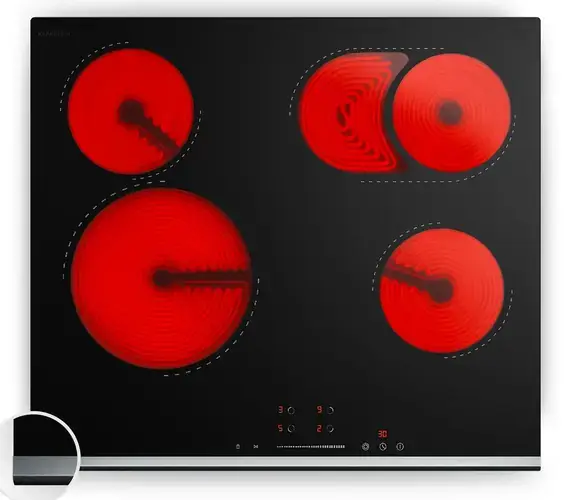
- Simple to clean — no gaps or recesses around control points
- Child lock function disables all zones with a long press
- Timers can be set per zone to switch off automatically
- Unresponsive if fingers are wet or the glass surface has standing water on it — dry hands and surface before use
- Can be activated accidentally if the surface is wet or if a cloth is left resting on the controls
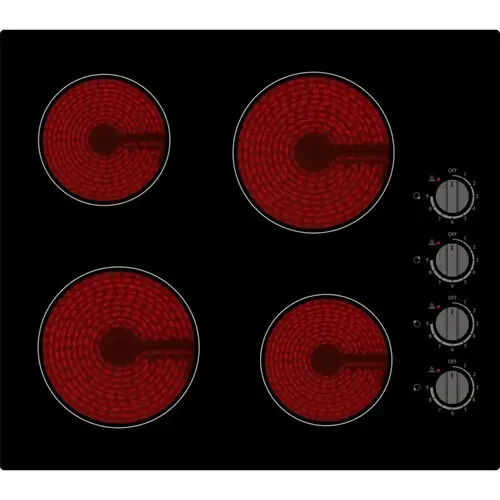
- Works reliably with wet hands — no capacitive sensor to confuse
- No accidental activation from resting objects on the hob front
- Instant visual indication of the current power setting from the knob position
- Grease and food residue accumulate around the knob base and require more cleaning effort than a flat touch strip
- Less common on modern models — available on the replacement and budget market
Timers matter more on ceramic than on induction. Because ceramic zones stay hot after switching off, a timer that cuts power to the zone at the end of a set period is genuinely useful for preventing overcooking. Look for a model where the timer switches the zone off rather than simply beeping. On many budget ceramic hobs the timer only alerts — it does not cut the power. Check the specification before purchasing.
Ceramic vs induction.
They look identical. They perform very differently.
Ceramic and induction hobs are visually indistinguishable when switched off. Both are flat black glass. Both have zone markings and touch controls on most models. The technology beneath the glass is fundamentally different. Understanding that difference is the most important decision in the hob buying process for most UK households.
| Aspect | Ceramic hob | Induction hob |
|---|---|---|
| Heat delivery | Element heats the glass. Glass heats the pan by conduction. Heat is generated in the glass surface itself. | Electromagnetic coils heat the pan base directly. No heat is generated in the glass. The glass stays cool away from the pan. |
| Heating speed | Moderate. Approximately 4–6 minutes to boil a litre of water from cold. The glass must reach temperature before heat transfers to the pan. | Fast. Approximately 1–2 minutes for the same task. Energy goes directly into the pan with no glass warming phase. |
| Energy efficiency | Approximately 65–70%. Energy is lost heating the glass and surrounding air. The hot glass radiates heat into the kitchen even when no pan is present. | Approximately 85–90%. Almost all energy enters the pan directly. Minimal ambient heat generated during cooking. |
| Surface safety | The glass surface becomes very hot during cooking and stays hot for several minutes after the zone is switched off. Burns are possible from touching the surface after cooking. Residual heat indicator required. | The glass surface stays close to room temperature except directly beneath the pan, where residual pan heat transfers back to the glass. Burns are significantly less likely. Surface cools much faster after cooking. |
| Cookware | Works with all pan types. Copper, aluminium, glass, ceramic, cast iron, and stainless steel all work without modification. | Requires induction-compatible pans with a ferromagnetic base. Copper, aluminium, and glass pans will not work without a bonded steel base. |
| Response to adjustment | Thermal lag. When power is reduced, the glass cools slowly and the pan continues to receive residual heat for several minutes. Simmering requires anticipation of this lag. | Instant response. Reduce power and the pan temperature drops immediately. Precise low-heat settings are consistent without managing residual heat. |
| Sugar spill risk | Hot sugar (jams, sauces, caramel) reacts chemically with the glass surface if left to cool. This causes permanent pitting. Must be scraped off immediately while the surface is hot. | Lower risk because the glass surface is cooler. Spills are less likely to bake on. Standard cleaning removes most residue. |
| Purchase price | Lower. Typically 30–40% less than an equivalent induction model at the same zone count and width. | Higher. The premium reflects induction technology, better safety characteristics, and significantly better performance. |
| Running cost | Higher per cooking session due to lower efficiency. The glass wastes energy as ambient heat during every use. | Lower per cooking session due to high efficiency. More of the electricity consumed goes directly into cooking the food. |
| Best suited to | Households where purchase price is the primary consideration, or where existing non-magnetic cookware collection makes induction impractical without full replacement. Also suits secondary cooking areas and rental properties. | Most primary kitchen installations where long-term running cost, safety, and performance are priorities. The standard specification in new German kitchen installations across the UK. |
The decision most people get wrong. Ceramic hobs appear cheaper to buy. Over a 10-year kitchen life, the lower efficiency of ceramic means it costs more to run than induction for the same cooking sessions. If you cook frequently, the running cost difference may exceed the purchase price saving within a few years. The right choice depends on your cooking frequency and how long you expect to keep the kitchen.
Standard sizes.
Electrical supply for wider models. Most 60cm ceramic hobs draw under 6kW and connect on a standard 13-amp socket. 75–80cm models typically draw 7–8kW and require a hardwired dedicated circuit. 90cm models often draw 9–10kW and require a higher-rated circuit. Confirm the electrical requirement with the hob specification sheet and a qualified electrician before purchase. The cost of a new circuit installation (approximately £200–£400) must be included in the total budget.
Benefits and limits.
- Works with all cookware. No pan replacement required. Your existing collection of copper, aluminium, glass, and ceramic pans all work without any modification or additional purchase.
- Lower purchase price than induction. Typically 30–40% less for the same zone count and width. The saving is real and significant at the entry and mid-range levels.
- Clean flat-glass aesthetic. Identical appearance to induction when switched off. Delivers the modern fitted kitchen look without the induction price premium.
- Simple installation for 60cm models. A standard 13-amp socket covers most four-zone ceramic hobs. No electrician visit required for the hob itself in most cases.
- Residual heat is usable. The heat retained in the glass after switching off a zone keeps food warm and allows gentle continued cooking without energy consumption. Experienced cooks use this deliberately.
- Slower than induction and gas. Boiling water takes 4–6 minutes on ceramic versus 1–2 minutes on induction. For households who cook frequently, this cumulative time loss is noticeable.
- Thermal lag on reduction. Turning down the power does not immediately reduce the heat the pan receives. Anticipating the lag is a learned skill. Sauces and delicate dishes require more attention than on induction.
- Hot surface after cooking. The glass stays dangerously hot for several minutes after shutdown. This is the principal safety concern for households with young children.
- Sugar spill risk. Any sugar-based spill must be removed immediately while the surface is hot. Leaving it to cool causes permanent chemical etching of the glass that cannot be polished out.
- Higher running costs than induction. Lower efficiency means more electricity used per cooking session. Over a 10-year kitchen life this may exceed the purchase price saving depending on cooking frequency.
Care and maintenance.
Get a ceramic hob scraper before the hob is delivered. A razor-blade scraper specifically designed for ceramic glass surfaces is an essential tool, not an optional accessory. Keep it in a drawer within reach of the hob. If a sugar spill occurs and you spend 30 seconds looking for a scraper, the glass may already be damaged. This is not an exaggeration — it is the most common cause of ceramic glass damage in UK kitchens.
UK cost guide.
These figures are indicative for 2025 and cover the hob unit only. Installation costs depend on whether an existing socket or circuit is already in place. Use them to understand where ceramic sits relative to induction before visiting a showroom.
At the premium ceramic price point, compare directly with induction. A £450 ceramic hob sits in direct competition with entry-level induction models. At that budget, the performance, safety, and efficiency advantages of induction may outweigh the remaining price difference, particularly if your cookware is already compatible. See the Induction Hob guide for the full specification comparison.
Is a ceramic hob
right for your household?
- Purchase price is the primary constraint and the budget does not reach induction at the same zone count and width.
- Your existing cookware collection includes copper, aluminium, glass, or ceramic pans and you are not in a position to replace them. Ceramic works with all of these without modification.
- The hob is for a rental property, secondary kitchen area, or utility room where performance and long-term running cost are secondary to low upfront cost.
- You cook at a low to moderate frequency and the running cost difference with induction will not accumulate to a significant sum over the life of the hob.
- Simple installation is important and you want a 60cm four-zone model that connects on an existing 13-amp socket without any electrical work.
- Safety is a priority — young children or elderly household members are present and the hot-surface risk of ceramic is a genuine concern. Induction's cool glass surface substantially reduces burn risk.
- You cook frequently. The efficiency advantage of induction compounds over high cooking frequency and may recover the purchase price premium within a few years of use.
- Cooking precision matters. Induction's instant response to power adjustments and consistent low-heat settings give significantly better control for sauces, reductions, and delicate work.
- Your cookware is already induction-compatible, or you are replacing a full kitchen and buying new pans anyway. The cookware replacement cost objection to induction does not apply in this case.
- You are specifying a primary kitchen with a 10+ year life expectancy and want the best long-term combination of performance, running cost, and safety.
Return to the Hobs guide to compare ceramic against all other hob types. The Induction Hob guide covers the full induction specification including glass surface finish options, sizes, and installation detail. The Hot Plate guide covers the solid plate electric hob at the entry level below ceramic.