
Handled Kitchens.
Practical, clear, and built to last.
A handled kitchen uses visible knobs, bars, or pulls on every door and drawer front. You grip the handle to open the cabinet. The principle is simple, immediate, and familiar for every age group. No mechanism to learn, no trigger zone to find, no rail to locate. The handle is exactly where it looks.
In German kitchen ranges, handled doors appear on Shaker, in-frame, contemporary slab, and classic modern styles. The door itself stays clean and flat. The handle provides the character, from slim brushed-aluminium bars to traditional brass cup pulls. The two choices are interdependent: door style and handle type are a single design decision, not two separate ones.
Handled kitchens take the wear that would otherwise go to the door finish. Oils and fingermarks accumulate on the handle rather than on the painted or lacquered door edge. Over the life of the kitchen this protects the finish and makes surface maintenance simpler. A handle swap ten years in refreshes the look without replacing the doors.
This guide covers handle types, design and pairing decisions, installation, costs, and how handled kitchens compare to the handle-free options available in the same German cabinet systems. See the true handleless, J-pull, push-to-open, and hidden handle guides on this site for the full picture across all five handle routes.
What is a handled kitchen?
A handled kitchen is the default format for most German kitchen ranges. Doors and drawers are fitted with knobs, bar handles, cup pulls, or edge pulls. The handle is a separate component screwed through the door front. The door itself carries no routing, channel, or modification. Two holes are drilled to the handle's fixing centres and the handle bolts through.
This is the most forgiving format in terms of future changes. The door is undamaged by the handle fixing. A different handle with the same fixing centres drops straight in. A handle with different centres requires new holes, but on most German doors this is a straightforward job with a drilling jig. The entire look of a handled kitchen refreshes with a handle change alone.
Handled kitchens work across the full range of German door styles. Contemporary flat-slab doors carry slim modern bars. Shaker doors suit traditional bar handles, cup pulls, and knobs. In-frame kitchens typically use knobs or smaller bar handles proportioned to the frame detail. The pairing of door style and handle type is a design decision that deserves the same attention as any other material choice in the kitchen.
For busy family kitchens, handled doors offer particular practical advantages. Children understand immediately how to open a door. Older users find handles more accessible than routed channels or rail gaps. Guests need no instruction. The kitchen functions without an introduction on the first visit.
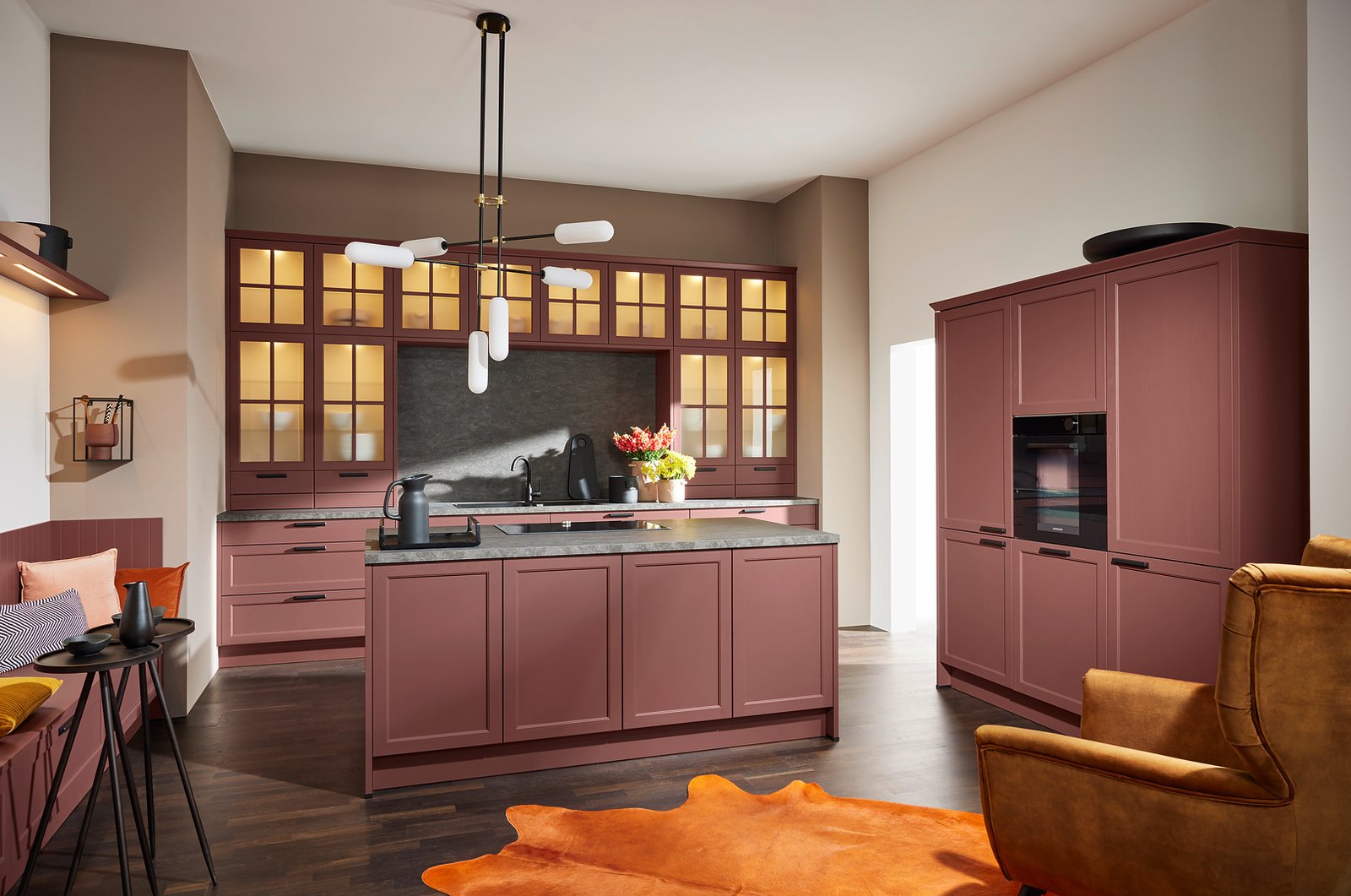
Bar handles on a contemporary German kitchen. The handle provides the detail. The door face stays flat and clean.
Handle types
used in German kitchens.
- Slim bars suit contemporary slab and flat-front German doors
- Heavier section bars suit Shaker and transitional layouts
- Specify bar length at approximately two thirds of drawer width for best proportion
- Best on smaller doors and wall units up to 400mm wide
- Often paired with cup handles on lower drawers for a balanced look
- Porcelain and glass knobs suit traditional and farmhouse styles
- Suits in-frame and Shaker door styles
- Typically paired with knobs on doors for a balanced set
- Not suited to very tall doors where a top-grip is needed
- Best on contemporary slab and flat-front doors
- Bridges the gap between handled and hidden handle kitchens
- Not suited to framed or in-frame door styles
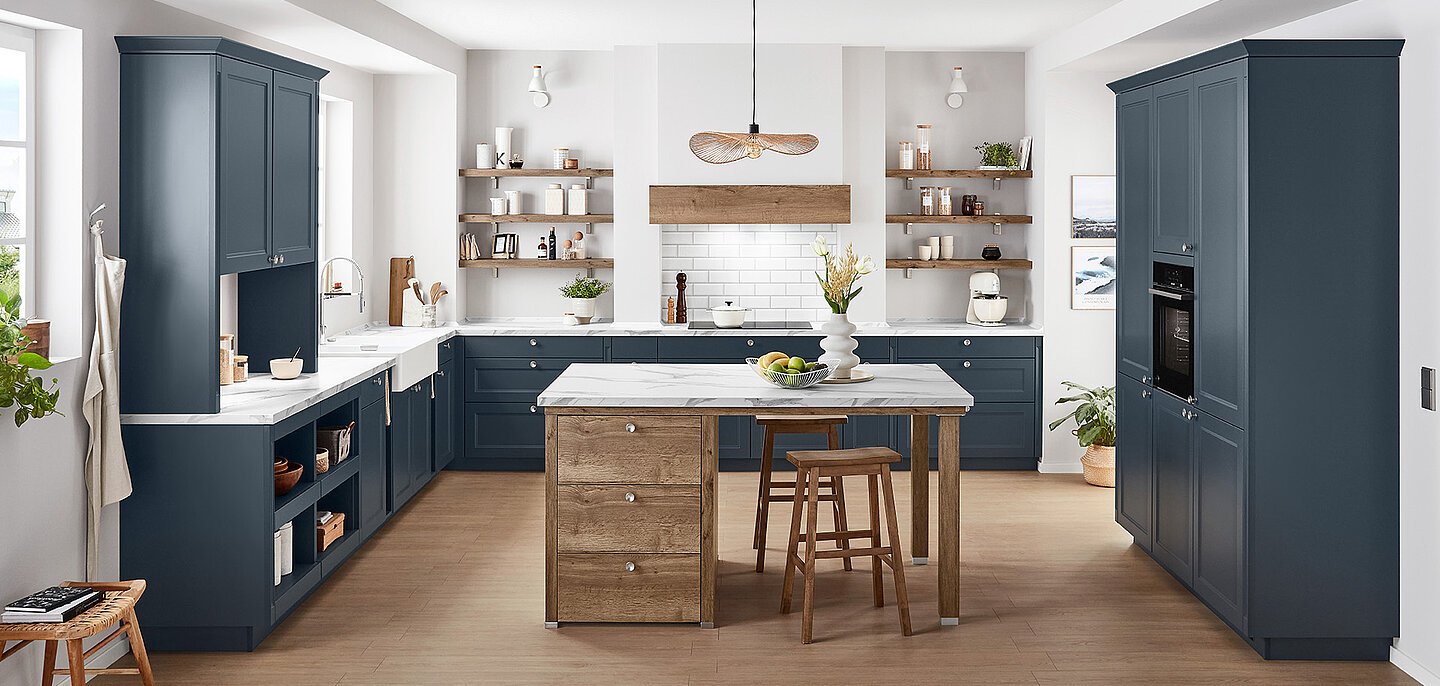
Bar handles on a contemporary slab run. Handle length at approximately two thirds of drawer width gives the best visual balance.
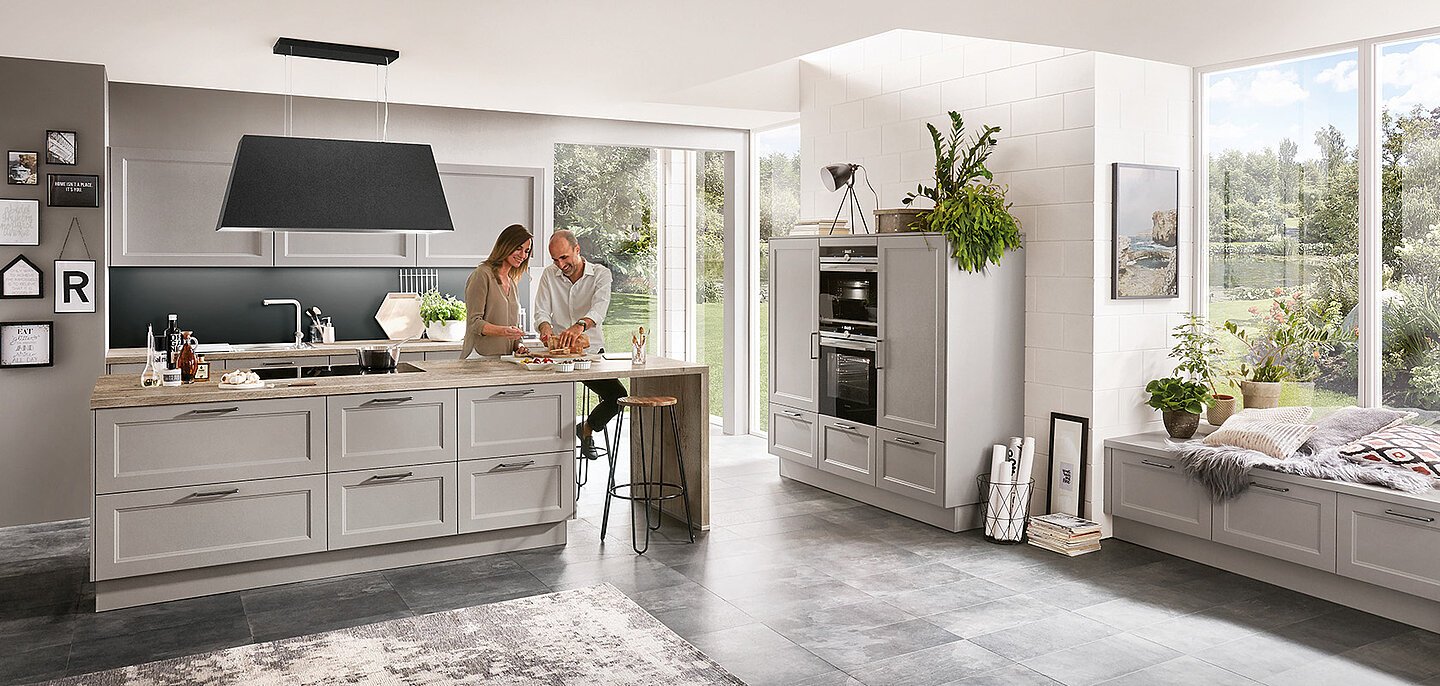
Cup handles on lower drawers paired with knobs on doors. A traditional combination well suited to Shaker and in-frame door styles.
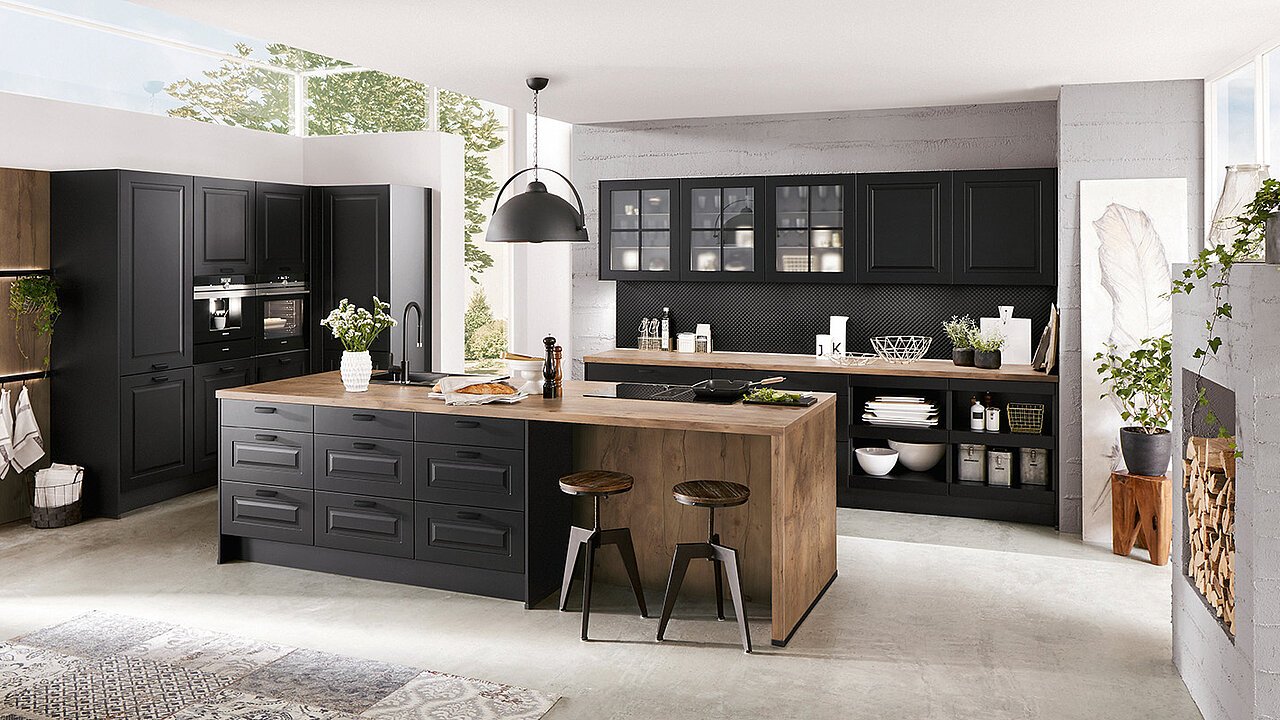
Slim bar handles in a dark finish on a contemporary layout. The handle introduces the detail. Everything else stays flat.
Handle and door style pairing.
One decision, not two.
Handle type and door style are a single design decision. A slim modern bar on a traditional in-frame kitchen looks incorrect. A cup handle on an ultra-flat lacquered slab front looks equally out of place. The pairing should be resolved together, not chosen independently and assembled later.
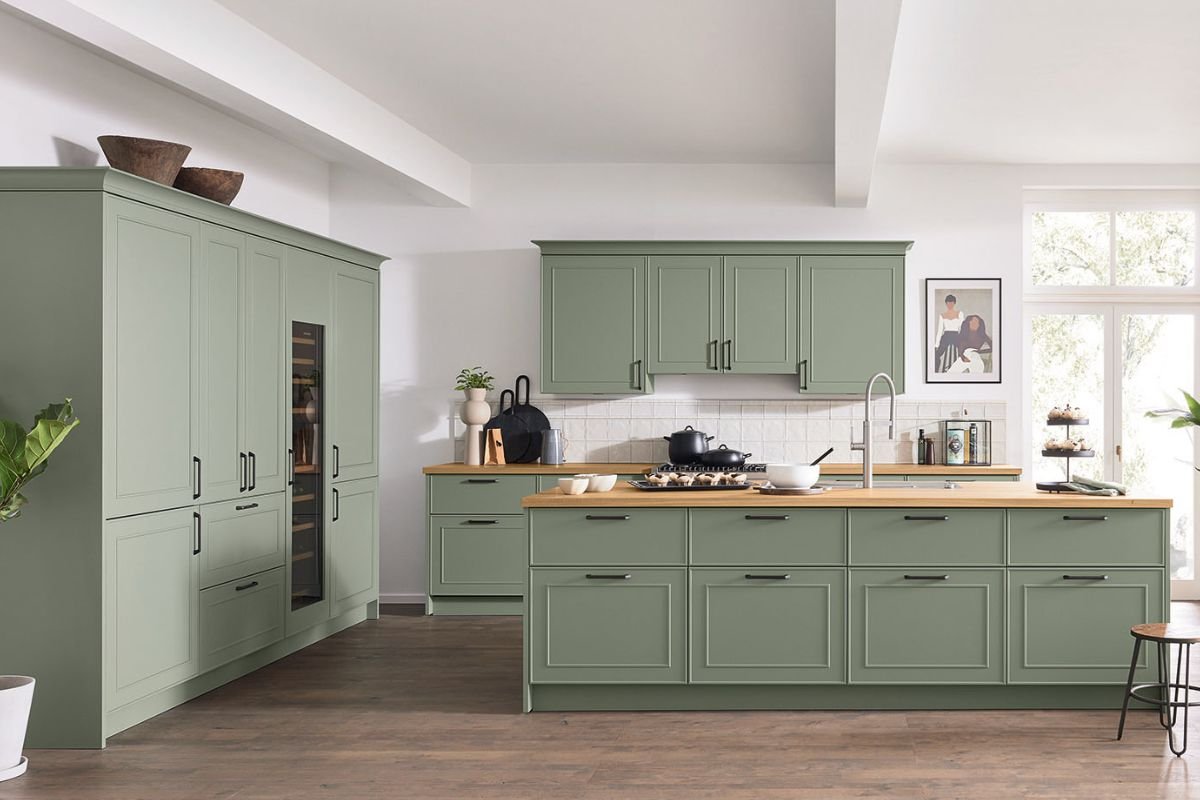
Skinny Shaker with slim bar handles. The narrow frame detail and the handle weight are matched. Neither dominates the other.
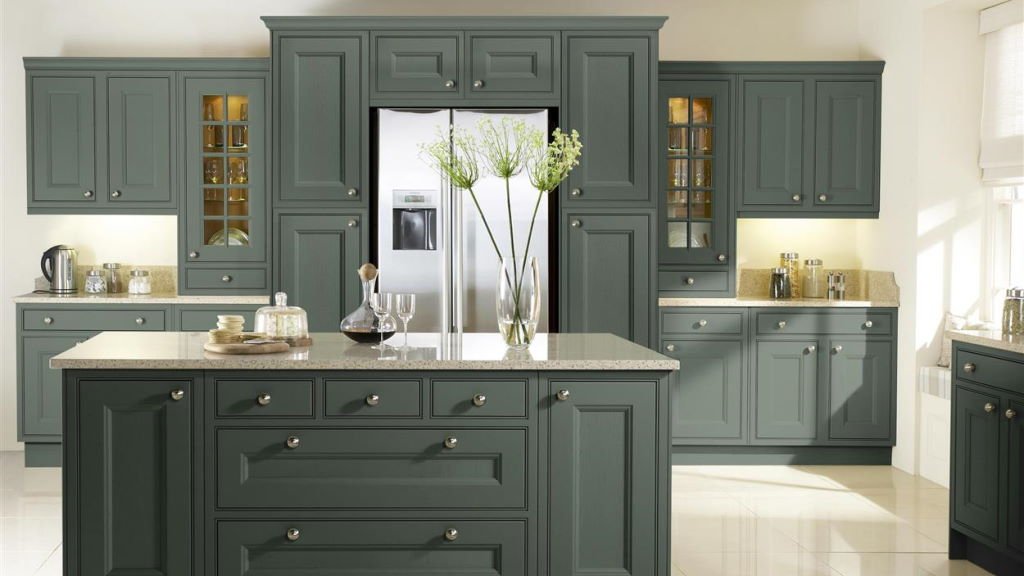
In-frame construction with knob handles. Smaller door areas within the frame require proportioned hardware. Long bars would dominate here.
Ask to see this combination on a printed elevation. Request a frontal elevation drawing with your chosen door style and handle type shown at scale. Stand back three to four metres from the drawing. Awkward proportions and mismatched styles are immediately visible from distance and very difficult to see in close-up showroom samples.
Benefits and limits.
- Immediately intuitive for every user. Children, guests, and older relatives understand how to open the kitchen on the first visit without instruction.
- Strong leverage on heavy doors. A long bar handle on an integrated fridge freezer or a wide pan drawer distributes pulling force along the full length of the grip. The heaviest door feels manageable.
- Handle takes the wear. Oils, fingermarks, and daily contact accumulate on the handle rather than on the painted or lacquered door edge. The finish lasts longer.
- Lower hardware cost. No special runners, profiles, touch latches, or servo drives required. The handle is the only additional component beyond a standard door and carcass.
- Design flexibility over time. Handle style and finish refreshed at any point by swapping the handles. The doors are undamaged and unchanged. No door replacement needed.
- Wide style range. From slim architectural bars to traditional cup pulls and knobs. The range of character available through handle choice is wider than any other handle-style route.
- Visual presence. In a small or very minimal space a large number of handles looks busy. Handles introduce a repeating element across every door and drawer front.
- Snag risk. Projecting handles catch clothing and bags in narrow walkways, galley passages, and around island corners. The risk increases with handle depth.
- Cleaning effort. Handles collect grease and fingerprints. Stainless steel and black finishes show marks quickly. The underside of bar handles accumulates grease in a way that flush surfaces do not.
- Style ageing. Certain handle shapes and finishes are closely associated with a specific period. A chrome bow handle reads as early 2000s. A choice made purely for current fashion may look dated before the kitchen does.
- Child safety. Young children sometimes use handles as climbing points on lower drawers and base unit doors. This places unexpected lateral and downward force on hinges and drawer runners.
A practical test before you decide. In the showroom, open and close a handled display with a shopping bag over your shoulder, or stand next to a buggy. If the handles catch, that kitchen will catch in daily use. If it feels comfortable, handled doors will work well in your household.
Design tips
for handled kitchens.
Handle size and proportion. Handle length needs to feel proportioned to the door or drawer front. Too small and the kitchen looks bitty. Too large and the handle dominates. A handle covering approximately one third to half the drawer width usually reads as balanced on German slab and Shaker fronts.
- —Doors up to 300mm wide: 96–128mm bar or knob
- —Doors 300–450mm wide: 128–192mm bar handle
- —Doors above 450mm wide: 192–320mm bar or two knobs
- —Pan drawers: handle approximately two thirds of drawer width
- —Wall unit handles: position towards the bottom edge, easy to reach
- —Base unit handles: position towards the top edge, away from knees
Alignment matters more than handle style. Consistent handle centres across all drawers and doors make a handled kitchen look calm and resolved rather than busy. Ask for a frontal elevation with handle positions marked before the doors are drilled. You see the alignment issues before installation at zero cost.
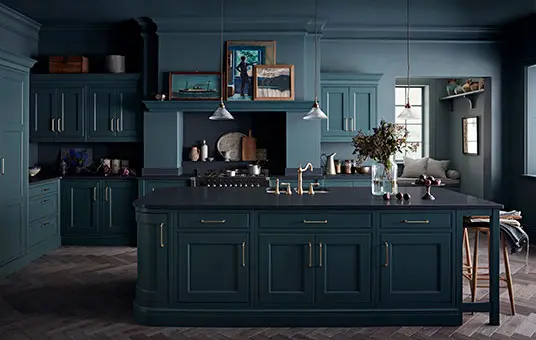
Consistent handle alignment across the full run. Handle centres aligned horizontally at the same height. The result reads as resolved, not busy.
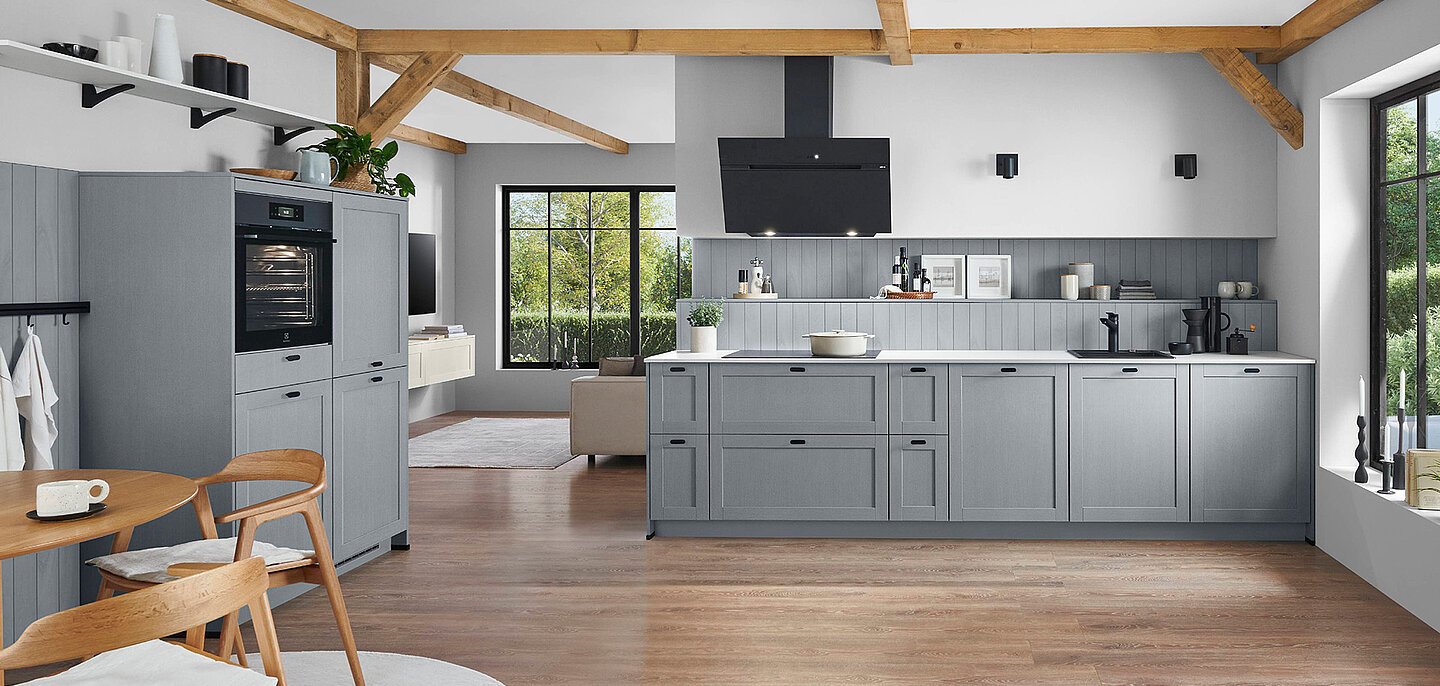
In-frame door style with proportioned handles. The frame detail and the hardware weight are matched at design stage.
Installation
and fitting considerations.
Care and maintenance.
Daily cleaning. Wipe handles with a damp microfibre cloth and mild washing-up liquid. Dry straight away to prevent water marks on stainless and black finishes. For brushed metals, wipe in the direction of the grain. This takes less than a minute and prevents grease from building up in the fixing screw recess and on the underside of bar handles where it is most difficult to remove.
Material-specific care. Stainless steel benefits from a specialist non-abrasive stainless cleaner from time to time to restore clarity and remove fingerprints. Brass and bronze handles divide into lacquered finishes, which remain stable and need only a gentle wipe, and living finishes, which patinate over time. Confirm with the supplier which type you have before applying any cleaner. Painted and timber handles need a soft cloth and gentle cleaner only. Avoid anything harsh near the fixing points.
Annual screw check. Once or twice a year go around the kitchen with a screwdriver and check all handle screws. Handles that have loosened slightly will rock when used. A loose handle places increased stress on the door material at the fixing point and accelerates wear. Tightening loose screws takes a few minutes and prevents unnecessary deterioration in the door finish around the hole.
Handle replacement. When a handle tarnishes, goes out of fashion, or is damaged, it swaps out individually. This is the primary maintenance advantage of a handled kitchen over any handleless route. A new handle in the same fixing centres fits without any modification to the door. A complete handle refresh across the kitchen takes one afternoon and changes the look entirely without touching the doors, carcasses, or worktops.
When to replace rather than clean. High-quality handles from German hardware suppliers have coatings designed to hold up over the kitchen's lifetime. If a handle finish dulls significantly despite regular cleaning, the coating has deteriorated or the wrong cleaning product has been used. At that point replacement is the right answer. The cost of one or two replacement handles is modest relative to the improvement in the overall kitchen appearance.
Living finishes on brass and bronze. Some brass handles are supplied with a deliberate patina programme built in. These are designed to change character over time and should not be cleaned back to their original appearance. Confirm with your supplier whether your specific handle finish is lacquered for stability or unlacquered for patination before applying any treatment.
Handle costs
in the UK market.
Handle cost is among the lowest line items in a kitchen project relative to its visual impact. The figures below are typical UK retail prices per handle. German-branded hardware and designer ranges sit at the upper end of each band.
| Handle type | Budget | Mid-range | Premium |
|---|---|---|---|
| Knobs | £2–£5 | £5–£15 | £15–£40+ |
| Bar handles 128–192mm | £3–£10 | £10–£25 | £25–£70+ |
| Long bars 320mm+ | £6–£15 | £15–£40 | £40–£100+ |
| Cup handles | £4–£10 | £10–£30 | £30–£70+ |
| Designer or branded | £15–£30 | £30–£80 | £80–£200+ |
Whole kitchen handle budgets. A typical UK kitchen uses 20 to 30 handles depending on layout. At mid-range pricing with a German kitchen, budget approximately £300 to £800 for the full handle set. Premium or designer handles on a larger kitchen can reach £800 to £2,000 or more. Budget handles on a basic kitchen run from £120 to £300.
Fitting costs. Handle fitting is usually included in a full supply-and-install German kitchen package. For independent fitting, allow £150 to £300 for a standard set. Higher where doors are high-gloss, require on-site jigs, or where the handle supplier requires specific drill speeds and backing materials.
A practical budget approach. Handles are among the lowest-cost items to upgrade at any point after installation. If the initial budget is tight, choose a solid mid-range handle now and plan a premium replacement in two or three years. The door and carcass quality is the fixed decision. The handle is not.
Handled kitchens
vs handle-free routes.
All five handle routes are available on German kitchen carcasses. The carcass specification, board quality, hardware, and warranty are identical regardless of the handle style chosen. The differences below are about the opening mechanism, visual character, and practical experience only. Dedicated guides on this site cover true handleless rail, J-pull, push-to-open, and hidden handle kitchens in full detail.
| Aspect | Handled kitchen | True handleless rail | J-pull / hidden handle |
|---|---|---|---|
| Opening method | Grip a handle fixed to the door face. Visible and immediately obvious. | Hook fingers behind an aluminium rail recessed into the carcass. Door face flat. | Groove or profile on the door edge. No separate rail or hardware on the carcass. |
| Front appearance | Handles project from the door face and are visible as an active design element across the run. | Completely flat door faces with a consistent shadow gap at rail level. | Mostly flat faces with a subtle groove or profile line visible at the door edge. |
| First-time use | Immediate. No instruction required. Every user understands handles from prior experience. | Easy once the rail gap is seen. Less obvious to a first-time visitor than a physical handle. | Clear once the profile or groove is noticed at arm's reach. |
| Walkway clearance | Handles project into the room. Risk of catching clothing in narrow layouts. | No projections. Maximum clearance in narrow passages and around islands. | Minimal projection. Low snag risk in tight layouts. |
| Heavy doors | Long bar handles give strong leverage on integrated fridges and wide pan drawers. | Full-length rail gives confident grip on heavy doors. Servo assist available on powered systems. | Shallow groove or profile gives adequate grip. Less leverage on the heaviest doors. |
| Design flexibility | Handle style and finish updated at any time without changing the doors. | Rail is a fixed element. Change requires rail replacement or full refronting. | Door-integrated. Change requires new door fronts. |
| Cost position | Wide range from budget to premium. No specialist hardware beyond the handle itself. | Higher than handled. Rail hardware, extra machining, and fitting precision add to cost. | Mid-position. Above handled at entry level, below true handleless rail in most ranges. |
| Best match | Busy family kitchens, traditional styles, properties used by a wide age range, or where future flexibility matters. | Contemporary open-plan spaces, long runs, strong linear design, and integrated appliances where a hardware-free aesthetic is the priority. | A mid-ground between handled and handleless. Clean look with a clear grip. More intuitive than true handleless for first-time users. |
Is a handled kitchen
right for you?
- You have a busy family kitchen used by children, older relatives, and frequent guests where intuitive, immediate operation matters more than a minimal aesthetic.
- You want the widest possible range of design character. From traditional knobs and cup pulls to slim architectural bars. No other handle route offers this breadth.
- You prefer to focus the kitchen budget on appliances, worktops, or internal storage rather than handle-free hardware systems and their associated installation complexity.
- You want the option to refresh the kitchen look in future without changing the doors. A handle swap takes an afternoon and costs a fraction of any alternative update.
- You are specifying a Shaker, in-frame, or traditional door style where visible hardware is part of the design intent rather than something to remove or conceal.
- You are designing a very minimal or gallery-style open-plan space where uninterrupted horizontal lines across the full run are a core design requirement.
- Walkway and passage space is very tight and projecting handles at hip height will regularly catch clothing or create movement problems in the kitchen.
- You are sensitive to visual clutter and prefer a completely flat, hardware-free face on every front. Push-to-open or true handleless deliver this more completely than any handled route.
- The kitchen is very compact and handles on every front would make the space feel visually heavier than it needs to be.
A handled kitchen with well-chosen hardware and good alignment is not a compromise. It is the most flexible, most accessible, and most practically forgiving route across all five handle options. The decision to go handled is as valid as any handleless choice. Use this guide alongside the true handleless, J-pull, push-to-open, and hidden handle guides on this site to make the comparison fully informed before you book a design appointment.