
Hot plate hobs.
The complete UK guide.
A hot plate hob — also called a solid plate or sealed plate hob — uses cast iron or steel discs as the cooking surface. Each disc sits proud of the hob frame and contains an internal electrical heating element. When the zone is activated, the disc heats up by resistive heating and transfers that heat directly to any pan placed on top of it. The disc itself is the cooking surface, not a glass surface above a hidden element.
Hot plate hobs are the oldest electric hob technology still in active UK production. They predate glass-ceramic surfaces by decades. The design is robust precisely because it is simple: no glass to crack, no electronics to fail, no sensors to clean around. A solid plate hob with a stuck dial is still usable. A cracked ceramic or induction glass surface is not.
The hot plate hob is not a design choice for a premium kitchen. It is a practical choice for specific applications: rental properties, utility rooms, student accommodation, secondary cooking areas, and households where budget is the primary constraint and aesthetics are secondary. This guide covers where hot plates make sense, the plate types available, how they compare to ceramic and induction, and the maintenance considerations that keep them functional over a long service life.
How a hot plate hob works.
A resistive heating element coils inside each solid plate disc. When you turn the dial, electrical current flows through this element. The element heats by electrical resistance — the same principle as a toaster or electric fire. This heat conducts outward through the cast iron or steel disc, bringing the entire surface of the plate to cooking temperature.
Heat transfer from the plate to the pan is entirely by conduction. The pan base must make direct physical contact with the plate surface. Pans with warped bases that do not lie flat against the plate transfer heat poorly and heat unevenly. Flat-bottomed pans that make full contact with the disc surface are essential for effective cooking on a hot plate.
The thermal mass of a solid cast iron plate means it retains heat for a long time after the zone is switched off. This residual heat is significantly greater than with a ceramic glass hob, where a thinner element beneath glass cools faster. On a solid plate, a switched-off zone continues to cook effectively for ten minutes or more depending on the plate size and the temperature it had reached. This characteristic makes precise heat control and timing difficult compared to ceramic or induction.
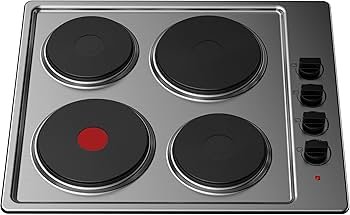
The solid cast iron plates sit proud of the hob frame. Each plate contains an internal heating element. The dial controls current flow through the element. The plate itself is the cooking surface.
Plate types.
Standard, rapid, and domino.
Three plate formats cover the UK solid plate market. The distinction between standard and rapid plates is the most important specification detail to check when purchasing.
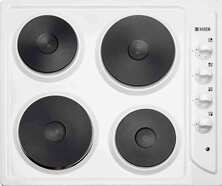
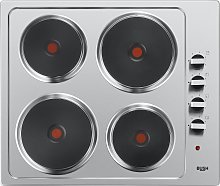
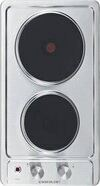
Standard sizes.
Electrical supply. Most 60cm solid plate hobs draw 6–7kW. Many connect on a standard 13-amp socket. Some higher-output models require a hardwired dedicated circuit. Check the wattage on the specification sheet before purchase. A standard plug connection is one of the practical advantages of the solid plate format over wider ceramic or induction alternatives.
Where hot plates
make practical sense.
A hot plate hob is rarely the right choice for a primary kitchen in a privately owned home where design and performance matter. It is specifically suited to contexts where the considerations are durability, low cost, minimal technology, and cookware compatibility. These are the applications where it genuinely performs better than the alternatives.
Not suited to primary owned-home kitchen specifications. If you own the property and are installing a kitchen with any meaningful life expectancy, ceramic or induction will give you better performance, lower running costs, and a result that does not immediately date the kitchen. The hot plate's advantages — low price, durability, plug-in installation, and universal cookware compatibility — are most relevant where performance is secondary to practical constraints. On a primary kitchen with a 10+ year specification, none of those constraints typically apply.
Hot plate vs ceramic
vs induction.
| Aspect | Hot plate | Ceramic | Induction |
|---|---|---|---|
| Cooking surface | Solid cast iron or steel plates sitting above the hob frame. No glass surface. | Flat glass-ceramic surface. Elements beneath the glass heat the glass which heats the pan. | Flat glass-ceramic surface. Electromagnetic coils beneath heat the pan directly, not the glass. |
| Heating speed | Slowest of the three. Standard plates take 5–8 minutes to reach full output. Rapid plates improve this but remain slower than ceramic. | Moderate. Hi-Light elements reach cooking temperature faster than solid plates. Approximately 4–6 minutes to boil water. | Fastest. Energy enters the pan directly. Approximately 1–2 minutes to boil the same volume of water. |
| Thermal response | Poorest. High thermal mass means very slow response to power reduction. The plate stays hot long after the zone is turned down. | Moderate lag. The glass surface retains heat after power reduction but cools faster than a solid plate. | Instant. Reduce power and the pan temperature responds immediately. No residual heat in the glass. |
| Energy efficiency | Lowest. The discs radiate heat in all directions. Significant energy wasted into the kitchen environment. | Approximately 65–70%. Heat lost through the glass to surrounding air. | Approximately 85–90%. Almost all energy enters the pan directly. |
| Surface durability | Highest physical durability. Solid iron plates will not crack from impact. Can rust if neglected. | Glass surface scratches and can crack from impact or thermal shock. | Glass surface scratches and can crack from impact or thermal shock. |
| Cookware | All pan types. No requirements. | All pan types. No requirements. | Magnetic-base pans only. Copper, aluminium, glass pans will not work. |
| Cleaning | Most demanding. Food bakes onto raised plates. Plates must be removed and scrubbed individually. | Flat glass wipes clean with a cloth. Sugar spills must be removed immediately while hot. | Flat glass wipes clean. Spills less likely to bake on as glass stays cooler. |
| Safety | Plates reach very high temperatures and stay hot long after shutdown. Higher burn risk than ceramic. No residual heat indicator on most budget models. | Glass surface hot during and after cooking. Residual heat indicator required and fitted on all UK models. | Glass surface stays cool away from active zones. Lowest burn risk of the three. Auto shut-off standard. |
| Purchase price | Lowest. Entry level below £100. Most budget models under £200. | Mid-range. Entry level from approximately £80. Good models from £200. | Highest. Entry level from approximately £250. Good models from £400. |
| Running cost | Highest per cooking session. Lowest efficiency means most electricity used for the same cooking task. | Mid-range running cost. Better efficiency than solid plates but worse than induction. | Lowest running cost per cooking session due to high efficiency. |
| Aesthetics | Dated appearance. Raised plates do not integrate with a modern kitchen design. Suited to utility and functional contexts. | Modern flat glass surface. Identical appearance to induction when off. Suits contemporary kitchens. | Modern flat glass surface with the same appearance as ceramic. Suits all kitchen styles. |
Benefits and limits.
- Lowest purchase price in any hob category. Entry level models below £100. Replacement parts — individual plates, elements, and controls — are widely stocked and inexpensive.
- No glass surface to crack. Solid iron plates withstand physical impact that would crack a ceramic or induction glass top. This is a real durability advantage in high-use or high-risk environments.
- Works with all cookware without exception. All pan materials — including thin aluminium, copper, glass, and ceramic — conduct heat from a hot plate surface.
- Simple dial controls with no electronics to fail. A stripped-back mechanical interface that anyone uses without instruction and that has very few failure modes.
- Most models connect on a standard 13-amp plug. No electrician visit required for installation in most cases.
- Slowest hob type to heat and respond. The combination of slow warm-up and high thermal lag on power reduction makes precise cooking control very difficult compared to ceramic or induction.
- Highest running cost per cooking session. The lowest efficiency of any hob type means more electricity is consumed for equivalent cooking output. Over regular use this compounds significantly.
- Most demanding to clean. Food bakes firmly onto hot raised plates and requires scrubbing with abrasive pads to remove. Grease accumulates in the frame channels around the plates.
- Iron plates rust when left damp or unused. The maintenance requirement of occasional oiling to prevent rust adds a step that glass hobs do not require.
- Flat pan base essential. A warped or ridged pan base that does not make full contact with the plate heats unevenly and wastes energy. This is less of an issue with gas or induction.
- Outdated aesthetics. Raised plates do not integrate with any modern kitchen design. The visual result is immediately different from and inferior to a flat glass surface in any contemporary kitchen context.
Care and maintenance.
UK cost guide.
Running costs are the real comparison to make. A £100 hot plate hob is cheaper to buy than a £250 entry-level ceramic. But if used daily, the lower efficiency of the solid plate will cost more in electricity over 12 months than the price difference between the two. If the hob will see regular daily cooking, the running cost argument for ceramic or induction is worth working through before defaulting to the lowest purchase price.
Is a hot plate hob
right for your application?
- The installation is for a rental property or student accommodation where durability, low cost, and zero technology complexity are the priorities above performance or aesthetics.
- Budget is the absolute primary constraint and the purchase price difference between hot plate and ceramic cannot be accommodated.
- The cooking position is secondary — a utility room, annexe, or studio kitchenette — where a plug-in two-plate domino format covers all practical requirements without a dedicated circuit or installation work.
- Users strongly prefer mechanical rotary dials and actively resist digital touch controls. The hot plate offers a purely mechanical interface that ceramic and induction do not.
- The existing cookware collection is entirely non-induction-compatible (copper, aluminium, glass, ceramic) and replacement is not possible within the project budget.
- This is a primary kitchen in an owned home where the kitchen will be in use for 5–10 years or more. The running cost, performance, and aesthetic disadvantages of solid plates compound significantly over a long installation life.
- The hob will see regular daily cooking. The efficiency difference between hot plate and ceramic or induction becomes material with frequent use and may recover any purchase price difference relatively quickly.
- Aesthetics matter. A flat glass surface integrates with any kitchen design style. Raised solid plates do not.
- Safety is a priority. Ceramic and induction both have residual heat indicators and auto shut-off. Most basic hot plate models do not. The higher thermal mass of solid plates means the surface stays dangerously hot for longer.
- The budget reaches entry-level ceramic. A £180 ceramic hob from a reputable brand performs better, looks better, and costs less to run than a £180 solid plate hob. At equivalent price points, ceramic is the better choice for nearly all applications.
Return to the Hobs guide to compare hot plates against all other hob types. The Ceramic Hob guide covers the flat glass electric alternative immediately above hot plates in the market. The Induction Hob guide covers the premium electric option.