
Induction hobs.
The complete UK guide.
An induction hob uses electromagnetic coils beneath a glass-ceramic surface to heat compatible pans directly. No heat is generated in the glass itself. The energy transfers into the base of the pan and generates heat there. The glass surrounding the cooking zone stays close to room temperature unless a pan has been sitting on it — it only warms from residual pan heat, not from the hob surface itself.
This fundamental difference from gas and ceramic hobs changes several things simultaneously. Boiling speeds are faster. Surface cleaning is simpler because spills do not bake onto a hot surface. Safety is higher because the glass does not reach burning temperature around the zone. Energy efficiency is significantly better because heat goes directly where it is needed rather than into the surrounding air.
Induction is now the default hob specification in new German kitchen installations in the UK. This guide covers how induction technology works, the two glass surface finishes now available, how induction compares to gas and vented hobs, installation choices, sizes, buying considerations, and the practical running and maintenance realities. Use it before you finalise your kitchen plan or visit a showroom.
How induction works.
A copper coil sits beneath each cooking zone. When you switch a zone on, alternating electrical current flows through the coil and generates a rapidly changing magnetic field. This field passes straight through the glass-ceramic surface. When an induction-compatible pan is placed on the glass, the magnetic field penetrates the metal base and induces electrical currents within it. These currents — called eddy currents — generate heat directly inside the metal.
The glass surface acts as a physical barrier between the coils and the pan. It does not generate heat itself. The zone glass warms only from contact with the hot pan base sitting on top of it, not from any heating mechanism within the hob. Remove the pan and the magnetic field no longer has a conductor to induce currents into. Energy transfer stops within fractions of a second.
For cookware to work on induction it must contain ferromagnetic metal. Cast iron, magnetic stainless steel, and enamel-coated steel all work. Aluminium, copper, glass, and ceramic do not unless they have a steel layer bonded to the base. The standard test is a fridge magnet: held against the base of a pan, a firm grip confirms induction compatibility.
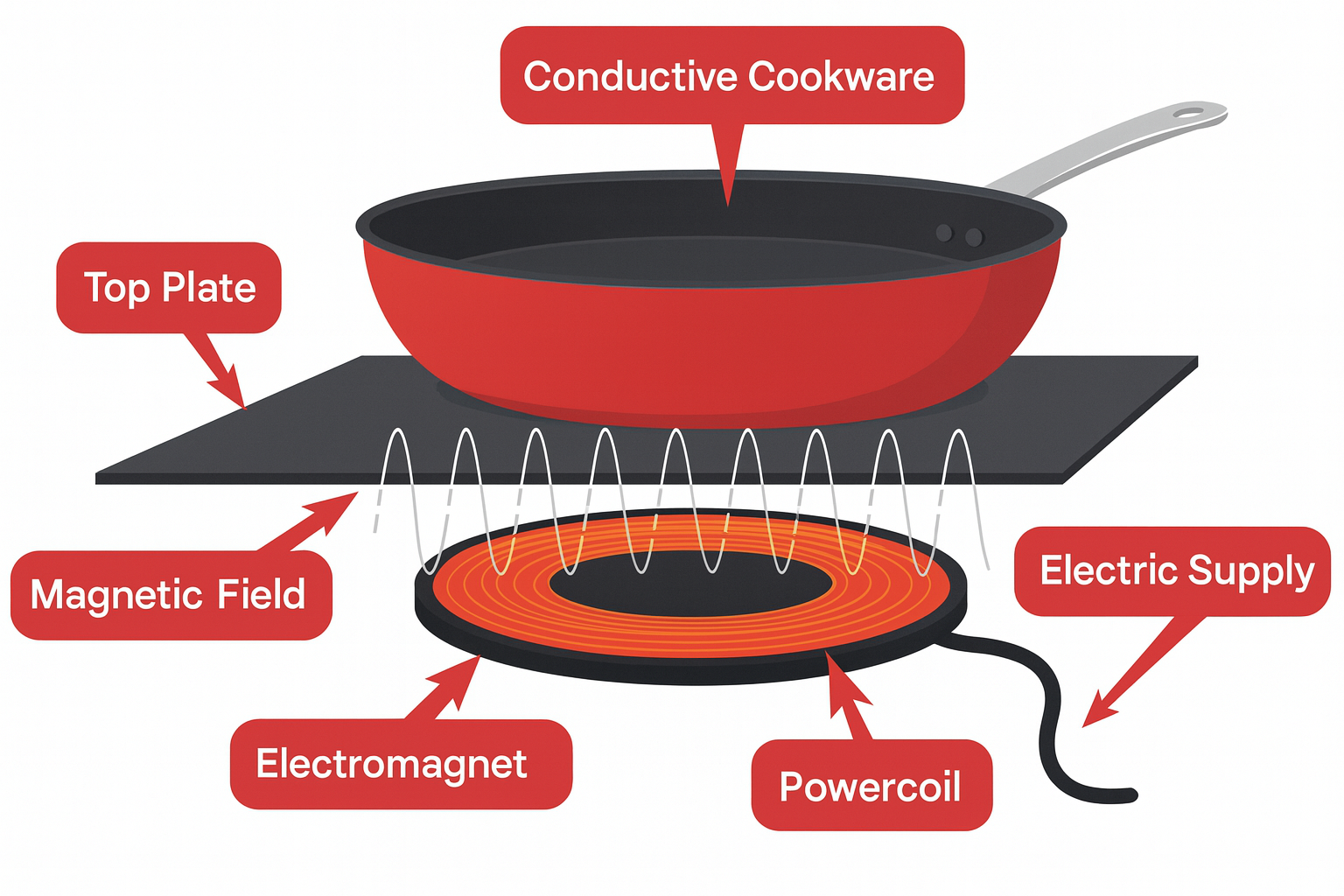
The electromagnetic coil beneath the glass generates a magnetic field. The field passes through the glass and induces currents in the pan base. Heat is generated in the metal, not in the glass.
Glass surface finish.
Gloss or matt. Know the difference.
Induction hobs have traditionally used a gloss glass-ceramic surface. A matt finish is a newer option now available on selected ranges from several German manufacturers. The distinction matters because the two surfaces look and behave differently in daily use, and the choice should be made before the kitchen is ordered rather than discovered afterwards.
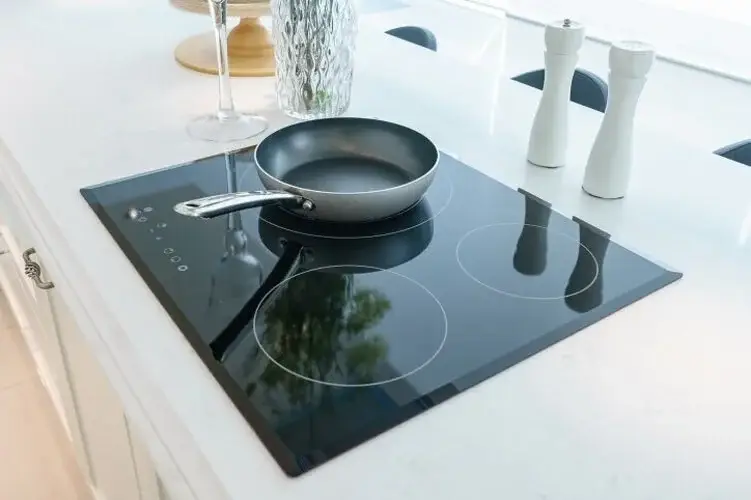
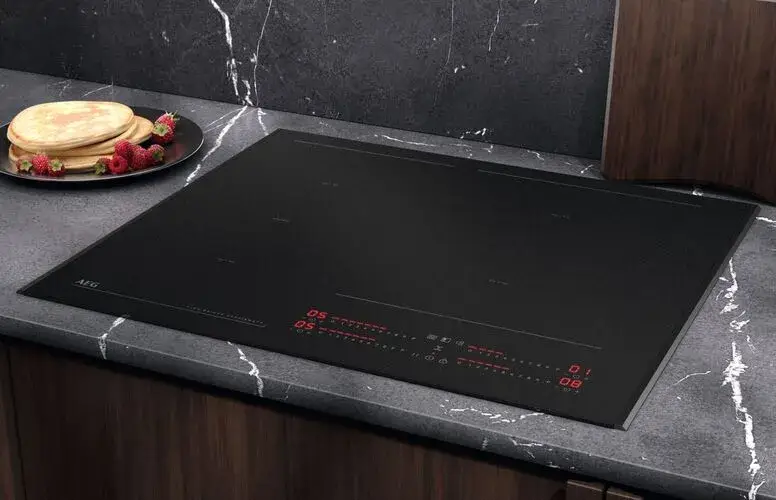
Both finishes scratch. The glass-ceramic surface on any induction hob will acquire fine scratches over time from pan movement, cleaning cloths, and daily use. Neither the gloss nor the matt finish eliminates scratching. The matt finish makes those scratches less visible because the surface does not reflect light that would catch and highlight the marks. If scratch visibility concerns you in your specific kitchen lighting, the matt finish is the more practical choice.
Induction vs gas
vs vented hob.
Three hob types dominate UK kitchen specifications in the premium and mid-premium market. Standard induction, gas, and vented induction (downdraft extraction integrated into the hob). Each has a different technology, different installation requirements, and suits different households and layouts. The comparison below covers the practical differences that matter for a UK kitchen buyer.
| Aspect | Induction | Gas | Vented Induction |
|---|---|---|---|
| How heat is generated | Electromagnetic field heats the pan base directly. No heat wasted in the glass or surrounding air. | Open flame heats the pan from beneath and sides. Significant heat escapes around the pan. | Same as standard induction. Electromagnetic field heats pan directly. Extraction built in. |
| Heating speed | Fastest of the three. Water boils very quickly. | Traditional speed. Slower than induction to reach full temperature. | Same as standard induction. |
| Energy efficiency | Highest of the three. 85–90% of energy reaches the pan. | Lower. 40–55% efficiency. Significant heat lost to the kitchen environment. | Same as standard induction, but the built-in fan draws additional electrical power. |
| Heat control | Digital precision. Consistent low settings for gentle simmering. No visual flame feedback. | Immediate visual feedback from flame. Continuous analogue control. Preferred by many experienced cooks. | Same digital control as standard induction. |
| Extraction | Requires a separate overhead or wall extractor. Not part of the hob. | Requires a separate extractor. Produces more airborne grease than induction. | Integrated downdraft extraction. No overhead extractor needed. Suits islands and open-plan kitchens. |
| Surface safety | Glass surface stays cool away from the zone. No open flame. Child lock standard. | Open flame and very hot pan supports. Highest burn risk of the three. | Same safety profile as standard induction. |
| Cleaning | Flat glass wipes clean. Spills do not burn onto a very hot surface. | Burners, caps, and pan supports require regular scrubbing. Grease builds up in recesses. | Flat glass same as standard induction. The extraction vents need periodic cleaning. |
| Cookware | Requires induction-compatible pans with ferromagnetic bases. Existing non-magnetic cookware will not work. | Works with all cookware types. No compatibility requirement. | Same cookware requirement as standard induction. |
| Services required | Dedicated electrical circuit. No gas connection needed. | Gas connection required. From 2026, not available in new UK builds. Check availability in existing properties before specifying. | Dedicated electrical circuit. Duct route from hob to outside required through the cabinet and floor or wall. |
| Best suited to | Most UK households. Particularly suits open-plan spaces, families with young children, and buyers who prioritise speed and easy cleaning. | Households with an existing gas connection where experienced cooks want visual flame feedback and cookware compatibility without change. | Island kitchens and open-plan spaces where an overhead extractor is unwanted, visually disruptive, or structurally impractical. |
Vented induction: the island kitchen solution
A vented hob integrates induction zones with built-in downdraft extraction, drawing steam and cooking fumes down through a central vent rather than upward to a ceiling extractor. This removes the need for an overhead hood entirely, transforming the visual design of an island or open kitchen. It requires planning for duct routing inside the cabinet beneath the hob. See the Vented Hob guide on this site for full installation detail.
Standard sizes and formats.
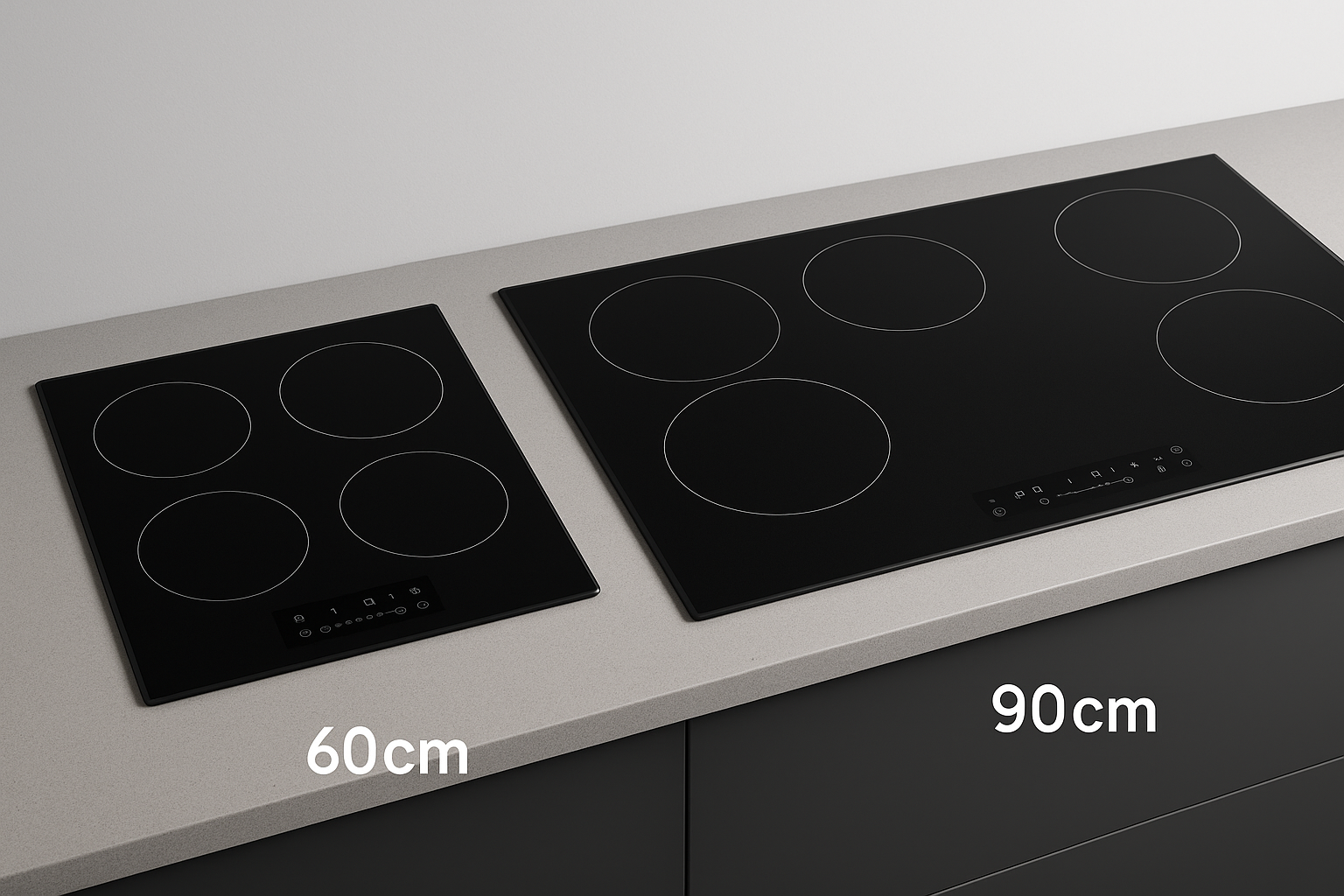
Size comparison across the four standard induction hob formats. The 60cm format fits standard cabinets. Wider formats require specific cabinet widths confirmed at the design stage.
Installation.
Decide before the worktop is templated.
The installation method determines the worktop cutout specification. You must confirm this decision before your worktop company visits to template. A flush-mounted hob requires a different cutout to a top-mounted hob. Changing the installation method after the worktop is cut means cutting a new worktop. There is no way to convert a top-mounted cutout to a flush-mounted one on an existing slab without remaking it.
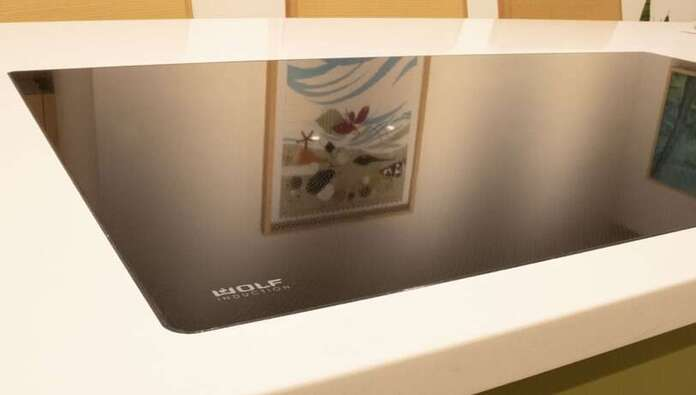
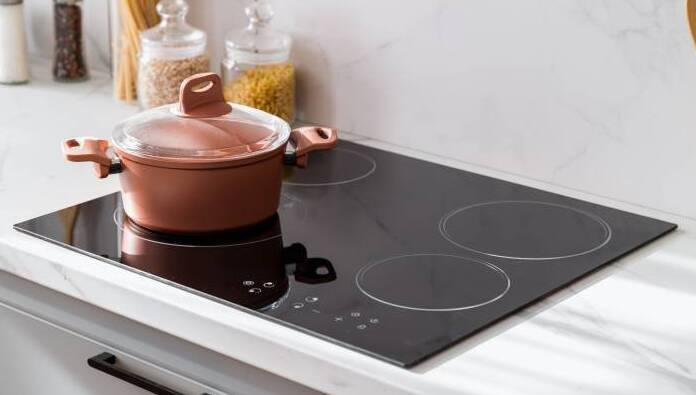
What to tell your worktop company. Before the template visit, confirm: (1) flush-mounted or top-mounted, (2) the exact cutout dimensions from the hob installation guide (not the overall hob dimensions), (3) whether any rebate depth is required for flush mounting, and (4) the silicone sealing specification. Bring the hob installation instructions to the template appointment. The worktop company needs the manufacturer's cutout drawing, not a verbal description.
If you choose top-mounted installation, confirm whether the hob includes a frame at the perimeter or not. Some hobs sit with just a bevelled glass edge touching the worktop. Others include a thin stainless steel or black trim frame around the edge. The choice affects the visual result and the cleaning detail at the edge.
Buying considerations.
Cookware compatibility. Check your existing pans before ordering. Hold a fridge magnet against the base of each pan. A firm grip confirms induction compatibility. Aluminium, copper, and glass pans will not work unless they have a bonded magnetic steel base. You do not need to replace all cookware immediately but identify which pieces will need upgrading before the hob is installed.
Electrical circuit. Most full-size induction hobs require a dedicated hardwired cooker circuit rated at 32 amps or above. This is separate from your ring main and must be installed by a registered electrician. Budget approximately £200–£400 for this work if a new circuit is not already present. Some compact domino-format hobs run on a 13 amp plug, but confirm the wattage rating before assuming a socket connection is sufficient.
Pacemakers and implanted cardiac devices. Induction hobs generate electromagnetic fields that may interact with some implanted cardiac devices. The field is strongest directly above the zone during active cooking. Manufacturers and clinical bodies generally recommend maintaining a safe distance. If you or a household member has an implanted device, consult your device manufacturer and cardiologist before purchase.
Pacemaker and implanted device warning. Consult your cardiologist and the device manufacturer before installing an induction hob in a household where someone uses an implanted cardiac device. The electromagnetic field generated during cooking is localised but the interaction risk varies by device type and age. Do not rely on this guide for medical guidance.
Key features worth shortlisting. Not all induction hobs offer the same control options. These are the features worth confirming on the specification before choosing between models.
Noise during use. You may hear a soft fan during operation. The cooling fan runs to protect the electronics beneath the glass. You may also hear a low buzz or hum at high power on some models, particularly with certain pan types. Both are normal. The noise level is significantly below that of a standard extractor fan during cooking.
Benefits and limits.
- Fastest heating of any domestic hob type. Boiling water is measurably quicker than gas or ceramic.
- Precise digital power control with consistent low settings for gentle simmering. No flame to drift or blow.
- 85–90% energy efficiency. Significantly less heat is wasted into the kitchen environment compared to gas.
- The glass surface stays cool away from the active zone. Burns from touching the surface are far less likely than with gas or ceramic.
- Flat glass surface wipes clean quickly. Spills do not bake onto a very hot surface the way they do on a ceramic or gas hob.
- Less ambient heat in the room. Suits open-plan kitchens where adding heat into the living space during cooking is unwanted.
- No gas connection required. A single dedicated electrical circuit covers all cooking requirements.
- Higher appliance price than basic gas hobs at an equivalent zone count. The price gap reduces at the premium end of both markets.
- Existing non-induction cookware will not work. Aluminium, copper, and glass pans without a magnetic base need replacing.
- The glass surface scratches under daily use. Both gloss and matt finishes scratch. Matt shows scratches less visibly.
- A low hum or fan noise is present during operation, particularly at high power. Unavoidable on any induction model.
- Cooking stops during a power cut. No backup cooking capability. Households who cook regularly during power disruptions should keep a gas camping stove as a backup.
- No visual feedback from the cooking zone. Experienced gas cooks sometimes find the transition to digital power levels takes adjustment.
Care and maintenance.
- →Hob stays cool: Check the pan has a magnetic base. Try a fridge magnet test.
- →Error codes: Ensure the ventilation gap beneath the hob (in the cabinet) is clear. Blocked ventilation triggers thermal protection.
- →Controls unresponsive: Dry your hands and the glass surface. Moisture on the touch controls prevents them registering.
- →Hum or clicking noise: Normal at high power with some pan types. Thinner steel pan bases resonate more than cast iron.
UK cost guide.
These figures are indicative for 2025. Prices vary by model, specification, and retailer. Do not use them to budget precisely. Use them to understand where different categories of induction hob sit relative to each other before visiting a showroom or requesting quotes.
Budget separately for electrical work. If a dedicated cooker circuit is not already present, installation by a registered electrician typically costs £200–£400. This is outside the hob purchase price and must be completed before the hob is installed. Confirm circuit availability with your electrician before finalising the kitchen order. A 32-amp circuit is the standard minimum. Some premium hobs require a 40-amp circuit — confirm the specific requirement on the hob you select.
Is induction
right for your household?
- You want the fastest domestic cooking technology and are not attached to cooking over an open flame.
- Safety is a consideration — young children, elderly household members, or anyone for whom a cool-surface hob reduces accident risk.
- You want a surface that is genuinely fast to clean rather than requiring scrubbing around burners and caps.
- You cook in an open-plan space where adding heat into the living area during cooking is something you want to minimise.
- Your property does not have a gas connection or you are planning a new build or major renovation. Induction is the natural default for all-electric specifications.
- You are willing to update non-compatible cookware. Most households find they already own a mix of compatible and non-compatible pieces.
- You cook extensively with a wok and require the high-output flame and physical wok support that induction cannot replicate in the same way. A gas domino module alongside an induction hob addresses this directly.
- Your household relies on cooking capability during power cuts, which occur regularly in your area.
- You or a household member has an implanted cardiac device and your cardiologist has advised against induction hob proximity.
- The majority of your existing cookware is non-induction compatible and you are not yet ready to replace it.
- You have an existing gas connection, cook at a high level, and the visual and tactile feedback of a gas flame is a genuine priority in how you cook.
Return to the Hobs guide to compare induction against all other hob types. The Vented Hob guide covers integrated downdraft extraction for island kitchens. The Gas Hob guide covers the practical considerations for households with an existing gas connection.