
Laminate worktops.
The complete UK guide.
Laminate worktops are the most widely installed worktop type in UK homes. They consist of a decorative laminate surface layer bonded to a chipboard or HDF core, producing a light, affordable, and easy-to-maintain worktop suitable for the full range of everyday kitchen uses. The laminate surface layer resists staining, cleans easily, and is available in a wide range of patterns including wood effects, concrete finishes, and stone effects. No sealing is required. The material is available the same day from builders' merchants and DIY retailers.
The most important thing buyers need to understand about laminate worktops is that not all laminate is the same. There is a significant and frequently misunderstood gap between the laminate worktops supplied by German kitchen manufacturers as part of a fitted kitchen system and the standard laminate worktops sold at high street retailers and DIY chains. The two products share the same category name. They do not share the same construction quality, edge treatment, moisture protection, or performance standard.
German kitchen manufacturer laminate worktops are engineered products built to DIN 68930 — a German industrial standard that sets defined performance thresholds for heat resistance, scratch resistance, and impact resistance. They are supplied in thickness options from 16mm to 100mm, made to order in lengths up to 3400mm, and include moisture protection details, décor edging, and sealing tape as standard. High street laminate worktops are off-the-shelf products at fixed sizes (typically 3000mm maximum length and 600mm depth), often with simpler edge treatments and less comprehensive moisture protection. This guide covers both — and explains exactly where the difference matters.
Both types share the fundamental laminate limitation: the chipboard or HDF core is vulnerable to moisture if installation is done incorrectly. Unsealed cut-outs, poorly jointed sections, and water pooling around sinks are the causes of most laminate worktop failures. Correct installation — not material quality alone — determines how long a laminate worktop lasts.
German vs high street.
Two very different products.
If you are specifying a laminate worktop, the single most important decision is which tier of product you are buying. German kitchen manufacturer laminate and high street laminate worktops both use a laminate surface on a chipboard or HDF core. The differences in construction, edge treatment, moisture protection, available sizes, and testing standard are substantial.
- Triple-layer chipboard core for improved stability and load-bearing strength. More consistent density across the full slab length than most high street equivalents.
- Tested to DIN 68930. Defined performance thresholds: dry heat resistance to 180°C, moist heat resistance to 100°C, scratch and abrasion resistance. Not a marketing claim — a tested standard.
- Post-formed or PP décor front edge. Creates a smooth, continuous rounded or square profile with no vulnerable joint on the top front corner. Reduces water ingress at the most exposed edge position.
- Moisture protection on both underside and rear edge. Resin-impregnated balance paper on the bottom face. Sealed rear edge protects against wall splash and condensation.
- Décor edging on all lateral cut edges. Factory-applied matching décor strip on all side cut ends — protects chipboard from moisture exposure and gives a finished appearance.
- 9-metre sealing tape supplied. Used at sink and hob cut-outs and above dishwashers. This specific detail — rarely included with high street products — addresses the most common cause of premature laminate failure.
- Made to order up to 3400mm length x 1200mm depth. Custom sizes, angles, and curved cut profiles available. Multiple thickness options: 16mm, 25mm, 38mm, 100mm.
- Standard chipboard core. Density and consistency varies significantly between budget and mid-range products. No mandatory third-party performance testing to DIN standard.
- No DIN 68930 certification in most cases. Performance claims vary by brand. The heat and scratch resistance of any given product is harder to verify independently.
- Square cut or post-formed front edge. Both are common. The square cut edge creates a joint at the top front corner where laminate and core meet — the most vulnerable moisture entry point on the worktop.
- Underside moisture protection varies by brand and price point. Back edge sealing is often not factory-applied — installer responsibility.
- Cut end finishing requires separate iron-on or adhesive edging strip, purchased separately. Factory décor edging is not standard on off-the-shelf high street products.
- Sealing tape is not typically supplied. The installer must source appropriate sealing materials for cut-outs and appliance areas separately.
- Fixed sizes: maximum 3000mm length, 600mm standard depth. No custom sizes, angles, or curves. Limited to the standard thickness offered (typically 38mm or 28mm).
The quality gap is inside the board, not on the surface. Both product tiers show similarly in photographs. The difference shows in performance around sinks and dishwashers, at cut-out edges, and at joints — the positions where moisture protection and core quality determine whether the worktop survives 10 years or fails in 3.
German laminate construction.
What you are actually buying.
A German kitchen manufacturer laminate worktop is a layered engineered product. Each layer serves a specific structural or protective function. Understanding the construction explains why the product performs better at the positions where standard laminate fails.
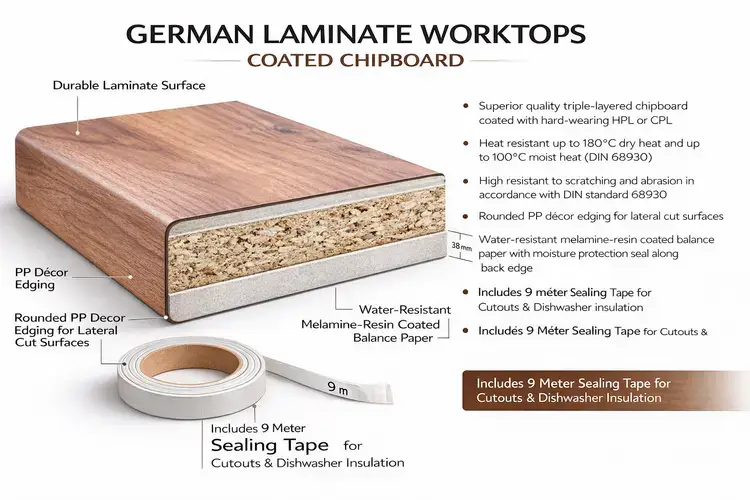
German kitchen manufacturer laminate construction. The layered diagram shows the relationship between the HPL surface, the triple-layer chipboard core, the balance paper underside, and the sealed rear edge. Each layer performs a specific function. The 9-metre sealing tape (not shown) is supplied separately for installation at all cut-outs and appliance positions.
DIN 68930 performance thresholds. German kitchen manufacturer laminate worktops are tested to DIN 68930 — the German standard governing laminate worktop performance.
- Dry heat resistance: up to 180°C
- Moist heat resistance: up to 100°C
- Scratch and abrasion resistance: tested and rated
- Impact resistance: rated against defined load criteria
These are the tested thresholds under DIN test conditions — not instructions for daily use. Hot pans still damage laminate surfaces. The DIN rating means the material was tested and passed; it does not mean you place pans at 180°C on it routinely.
Slimline worktops.
HDF core, 16mm, contemporary profile.
Certain German kitchen manufacturers offer a slimline laminate worktop alongside their standard chipboard-core range. The slimline uses a different core material — high-density fibreboard (HDF) rather than chipboard — and is significantly thinner at 16mm total thickness.
HDF (high-density fibreboard) is a denser, smoother, and more uniform material than chipboard. It is produced by breaking down wood fibre to a much finer consistency and compressing it at higher pressure than standard chipboard production. The result is a board with higher face hardness, better screw-holding at cut edges, and a smoother surface for laminate bonding. The trade is brittleness at thin sections compared to the greater flexibility of chipboard at equivalent thickness.
The slimline specification typically runs as follows: 16mm total thickness, laminate on both faces (top and underside), 1.2mm thick décor edge applied all around the board perimeter. The décor edge running around all four sides is a practical distinction from standard chipboard worktops where the cut ends are finished separately after installation. Maximum worktop width is 3400mm on the same bespoke-cut basis as standard German kitchen laminate.
The 16mm profile suits contemporary handleless and true handleless kitchen designs where a slim worktop profile is part of the visual brief. It also reduces the vertical depth of the worktop above the cabinet, which affects the relationship between the worktop surface and wall units or extractor positioning — confirm the spatial implications with your kitchen designer before specifying the 16mm slimline in place of the standard 38mm product.
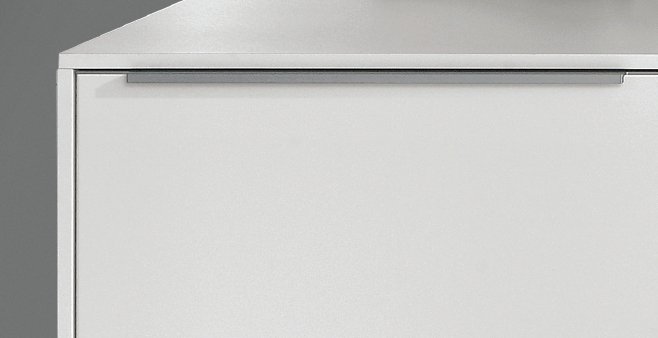
Slimline laminate worktop. The 16mm HDF core with laminate on both faces and 1.2mm décor edge all around produces a clean, contemporary profile. The slim front edge depth suits handleless and true handleless kitchen designs where visual minimalism is the brief.
Sizes and thickness.
German vs high street.
The size and thickness options available in German kitchen manufacturer laminate and high street laminate are fundamentally different — and this matters practically for kitchen planning. High street laminate is an off-the-shelf product at fixed dimensions. German kitchen laminate is made to order at your exact specification.
High street laminate worktops are typically available in 3000mm lengths at 600mm depth (the standard UK base cabinet depth). They are cut from this stock on-site or at point of purchase. Custom lengths, non-standard widths, angles, curves, and island shapes are not available — they require ordering a full-length piece and cutting to size, generating significant waste on complex layouts.
German kitchen manufacturer laminate worktops are made to order. The maximum standard dimensions are typically 3400mm length by 1200mm depth. The worktop is cut at the factory to your exact specification including angles, curves, shaped ends, and custom widths. This eliminates most on-site cutting and reduces waste on complex layouts. For L-shaped, U-shaped, and island kitchen layouts, the made-to-order approach is significantly more efficient.
| Dimension | German manufacturer laminate | High street laminate |
|---|---|---|
| Maximum length | 3400mm (made to order) | 3000mm (stock size, cut to length) |
| Maximum depth | 1200mm (made to order) | 600mm (stock size) |
| Custom sizes | Yes. Cut to your exact specification at factory | No. Fixed stock sizes only |
| Angles and curves | Yes. Angled cuts, rounded ends, island shapes | No. On-site straight cuts only |
| Available thicknesses | 16mm (slimline HDF), 25mm, 38mm, 100mm | Typically 28mm or 38mm only |
| Edge finishing | Factory-applied décor edging on cut ends. Post-formed or PP front edge. | On-site iron-on or adhesive edge strip, purchased separately |
German laminate thickness options.
| Thickness | Core | Best for |
|---|---|---|
| 16mm | HDF (high-density fibreboard). Laminate both faces, 1.2mm décor edge all around. | Slimline contemporary kitchens. Handleless and true handleless designs. |
| 25mm | Chipboard core. Standard laminate surface and balance paper underside. | Kitchens where a slimmer profile than 38mm is preferred with more material presence than 16mm. |
| 38mm | Triple-layer chipboard core. The standard German kitchen worktop thickness. Post-formed or square front edge. | Standard kitchen worktop specification. The most common choice across German kitchen ranges. |
| 100mm | Thick chipboard core. Post-formed or square front edge. Very substantial visual presence. | Statement thick-edge looks. Breakfast bar overhangs where visual weight is part of the brief. |
100mm is a statement product. A 100mm laminate worktop gives the visual presence of a chunky stone slab at a fraction of the cost. It is used for breakfast bar overhangs, island ends, and any position where the front edge face is a visible design element. Confirm with your German kitchen supplier which thickness options are available in the specific finish you are specifying.
Edge options.
Rounded and square.
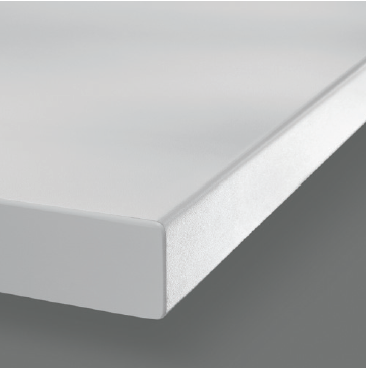
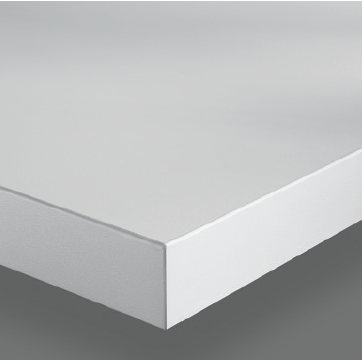
German kitchen manufacturer laminate worktops are available with two principal front edge profiles: post-formed rounded edge and square edge. The choice is aesthetic in the first instance — both are structural equals in terms of core protection — but each suits different kitchen design styles. Confirm the edge option available in your chosen finish with the manufacturer, as not all patterns are available in both edge profiles.
Design range.
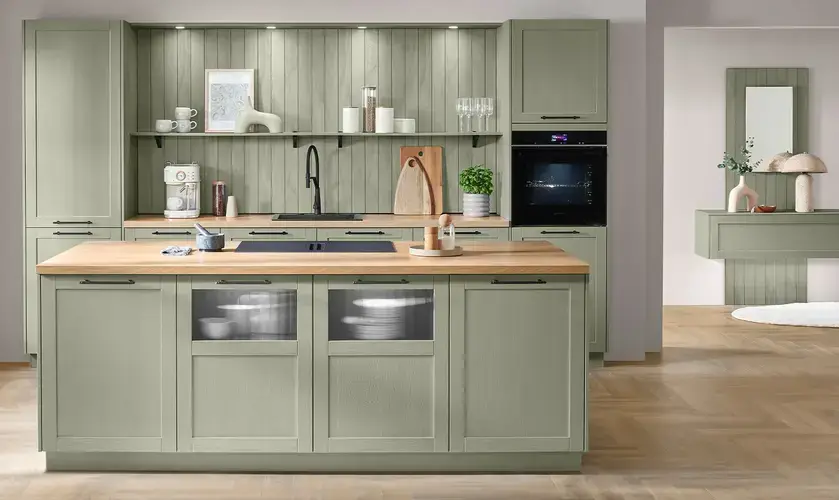
Modern laminate worktops from German kitchen manufacturers are available across a comprehensive design range. Digital printing technology applied to high-pressure laminate surfaces produces realistic wood grain effects, concrete textures, stone effects, and plain colours. The pattern is consistent from one end of the worktop to the other — no natural variation between sections, which suits kitchens where visual consistency across a long run is important.
German kitchen manufacturers synchronise their laminate worktop patterns with door and cabinet colour collections. This means the worktop finish is designed to coordinate with the specific door colours in the range — not just a broadly matching colour, but a matched finish and texture combination designed as part of the same system. This level of coordination is not available when mixing components from different sources.
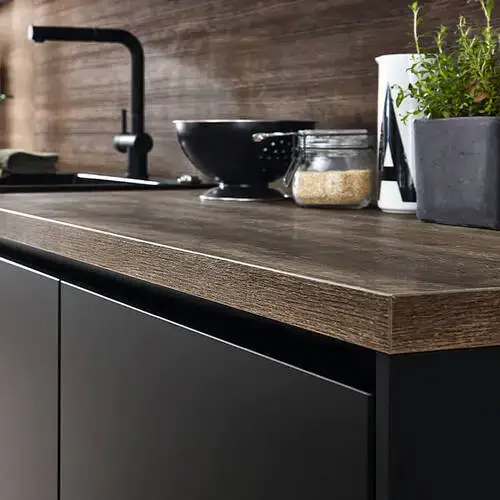
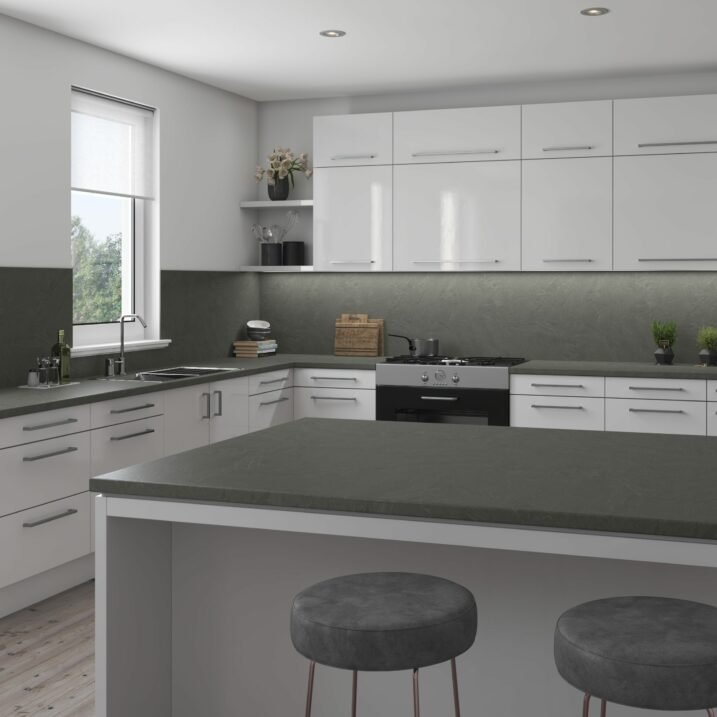
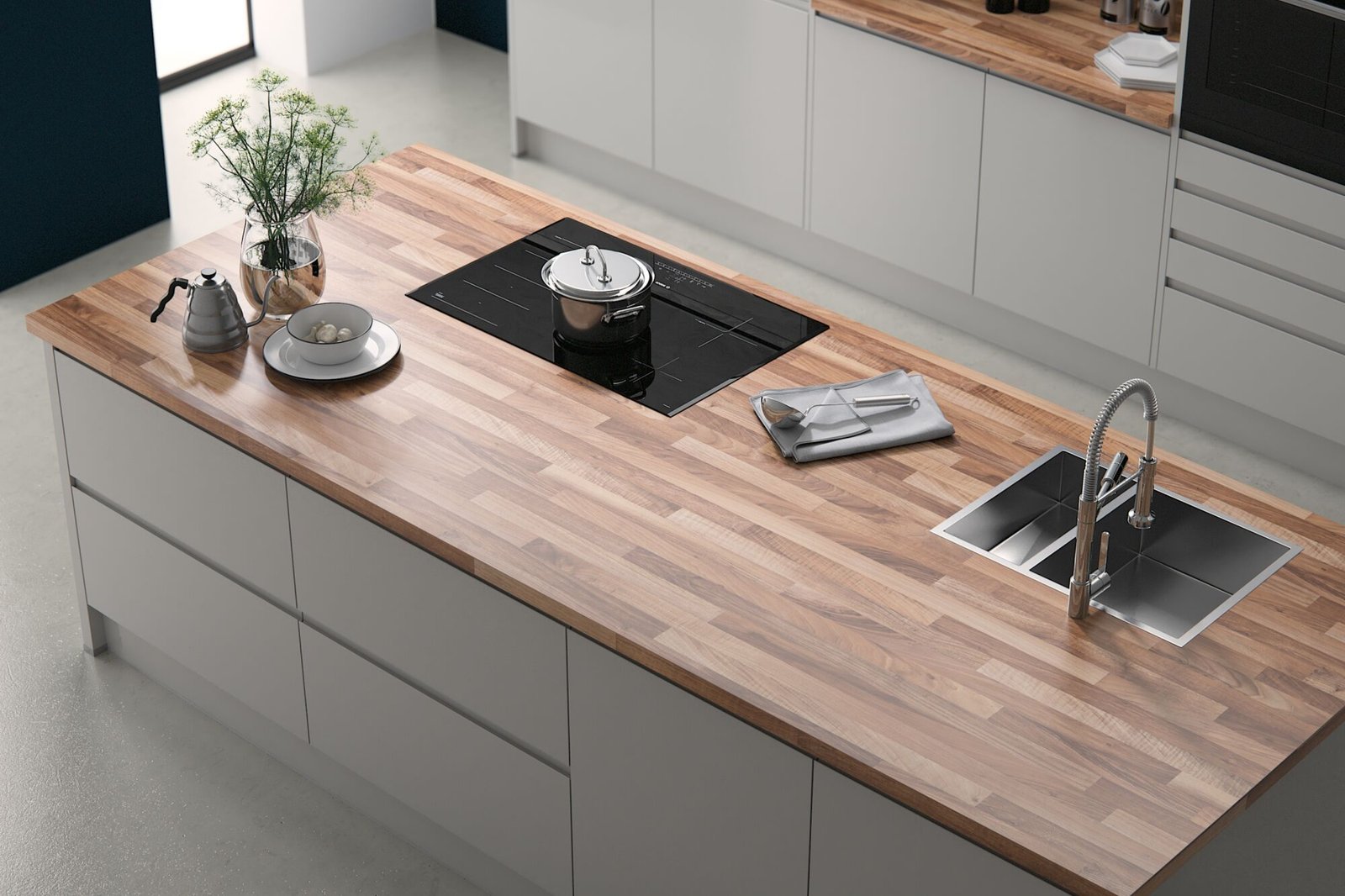
German kitchen manufacturer laminate worktops. The pattern range includes realistic stone effects, concrete finishes, wood grains, and plain colours — all designed to coordinate with the manufacturer's door and cabinet colour collections as part of an integrated kitchen system.
Advantages and limits.
- The most affordable worktop material. German kitchen manufacturer laminate at 38mm is significantly less expensive per square metre than entry-level quartz, ceramic, or granite at any equivalent size specification.
- No sealing required. The laminate surface is non-porous and does not require any periodic sealing treatment. Daily cleaning with mild detergent is sufficient throughout ownership.
- Consistent patterns from end to end. Manufactured product means no natural variation between sections — the finish is the same at both ends of a 3400mm run. Suits kitchens where visual consistency matters.
- Made to order (German manufacturer). Cut to your exact specification at the factory including angles, curves, and island shapes. Maximum 3400mm length and 1200mm depth — dimensions unavailable in high street products.
- Multiple thickness options (German manufacturer). 16mm slimline through to 100mm statement profiles. High street is restricted to standard 28mm or 38mm only.
- Comprehensive moisture protection on German products. Triple-layer chipboard, balance paper underside, sealed rear edge, décor edging on cut ends, and 9m sealing tape supplied — a level of moisture management not available from most high street products.
- Coordinated with kitchen system. German manufacturer laminate is designed to match specific door and cabinet colours. The worktop and kitchen read as one designed system.
- Hot pans damage the surface permanently. All laminate — German or high street — marks under direct contact with very hot pans, oven trays, and hot appliances. No resin to degrade like quartz, but the laminate surface itself scorches. Trivets are non-negotiable.
- Direct cutting marks the surface. Knives cut through the laminate layer and expose the chipboard core beneath. Always use a chopping board.
- Chipboard core is vulnerable to sustained moisture. Even well-protected German laminate will swell and delaminate if cut-outs are left unsealed, joints are not protected, or water pools around sinks for extended periods.
- Damage is not repairable. A burned or deeply scratched section of laminate cannot be re-polished or re-surfaced. Section replacement is the only remedy for significant damage. Unlike solid surface, which sands and re-polishes to near-original.
- Visible joins on long runs. Like all worktop materials except solid surface, joins are visible at section junctions. Well-executed joins are minimal, but they exist.
- Limited edge profile options compared with quartz or stone. Post-formed rounded or square edge is the standard range. Ornate profiles are not achievable in laminate.
Laminate vs
other worktop materials.
| Aspect | German laminate | High street laminate | Quartz | Ceramic | Granite |
|---|---|---|---|---|---|
| UK price guide | £100–£300 per m² | £50–£150 per m² | £300–£600+ per m² | £200–£500+ per m² | £150–£600+ per m² |
| Heat resistance | DIN 68930 rated. Surface marks from direct hot pan contact. Trivets essential. | Surface marks from direct hot pan contact. No DIN rating in most cases. Trivets essential. | Moderate. Resin binder marks permanently. Trivets essential. | Excellent. No resin binder. Hot pans tolerated on flat surface. | Good. Stone tolerates heat but sealant degrades. Thermal shock risk. Trivets required. |
| Scratch resistance | Good resistance to daily kitchen contact. Scratches from direct knife use. Use boards. | Moderate. Surface wears faster than German laminate under comparable use. | Good. Everyday contact does not mark. | Good (6–7 Mohs). Daily kitchen use does not mark surface. | Very good (6–7 Mohs). |
| Moisture protection | Triple-layer chipboard, balance paper underside, sealed rear edge, 9m sealing tape supplied. | Varies by brand. Often less comprehensive. Installer responsible for much of the moisture protection. | Non-porous surface. No sealing. Core not exposed in standard installation. | Low porosity. No sealing. Resistant to surface staining. | Porous. Sealing required. Core not exposed in standard installation. |
| Made-to-measure sizes | Yes. Up to 3400 x 1200mm. Angles, curves, custom profiles available. | No. Fixed stock sizes only. Maximum 3000 x 600mm. | Yes. Fabricated to kitchen specification. Large format slabs available. | Yes. Fabricated to specification. Large slab formats. | Yes. Fabricated to specification from natural stone slab. |
| Repairability | Limited. Burns and deep scratches require section replacement. No surface restoration possible. | Limited. Same limitations as German laminate. Section replacement for significant damage. | Moderate. Small chips fillable. Heat damage often permanent. | Limited. Edge chips fillable. No surface restoration. | Good. Stone re-polishing by specialist possible. |
| Long-term performance | Reliable when correctly installed. Expected life 10–15 years with good care. Failures typically installation-related. | Shorter expected life in hard-working kitchens. More vulnerable to edge and moisture failure. | Very good. Low maintenance. Heat damage is the primary risk. | Very good. Low maintenance. Edge chipping is the primary risk. | Good. Sealing maintenance required to maintain performance. |
Installation.
Where laminate fails and why.
Most laminate worktop failures are installation failures, not material failures. The chipboard or HDF core of any laminate worktop is structurally sound when dry and protected. The same core begins to fail rapidly when moisture reaches it through unsealed cut-outs, poorly jointed sections, or inadequately protected appliance positions. A high-quality German laminate worktop installed without proper sealing will fail earlier than a budget high street laminate installed correctly.
Installation is where German laminate's advantage is realised. The sealing tape, factory décor edging, sealed rear edge, and balance paper underside supplied as standard with German kitchen laminate address the most common installation failure points. These details exist because the manufacturer has engineered the product for correct installation. If your installer discards the sealing tape or skips the cut-out treatment, the engineering advantage disappears entirely.
Maintenance and care.
Laminate daily maintenance is simple. No sealing, no specialist products, no periodic professional treatment. The laminate surface resists staining from common kitchen spills and cleans with standard household products. The rules to remember are simple: no hot pans directly on the surface, no direct cutting, and wipe standing water around the sink before it has time to find a route into the core.
What the DIN 68930 rating means in practice.
The 180°C dry heat and 100°C moist heat figures in the DIN 68930 specification are test thresholds — the temperatures at which the surface passes defined performance criteria in laboratory conditions. They are not instructions for daily use. A pan arriving from the hob at 200°C+ placed directly on any laminate surface will leave a mark. The DIN rating means the product was formally tested and passed — it does not mean the surface is impervious to hot cookware.
UK cost guide.
Laminate is the most affordable worktop category. German kitchen manufacturer laminate is more expensive than high street laminate but still significantly less than entry quartz, ceramic, or granite. The made-to-order nature of German kitchen laminate means pricing is typically provided per kitchen specification rather than as a simple per-square-metre rate — confirm pricing with your German kitchen supplier at specification stage.
German kitchen laminate is typically part of the kitchen package price. Unlike stone, quartz, or ceramic worktops which are usually priced and supplied separately from the cabinetry, German kitchen manufacturer laminate worktops are priced as part of the fitted kitchen order. Compare the total kitchen package price rather than the worktop cost in isolation. The made-to-order worktop included in a German kitchen package represents significantly better value than buying an equivalent made-to-measure laminate worktop separately.
Who laminate suits.
- Budget is a primary consideration and you want the best available laminate specification — a German kitchen manufacturer 38mm DIN 68930 rated product, not a budget high street alternative.
- You are fitting a German kitchen system and want the worktop, doors, and cabinets to coordinate as a designed whole. German kitchen manufacturer laminate is matched to the kitchen range — separate-source worktops are not.
- You want a simple, no-maintenance surface. No sealing, no oiling, no specialist products throughout the life of the kitchen.
- You are committed to using trivets and chopping boards consistently. The surface rewards these habits reliably.
- You need custom sizes, angles, or a very long run. German kitchen laminate is made to order at up to 3400mm length — high street laminate is fixed at 3000mm maximum and 600mm depth.
- You want heat performance without trivets. Ceramic and porcelain handle hot pans without marking. Quartz is better than laminate but still requires trivets. If consistent trivet use is not realistic in your household, a harder surface is the correct choice.
- Surface repairability matters. Laminate damage requires section replacement. Solid surface is the only material that sands and re-polishes to near-original after accumulated marks.
- You want the look and feel of natural stone or the visual depth of quartz. Laminate stone and concrete effects are good but identifiable as laminate at close range and under the hand.
- The kitchen will receive very heavy use with frequent wet contact, standing water, or significant heat exposure. A harder, more moisture-resistant surface — quartz, ceramic, or porcelain — will serve better over a longer period.
- Ornate edge profiles are important. Laminate is restricted to rounded or square post-formed edges. Quartz and stone offer the full range of decorative profiles.
Frequently asked questions.
See the Worktops hub to compare laminate with quartz, ceramic, granite, and other materials. The Quartz guide covers the most common upgrade from laminate — comparable design range, significantly better heat and surface durability, at a higher price point.