
Marble worktops.
The complete UK guide.
Marble is a metamorphic rock formed when limestone is subjected to intense heat and pressure deep underground. The process recrystallises the calcium carbonate minerals into a dense, interlocking crystal structure with the characteristic translucency, veining, and cool surface feel that make marble one of the most recognisable and desired materials in kitchen design.
In a kitchen worktop context, marble is the most demanding of the natural stone options. It is softer than granite, quartzite, or engineered surfaces — sitting at 3–4 on the Mohs scale — and it is reactive to acids. Lemon juice, vinegar, wine, and tomato sauces all etch the calcite surface, leaving permanent dull marks that cannot be cleaned off. This is not a maintenance failure; it is the chemical nature of the stone. Etching is unavoidable in an active kitchen.
Marble is the right choice for owners who understand and accept this. Many buyers specify marble knowing that patina and surface change over time are part of the material's character. In low-activity kitchen zones — baking areas, islands used primarily for presentation, or kitchens with light daily use — marble performs practically and ages beautifully. In high-activity kitchens where acid spills are frequent and immediate attention is not always possible, marble accumulates marks visibly and needs professional restoration to recover a uniform finish.
The heat picture requires the same nuance as all sealed natural stone. The marble itself tolerates high temperatures. The sealant applied to protect the porous surface does not. Repeated hot pan contact degrades the sealant over time, and rapid temperature changes create thermal shock risk that can crack the stone. Trivets are the permanent correct habit.
What is marble.
Marble forms when limestone — a sedimentary rock composed primarily of calcium carbonate — undergoes metamorphism. Heat and pressure cause the calcite grains to recrystallise, producing a dense, interlocking crystal structure that is harder and more compact than the original limestone. The veining that defines marble's appearance forms during this process as mineral impurities — clay, iron oxides, mica, and carbon — are redistributed through the crystal structure.
The calcium carbonate content that gives marble its characteristic translucency and cool feel is also what makes it chemically reactive to acid. This is not a flaw in the material; it is the fundamental chemistry of calcite. Acid reacts with calcium carbonate and dissolves the surface slightly, leaving an etched area where the polished crystal structure has been disrupted. The etch reads as a dull mark against the polished surrounding surface. No sealer prevents etching. Sealers prevent staining — the two are different phenomena.
Marble's hardness sits at 3–4 on the Mohs scale. It is significantly softer than granite (6–7) and quartzite (7+). In practical kitchen terms, this means marble accumulates fine surface scratches from normal contact more readily than harder stones. Most of these are only visible in raking light, but they accumulate over time and contribute to the patina effect that characterises aged marble.
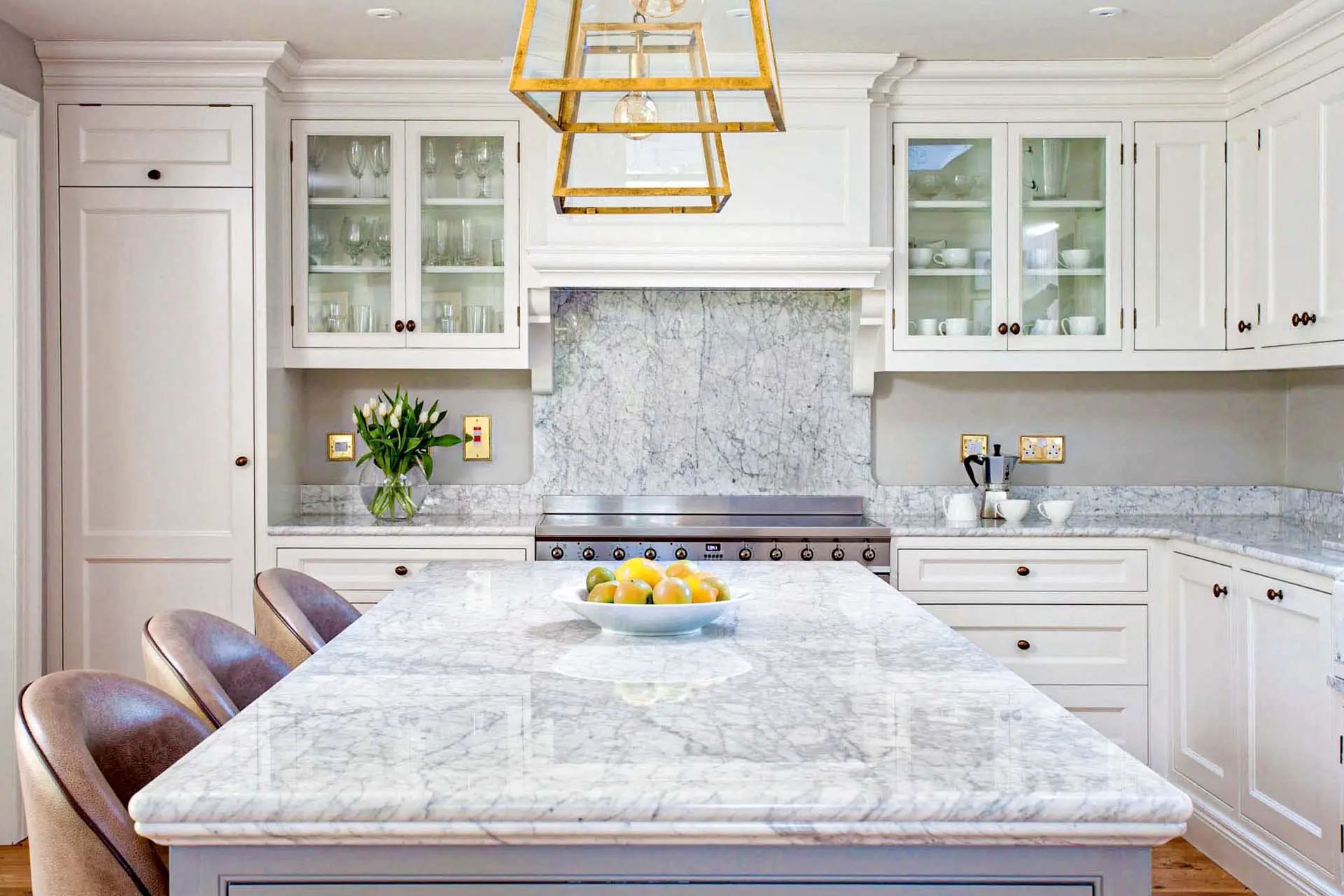
Marble's translucent crystal structure and dramatic veining produce a surface appearance that no engineered material fully replicates. The cool temperature of the stone surface makes it a traditional choice for baking areas and pastry preparation.
Heat, sealing,
and thermal shock.
Marble's heat reputation in kitchen guides is often described as "good heat resistance for everyday cooking". This is accurate for the stone itself — calcite is a mineral and marble at working temperature from a hob or oven will not scorch or warp. The sealed surface you interact with in a kitchen is a different matter.
The impregnating sealant that fills the pores of marble and provides stain resistance does not have the same heat tolerance as the stone. Repeated contact with very hot cookware degrades the sealant over time. The effect is cumulative — the sealant depletes faster than the maintenance schedule assumes, leaving the porous marble increasingly vulnerable to staining. In an active kitchen where trivets are used inconsistently, marble may need resealing well within the 3–6 month interval that applies to heavily used polished marble.
Thermal shock is a more acute risk. When a very hot pan is placed on a cold marble surface — particularly near a sink where the stone is cooler from water contact — the stone expands and contracts unevenly. The internal stress generated by this rapid temperature differential can crack the slab. Thermal shock cracks in marble are not repairable by polishing and in most cases require section replacement.
Use trivets as a permanent habit. The marble stone tolerates heat; the sealant protecting the porous surface does not. Repeated hot pan contact degrades the sealant and accelerates the resealing schedule. Rapid temperature changes between a hot pan and a cold surface — most commonly near the sink — cause thermal shock that can crack the slab. This applies to all pans taken directly from the hob and anything removed from the oven.
Sealing and etching are separate issues. This distinction is one of the most important things to understand before buying marble. The impregnating sealer fills the pores of the stone and prevents staining from oil, coffee, and coloured liquids that would otherwise penetrate and discolour the stone. The sealer does not affect the surface chemistry. Acid still reacts with the exposed calcite crystals at the surface regardless of seal condition. You seal marble to prevent staining. Etching is not preventable by sealing.
The water drop test for marble. Place a few drops of water on the surface and leave for 10–15 minutes. If the water beads, the seal is intact and protecting against staining. If the stone darkens at the water contact point, resealing is due. Separately, test acid response by leaving a drop of lemon juice for 10 minutes — any dull mark left after cleaning indicates an etch, which is normal for marble and confirms the stone behaves as expected.
- The stone tolerates heat; the sealant does not — use trivets consistently
- Thermal shock from rapid temperature changes can crack the slab — risk is highest near sinks
- Sealing prevents staining; it does not prevent etching — these are different processes
- Etching from acid is a permanent surface change that only re-polishing removes
- Busy kitchens may need resealing as frequently as every 3–6 months
Design possibilities.
Marble's design appeal rests on three properties that no engineered material replicates convincingly: the translucency of the crystal structure, the natural variation of veining within a single slab, and the cool, slightly tactile surface quality under the hand. In contemporary German kitchen design, marble is most often specified for islands, baking areas, and full-height splashbacks where the stone is a visible design feature rather than the primary working surface.
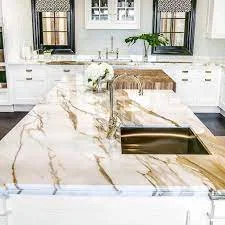
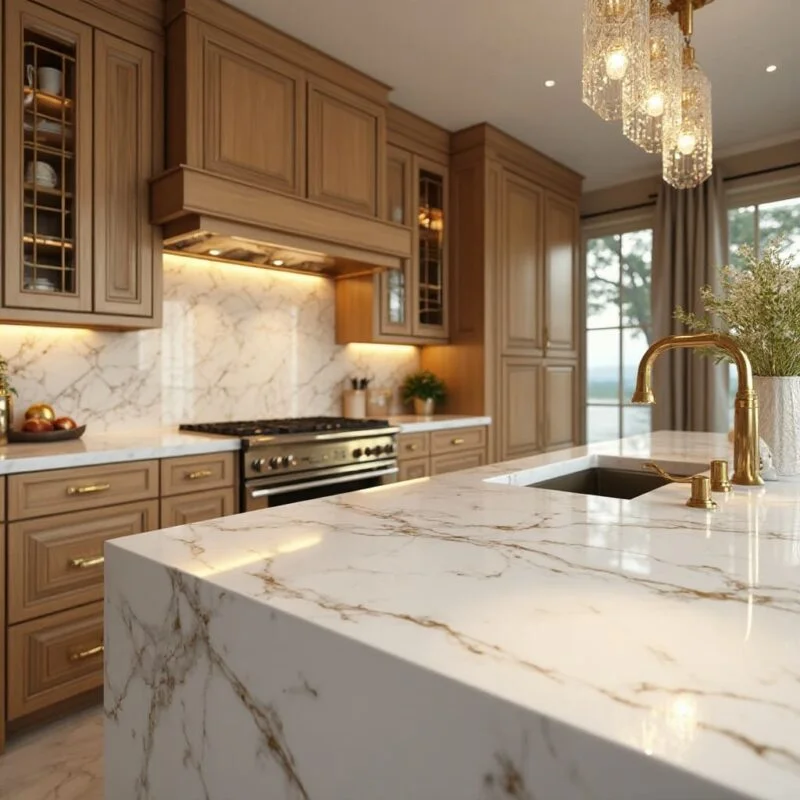
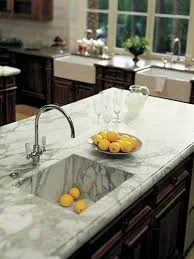
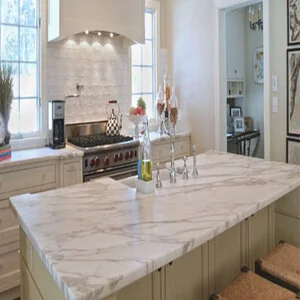
Marble in UK kitchen installations. The combination of natural veining, translucent crystal structure, and cool surface feel gives marble a design presence that engineered materials approach but do not match. Layout planning with marble requires viewing actual slabs at the stone yard — pattern and veining distribution varies significantly across a slab.
Carrara, Calacatta,
and Statuario.
The most frequently specified marbles for UK kitchen worktops come from the Apuan Alps in Tuscany, where quarrying has been continuous for over two thousand years. Three names dominate the market: Carrara, Calacatta, and Statuario. Despite coming from the same mountain region, they are quarried from different areas and differ significantly in appearance, rarity, and price. Understanding the differences prevents buying the wrong stone for a given brief.
The same name does not guarantee a consistent slab. Carrara, Calacatta, and Statuario all cover a range of slab qualities and appearances quarried from different zones within the same mountain. A Calacatta slab from one quarry area may look very different from a Calacatta slab from another. Visit the stone yard to view and select actual slabs — particularly for Calacatta and Statuario where price is high and slab-to-slab variation is significant.
Etching explained.
Etching is the most important thing to understand about marble before specifying it for a kitchen. It is not a maintenance failure, a fabrication defect, or something a better sealer prevents. It is the direct chemical reaction between acid and the calcium carbonate minerals at the polished surface of the stone.
When an acidic liquid contacts polished marble, the acid dissolves a thin layer of calcite at the surface. The dissolved area loses its polished crystal structure. It reads as a dull, slightly matt mark against the surrounding polished surface. The mark is permanent at that surface level. It cannot be cleaned off because the mark is not a stain — the surface structure has changed. Re-polishing by a stone specialist can restore the original finish, but it removes a small amount of stone in the process.
Etching happens immediately. A lemon half rested on polished marble for 30 seconds leaves a visible etch mark. A glass of wine knocked across the surface and left for a few seconds while it is cleaned up will etch. The speed of the reaction surprises most people who have not worked with marble before. Quick blotting reduces the extent of etching but does not prevent it entirely if the acid contacts the polished surface.
Common kitchen acids that etch marble include: lemon and citrus juice, vinegar, wine, sparkling water (carbonic acid), tomato and tomato-based sauces, fruit juices, coffee and tea left to dry on the surface, condiments including ketchup and mustard, and any cleaner that is not pH-neutral. The list covers the majority of everyday kitchen activity. This is why marble is described as high maintenance in active kitchens — the material etches under normal cooking conditions, not only under careless use.
Honed finish reduces the visual impact of etching. A honed (matt) finish on marble does not prevent etching, but etch marks are considerably less visible on a honed surface than on a high-gloss polished one — both have a similar reflectance and the contrast between etched and un-etched areas is much smaller. Many buyers who plan to use marble in an active kitchen choose a honed finish specifically for this reason.
Advantages and limits.
- Distinctive natural character. The translucency of the crystal structure, the unique veining, and the cool surface feel give marble a presence that no engineered material fully replicates at scale.
- Cool surface temperature. The thermal mass of marble keeps the surface noticeably cool, which suits baking and pastry preparation where a cold work surface is useful.
- Premium visual impact. Marble drives the design of a kitchen in a way that few other materials do. Islands, splashbacks, and waterfall ends in marble command attention.
- Ages with character. Buyers who accept patina find that the accumulation of fine marks and light etching over years gives marble an antique quality that polished engineered surfaces cannot develop.
- Each slab is unique. Natural variation in veining, colour distribution, and crystal pattern means no two marble installations look identical.
- Wide finishing options. Polished, honed, and brushed finishes all suit different kitchen aesthetics. Honed is the most practical choice for active kitchen use.
- Etching is unavoidable. Acid contact creates permanent dull marks. This is not preventable by sealing. It is the inherent chemistry of the stone and will occur in any kitchen where food preparation involves acid.
- Softer than alternatives. At 3–4 Mohs, marble scratches more easily than granite, quartzite, quartz, and porcelain. Scratches accumulate over time and contribute to the patina effect.
- Frequent sealing required. Every 3–12 months depending on use intensity. Polished marble in a busy kitchen needs resealing at the shorter end of this range.
- Trivets required permanently. The sealant is damaged by hot pan contact over time. Thermal shock from rapid temperature changes can crack the slab. Same trivet habit required as for granite and quartzite.
- Higher restoration cost over time. Professional re-polishing to address significant etching is a periodic cost that other materials do not carry. Budget for this in long-term kitchen planning.
- Not suited to busy, active kitchens without very consistent care. If immediate acid blotting is not realistic in your daily routine, marble will etch visibly and quickly.
Marble vs
other worktop materials.
This comparison covers practical kitchen performance. Marble is included as the reference material since this is the marble guide. The table is designed to help buyers decide whether marble's specific combination of properties suits their situation or whether an alternative delivers the desired look with different trade-offs.
| Aspect | Marble | Granite | Quartzite | Quartz | Porcelain |
|---|---|---|---|---|---|
| UK price guide | £200–£700+ per m² | £150–£600+ per m² | £400–£700+ per m² | £250–£700+ per m² | £250–£700+ per m² |
| Hardness | 3–4 Mohs. Scratches in normal use. Softest of the natural stone options for kitchens. | 6–7 Mohs. Very good scratch resistance. | 7+ Mohs. Harder than granite. Very good scratch resistance. | Good. Engineered surface resists everyday contact. | Very good. One of the hardest worktop surfaces available. |
| Acid / etching | Etches permanently with all common kitchen acids. Lemon, wine, vinegar, tomato. Cannot be cleaned off — only re-polished. | Does not etch. Good acid resistance in natural stone. | True quartzite does not etch. Some mislabelled stones do. Confirm before buying. | Does not etch. Resin surface is acid resistant. | Fully acid resistant. Does not etch under any kitchen conditions. |
| Heat and sealant | Stone tolerates heat. Sealant is damaged by hot pan contact. Thermal shock can crack surface. Use trivets permanently. | Stone tolerates heat. Sealant damaged by hot pan contact. Thermal shock risk. Use trivets. | Stone tolerates heat. Sealant damaged by hot pan contact. Thermal shock risk. Use trivets. | Low heat tolerance. Resin binders mark under sustained heat. Trivets always required. | Excellent. No organic binders. Fully heat resistant with no sealant to protect. |
| Maintenance | High. Sealing every 3–12 months. Blot spills immediately. Periodic professional re-polishing for etching restoration. | Moderate. Sealing every 1–3 years. Daily cleaning simple. Trivets required. | Moderate. Sealing every 1–2 years. Daily cleaning simple. Trivets required. | Very low. No sealing. Wipe clean. Trivets required. | Very low. Wipe clean. No sealing. No special products. |
| Visual character | Translucency, natural veining, cool surface. Ages with patina. Each slab unique. Cannot be engineered. | Natural stone character. Wide range of colours. Speckled and veined options. | Natural stone character. Bold veining often compared to marble but harder and more practical. | Engineered consistency. Patterns repeat across slabs. Predictable. | Manufactured. Consistent within a batch. Can mimic stone appearance. |
Marble vs quartzite. Quartzite is the closest natural stone alternative that delivers similar veining aesthetics with substantially better practical performance. True quartzite at 7+ Mohs does not scratch as easily, does not etch with common kitchen acids, and requires less frequent resealing. If the design brief is primarily about dramatic natural stone veining and the buyer is concerned about marble's maintenance, quartzite is the natural first alternative to compare.
Marble vs quartz. Engineered quartz produces marble-effect patterns that replicate the visual look of Carrara and Calacatta without any of marble's maintenance requirements. Quartz does not etch, does not scratch as easily, and needs no sealing. The trade is natural stone character and tactile authenticity versus engineered reliability and zero maintenance. For buyers who want the marble look without the marble commitment, quartz is the practical alternative. It is not the same material under the hand, but from a design photograph it is often indistinguishable.
Maintenance and care.
Marble maintenance in a kitchen is more demanding than other natural stone options. The two separate maintenance needs — sealing against staining and managing etching from acid contact — require different responses. Sealing is a periodic maintenance task. Etching management is a continuous daily habit. Both are required throughout the life of the worktop.
UK cost guide.
Marble pricing varies significantly by stone name, quarry, grade, and slab selection. These figures are indicative. Always obtain quotes that specify the stone name, quarry origin, thickness, finish, and layout scope — price comparisons between suppliers mean very little without these details confirmed.
Long-term cost picture. The unit price of the stone is only part of the total cost of owning marble in a kitchen. Factor in: sealing products on a 3–12 month schedule, pH-neutral cleaning products for daily maintenance, and periodic professional restoration to address significant etching accumulation. For Calacatta and Statuario specifically, restoration cost is relevant because the premium material cost makes professional care worthwhile to preserve the investment.
Who marble suits.
- You value the natural character of marble — the translucency, the veining, the cool surface — and accept that this comes with the maintenance commitment the material requires.
- You understand etching and accept it as part of the material's behaviour. You are comfortable with a surface that develops patina over time rather than maintaining a showroom finish throughout the life of the kitchen.
- You are willing to blot acid spills immediately, use pH-neutral cleaners exclusively, reseal every 3–12 months, and use trivets consistently as permanent habits — not occasional good intentions.
- You plan marble for a specific application rather than the entire kitchen — a baking area, an island used for presentation more than heavy cooking, or a feature zone where the maintenance load is lower than the primary cooking surface.
- Your kitchen design centres on marble as a visible design statement. You want a material that drives the visual character of the room and that no engineered alternative replicates with full conviction.
- Etching concerns you. If the idea of permanent acid marks from lemon juice and wine is a dealbreaker, marble is the wrong material regardless of its appeal. Quartzite and engineered quartz deliver similar aesthetics without etching.
- Your kitchen is active with regular cooking. High-use kitchens with frequent acid spills, heavy preparation, and inconsistent immediate clean-up will etch marble visibly and quickly. The maintenance commitment is not realistic in this context.
- You want a surface that maintains a uniform finish without periodic professional restoration. Quartz, porcelain, and sintered stone all deliver long-term uniformity without restoration costs.
- You want maximum heat resistance with no sealant degradation concern. Porcelain and sintered surfaces have no sealant and no organic binders — they are genuinely trivet-free.
- Budget is under pressure on multiple kitchen items. Marble's ongoing maintenance cost — sealing products, specialist cleaners, and periodic professional restoration — adds a meaningful long-term cost that other materials do not carry.
Frequently asked questions.
See the Worktops hub to compare marble with granite, quartzite, quartz, porcelain, and other materials. The Quartzite guide covers the most practical natural stone alternative for buyers who want marble's veining character in a harder, acid-resistant material.