
Skinny Shaker.
Classic frame. Contemporary weight.
Skinny Shaker, also called Slim Shaker, keeps the defining construction of a Shaker door: four framing members around a flat recessed centre panel. The difference is the frame width. Where a classic Shaker door uses stiles and rails of 70–90mm, a Skinny Shaker reduces that to approximately 10–20mm on most kitchen ranges. Some specialist doors go further, with profiles closer to 8mm on selected tall units and feature pieces.
The narrower frame shifts the visual character of the door significantly. A smaller border means a larger panel, more negative space, and a lighter presence across the run. The door still reads as framed. The shadow line and the recessed panel are both present. But the room reads as more contemporary and less weighted than the same layout with a classic Shaker profile.
This is why Skinny Shaker has grown rapidly as a specified style in the UK market. It sits in the transitional space between standard Shaker and the clean geometry of a flat slab or handleless kitchen. It suits open-plan extensions, new builds, and any property where a buyer wants framed character without the traditional heaviness that a full-width Shaker frame delivers. It also works naturally on German frameless carcasses, which is where most UK sales occur.
Ballerina's Atlanta profile is one of the most widely referenced Skinny Shaker examples in the UK market. Nolte, Leicht, and Bauformat all carry comparable profiles. See the kitchen door styles guide and the Shaker kitchen guide on this site for the full context on where Skinny Shaker sits relative to other door styles.
What is a Skinny Shaker door?
A Shaker door uses four framing members (two vertical stiles and two horizontal rails) around a flat recessed centre panel. This is the construction. The profile width of those frame members is what distinguishes Skinny Shaker from Classic Shaker. Everything else, the recessed panel, the shadow line where the panel meets the frame, the overall door construction, is identical.
Skinny Shaker reduces the frame width from the 70–90mm typical of a classic Shaker door to approximately 10–20mm on most kitchen ranges. Some doors marketed as super skinny or narrow frame Shaker go further, with stile widths closer to 80mm, though these ultra-slim profiles are better suited to bedroom furniture and light-duty doors than heavily used kitchen base units.
The practical effect of the narrower frame is that the centre panel takes up more of the door face. More panel, less border. The door reads as lighter across the run. The shadow line is still present at the panel rebate, which preserves the character of the Shaker style, but the overall impression is closer to a contemporary slab than a deep-framed traditional Shaker.
Different suppliers use different names for the same style. Skinny Shaker, Slim Shaker, narrow frame Shaker, and micro Shaker all refer to variations of the same principle. When comparing products across suppliers, always ask for the frame width in millimetres rather than relying on the marketing name. A 40mm frame and a 20mm frame are very different doors in a real room.
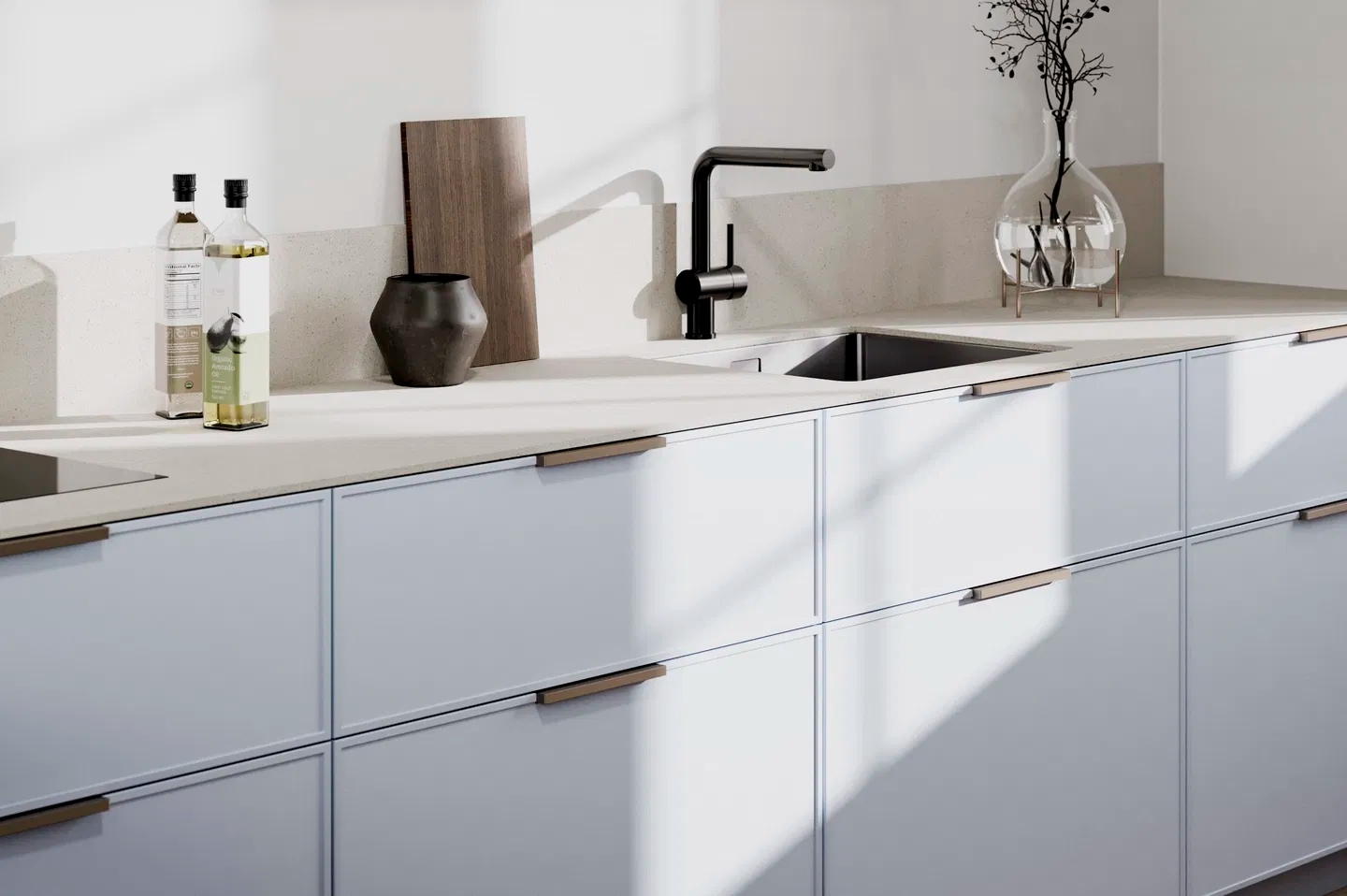
Leicht Skinny Shaker. The narrow frame leaves a large proportion of panel visible. The shadow line at the panel rebate preserves the Shaker character at a contemporary weight.
Frame widths
and what they mean in practice.
Frame width is the single specification that determines whether a door reads as Classic Shaker, Skinny Shaker, or something closer to a slab. Ask your supplier for the exact stile and rail measurement in millimetres before committing to a door style. A sample in a brochure does not communicate how a frame width reads across a full kitchen run in a real room.
Always ask to see a full-size rail sample. A 10mm rail looks dramatically different from a 45mm rail in person. A 40–50mm frame often delivers the best balance for kitchen projects: slim enough to read as contemporary, substantial enough to support hinges and handle fixings on base units through heavy daily use.
Materials for
Skinny Shaker doors.
Slim frames need stable cores and reliable finishes more than wide frames do. A 40mm frame has less tolerance for movement, warp, or edge damage than a 75mm frame. The specification of the core material and the quality of the edge finish both show faster on a narrow profile.
German kitchen manufacturers typically use lacquered or foil-faced MDF cores for Skinny Shaker doors. The choice of engineered core over solid timber is deliberate: MDF is dimensionally more stable than solid wood in the humidity and temperature variation of a typical kitchen, and the edges of a precision-routed MDF frame hold lacquer consistently at the narrow widths these doors require.
- Consistent colour and edge quality across the run
- Edge knocks show on darker shades near high-use zones
- Strong option for visible grain character without solid wood instability
- Edge sealing quality determines long-term durability at the frame edge
- Better suited to moderate (40–60mm) than extreme (under 25mm) rail slimming
- Allows future repainting or colour change
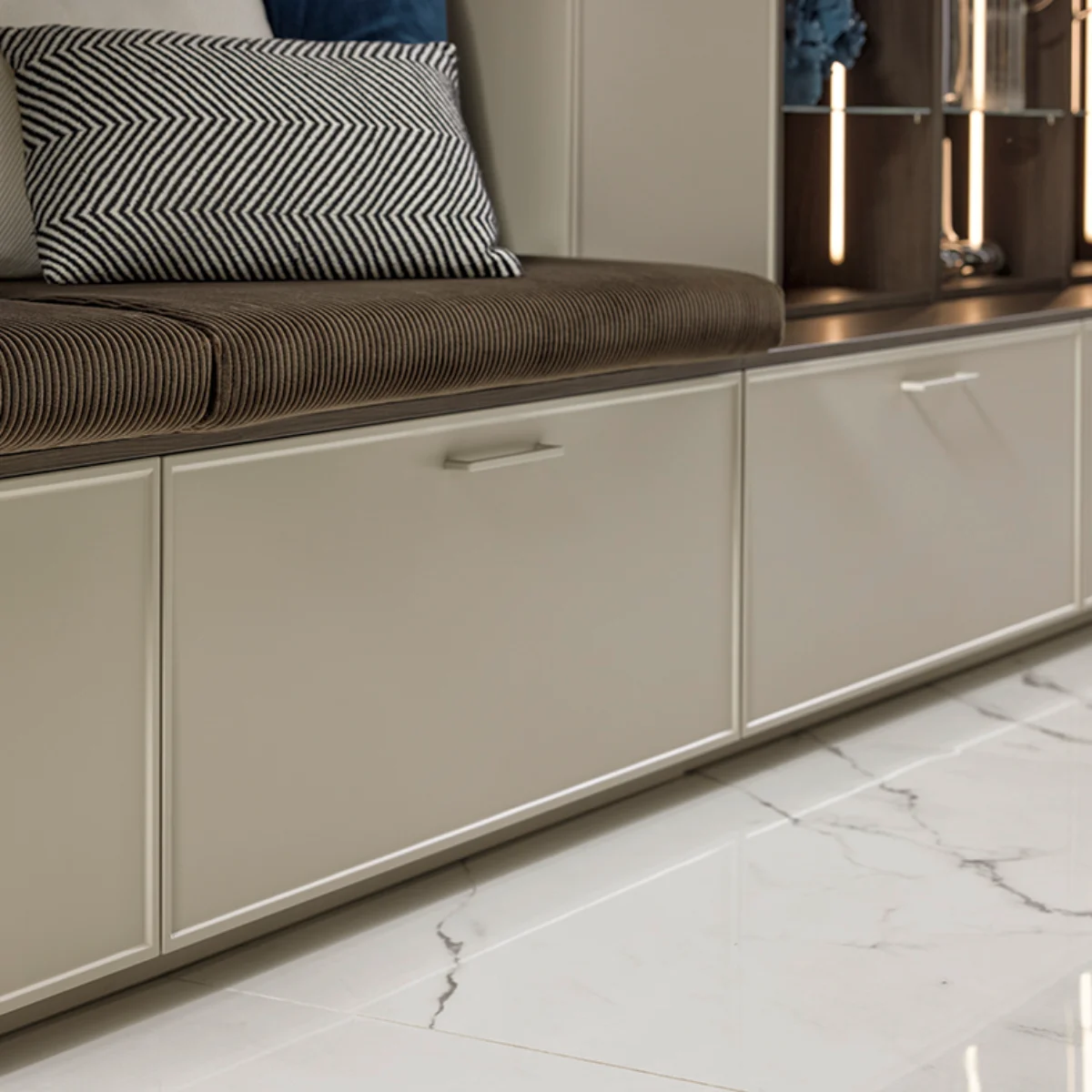
Nolte Slim Shaker. Lacquered MDF core with consistent profile edges. The even finish across the full run is a result of the precision of the factory lacquering process on engineered core doors.
German and European kitchen manufacturers favour veneered and lacquered engineered cores for Skinny Shaker doors because stability and clean edges matter more at narrow frame widths than at the wider profiles where solid timber performs acceptably. The same logic applies when specifying Skinny Shaker on a German carcass system.
Skinny Shaker on German
frameless cabinet systems.
German kitchen manufacturers design their systems around frameless carcasses. Doors overlay the front of the box and hang directly off the cabinet side panels. There is no structural face frame reducing the cabinet opening. This means Skinny Shaker doors on a German frameless carcass deliver the full internal width and drawer depth of any other door on the same system.
The combination works naturally. A Skinny Shaker door on a German carcass reads as a modern classic rather than a period in-frame kitchen. The narrow frame sits in front of the frameless box, the shadow line at the panel rebate gives the front face character, and the storage behind is fully modern: deep full-extension drawers, wide pull-outs, and integrated waste systems.
Most German manufacturers offering Skinny Shaker profiles carry the same door across their entire carcass range. The same front works on a 300mm base unit, a 600mm base, a tall appliance housing, and an island. Planning in the standard German module grid of 300, 400, 500, and 600mm widths keeps the layout straightforward. The Skinny Shaker front drops into the same grid as any other door style on the range.
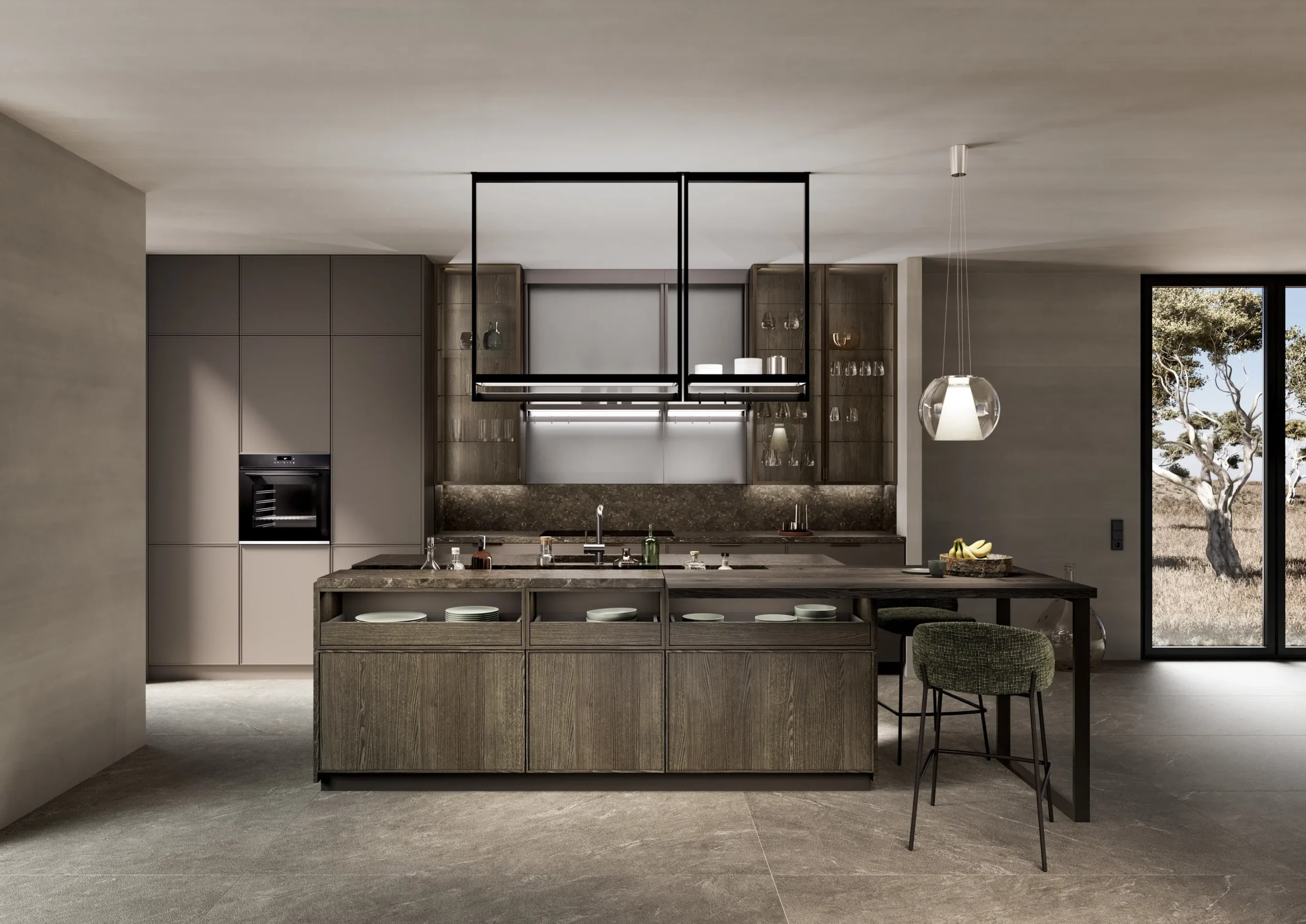
Leicht Skinny Shaker across a full kitchen layout on a German frameless system. The profile is consistent from base units to tall appliance housing to island. Storage performance is identical to any other door on the same carcass.
- Full internal width retained. No face frame reducing the carcass opening.
- Slim frames suit tall appliance banks where a wider frame would feel dominant
- Works naturally with slim bar handles, knurled pulls, and handleless rail systems
- Less obviously traditional than a deep-frame Shaker. Buyers wanting maximum period character should look at Classic Shaker or in-frame.
- Very slim rails (under 25mm) need careful handle sizing. Over-scaled hardware looks wrong on a narrow frame.
Skinny Shaker vs
Classic Shaker.
Both doors share the same core construction: four frame members around a flat recessed centre panel. The difference is frame width and what that width communicates in the room. The table below covers the practical distinctions that matter for a UK kitchen buyer.
| Aspect | Skinny Shaker | Classic Shaker |
|---|---|---|
| Frame width | 10–20mm on most kitchen ranges. Some specialist profiles closer to 8mm on feature doors. | 70–90mm on mainstream UK Shaker ranges. Wider borders and deeper shadow lines. |
| Visual weight | Lighter. More panel visible, less border. Suits smaller rooms and tall appliance banks where a wide frame would feel heavy. | More substantial. The frame has visual presence across a run. Reads as furniture rather than cabinetry. |
| Style direction | Transitional. Bridges classic and contemporary. Works alongside modern appliances and open-plan living spaces. | Traditional. Reads as heritage and period. Works best with statement handles, classic colours, and furniture-quality joinery. |
| Best property types | New builds, modern extensions, open-plan spaces with large glazing, and period homes where a lighter framed look is preferred. | Period houses, cottages, and projects where a furniture-led traditional kitchen is the brief. |
| Handle choice | Slim bar handles, knurled pulls, and smaller knobs. Large cup handles and heavy backplates look disproportionate on narrow rails. | Larger knobs, cup handles, and traditional bar handles. More frame material around the handle suits bolder hardware choices. |
| Long-term appeal | The underlying Shaker construction is enduring. The narrower profile reflects a sustained market move to cleaner framed styles rather than a short-term trend. | The most consistently specified kitchen door style in the UK for over a decade. Safe for resale in almost any property type. |
Ask your designer to show the same layout drawn as Skinny Shaker and as Classic Shaker. The visual difference between the two profiles on a full elevation is clearer from a drawing than from a description. Most buyers settle the choice quickly when they see both options on their own plan.
Colour and finish
for Skinny Shaker kitchens.
Skinny Shaker holds colour in a way that standard Shaker does not. The narrower frame means the centre panel dominates the door face. A bold colour on a Skinny Shaker door reads as more saturated and resolved than the same colour on a wide-frame Shaker, because there is less frame breaking the colour field into border and panel.
This makes deeper colours particularly effective on Skinny Shaker. Navy, forest green, charcoal, dark teal, and black all work confidently because the large panel carries the colour with minimal visual interruption. The shadow line at the panel rebate gives the colour depth and definition without the frame competing with it.
Most German kitchen brands offering Skinny Shaker profiles carry a full colour programme. RAL Classic matching is standard on quality ranges. Selected brands extend to Farrow and Ball and SIKKENS colour matching, which allows the kitchen to follow a heritage paint scheme used elsewhere in the property.
Matt and eggshell finishes suit Skinny Shaker particularly well. They reduce reflections across the panel surface and make the shadow line at the rebate more readable. High-gloss is available but demands a higher standard of gap consistency across the run, because panel reflections amplify any irregularity in alignment or fitting.
Always view a full door sample in your room. Skinny Shaker doors with large panels show lighting variation much more visibly than standard Shaker. A colour that looks resolved in a showroom with consistent artificial light may read differently in a north-facing UK kitchen. Request a painted door sample in your chosen colour and view it in the actual space before confirming the order.
Design tips for
Skinny Shaker kitchens.
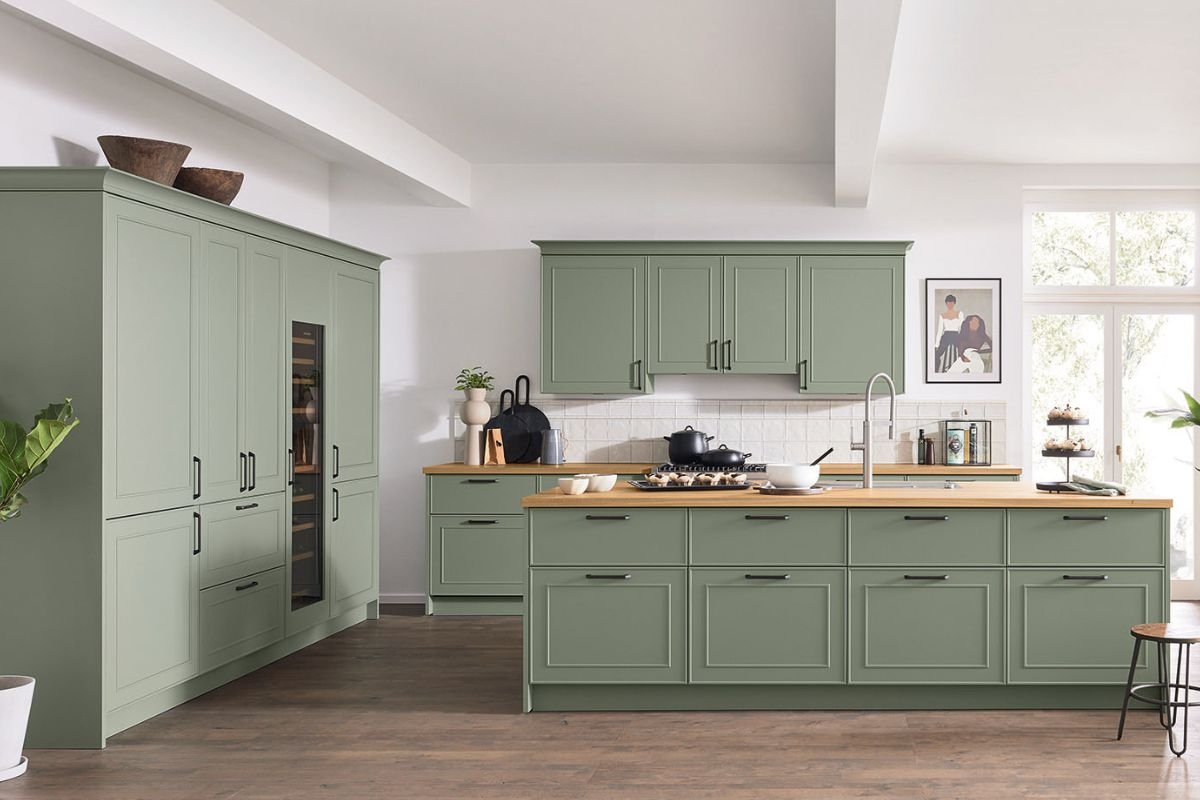
Ballerina Atlanta Skinny Shaker. One of the most widely referenced Skinny Shaker profiles in the UK market. Narrow frame, large panel, slim bar handle. The combination reads as contemporary while retaining the character of a framed door.
Bauformat Skinny Shaker in a deep tone with lighter wall units. The narrow frame allows the colour contrast to read clearly between the two runs without the frame weight competing with the colour.
UK cost bands.
Frame width influences door manufacturing cost and fitting precision more than raw carcass price. Finish level, brand, and room size drive most of the variation. For all three cost bands below, the total project spend reflects worktop choice, appliance package, and any building work on top of the cabinetry figure. Request itemised quotes that separate cabinets, door upgrade, fitting, worktops, and appliances.
These are indicative ranges only. The best way to understand where your project sits is to request the same layout quoted three ways: Skinny Shaker on a German system, Classic Shaker on the same system, and a slab or handleless door on the same system. The comparison on a single plan gives a clear view of the door style uplift versus the rest of the specification.
Is Skinny Shaker
right for you?
- You want framed doors but prefer a lighter, more contemporary feel than a wide-frame Classic Shaker delivers.
- Your kitchen sits in an open-plan space with strong sight lines to living areas, where a heavy traditional frame would feel out of place.
- You want a German kitchen with full storage performance but prefer framed character over flat slab or handleless fronts.
- You plan slim handles or a handleless rail system and want a subtle frame detail that supports rather than competes with that choice.
- You want to use a bolder colour and prefer the large panel of a Skinny Shaker door as the canvas for it.
- You want the maximum traditional, furniture-led character with deep frame shadows and prominent joinery. Classic Shaker or in-frame deliver this better.
- You own a period property where a wide-frame Shaker sits closer to the architectural character of the building.
- You prefer large knobs, cup handles, and substantial traditional hardware that looks proportional on a wider frame.
- You want the cleanest possible contemporary look with no visible frame detail. A slab door or handleless system delivers this more completely.
Visit a showroom with both Skinny Shaker and Classic Shaker displays if you are comparing the two. The difference in visual weight reads immediately in person in a way that descriptions and photographs do not capture. Also see the Shaker kitchen guide and the full kitchen door styles guide on this site for the complete picture across all ten styles.