
Travertine worktops.
The complete UK guide.
Travertine is a form of limestone deposited by mineral-rich spring water. As the water evaporates and cools, calcium carbonate precipitates and builds up in layers, creating the characteristic banded structure and warm cream, ivory, and honey tones that define the material. The small voids and channels visible in travertine slabs form from trapped gases and organic matter during deposition. These are part of the stone's natural formation — not defects — and are typically filled during fabrication to create a practical kitchen surface.
Travertine sits in the natural stone family alongside marble and limestone. Like marble, it is a calcite-based material, which means it reacts chemically with acids. Lemon juice, vinegar, wine, and tomato etch the polished or honed surface, leaving dull marks that cannot be cleaned off and require professional re-polishing to remove. This is the most important thing to understand before specifying travertine for an active kitchen.
Heat and sealing carry the same nuance as all sealed natural stone. The stone itself tolerates high temperatures. The impregnating sealant applied to the porous surface does not. Repeated hot pan contact degrades the sealant over time. Rapid temperature changes between a hot pan and a cold stone surface cause thermal shock, which can crack the slab. Trivets are the correct permanent habit — not an occasional precaution.
Travertine's warm, earthy character suits Mediterranean, classic, and soft contemporary kitchens. It performs best in lower-activity kitchen zones — feature islands, breakfast bars, pantry areas — where the maintenance load is manageable and the stone can age with the gentle patina that defines its long-term appeal.
What is travertine.
Travertine is a sedimentary limestone formed by the chemical deposition of calcium carbonate from hot springs and geothermal waters. Unlike marble — which forms under intense heat and pressure — travertine builds up at or near the earth's surface as water deposits mineral layers over time. The layered formation process creates the characteristic banding that runs through the stone and the small voids where gases and organic matter were trapped during deposition.
For worktop use, fabricators fill the natural voids with grout, resin, or crushed stone to create a smooth, practical surface. The fill material is usually colour-matched to the stone, though it remains visible on close inspection. The filled surface is more practical for kitchen use than an unfilled one — it prevents food debris collecting in the voids — and is standard on all UK kitchen travertine worktops.
The mineral composition of travertine places it in the same calcite family as marble. This determines its practical behaviour: softer than granite and quartzite, reactive to acid, porous enough to require sealing. The warm, earthy colour palette — cream, ivory, beige, honey, and light brown — is determined by iron oxide and other mineral impurities present in the spring water at the time of deposition. This palette remains consistent across the global travertine supply, which is both a characteristic and a limitation: travertine does not offer the colour range of granite or the engineered variety of quartz.
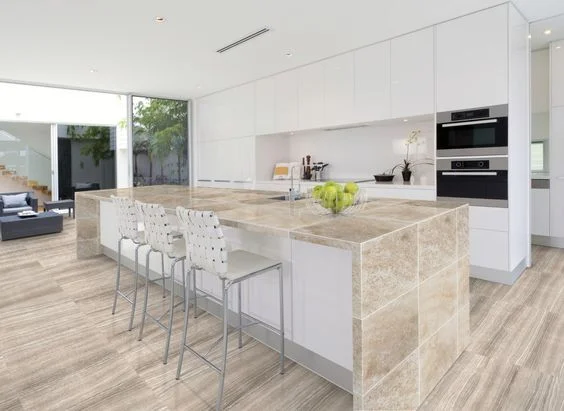
Travertine's warm cream and honey tones suit classic, Mediterranean, and soft contemporary kitchens. The layered formation structure and characteristic filled voids are visible in the surface detail, distinguishing it from marble and granite.
Heat, sealing,
and thermal shock.
Travertine's heat behaviour follows the same pattern as all sealed natural stone: the stone itself tolerates high temperatures, but the impregnating sealant applied to the porous surface does not. The distinction matters practically.
Repeated exposure to very hot cookware degrades the sealant over time. The impregnating sealer fills the pores of the travertine and provides stain resistance. High heat breaks down the sealer compound gradually, depleting the stone's protection faster than the 6–12 month resealing schedule assumes. In a kitchen where trivets are used inconsistently, travertine may absorb staining liquids and show marks significantly sooner than properly maintained stone.
Thermal shock is the more acute risk. When a very hot pan is placed on a cold travertine surface — most commonly near a sink, an external wall, or an area exposed to cold draughts — the stone expands and contracts unevenly. The internal stress this generates can crack the slab. Travertine, as a softer and more porous stone than granite or quartzite, carries a similar thermal shock risk. Cracks from thermal shock are not repairable by polishing and in most cases require section replacement.
Sealing and etching are separate issues. The sealer prevents staining — it fills the pores so liquids cannot penetrate. Etching is a surface chemical reaction between acid and calcite. The sealer has no effect on etching. Both granite and marble pages make this distinction. For travertine, the same applies: you seal to prevent staining, but etching from kitchen acids happens regardless of seal condition.
Use trivets as a permanent habit. The travertine stone itself tolerates heat. The sealant that protects the porous surface does not. Repeated hot pan contact degrades the sealant over time. Rapid temperature changes between a hot pan and a cold surface cause thermal shock that can crack the stone. This applies to all pans taken directly from the hob and anything removed from the oven. The risk is highest near sinks and in cold areas of the kitchen.
The water drop test. Drop a few drops of water on the travertine surface and leave for 10–15 minutes. If the water beads, the seal is intact and providing stain protection. If the stone darkens at the contact point, the stone is absorbing moisture and resealing is due. Reseal before staining has established itself in the stone — do not wait until visible marks have formed.
- Stone tolerates heat; sealant does not — trivets required permanently
- Hot pan contact depletes the sealant gradually over time
- Thermal shock from rapid temperature changes can crack the slab
- Thermal shock risk is highest near sinks and cold areas of the kitchen
- Sealing prevents staining — it does not prevent acid etching. These are separate issues.
- Etching from lemon, vinegar, wine, and tomato is permanent — only professional re-polishing removes etch marks
Design possibilities.
Travertine's warm palette and organic texture suit kitchen schemes where natural character and connection to traditional materials are part of the brief. The stone works particularly well as a feature material — on islands, peninsulas, breakfast bars, and pantry areas — paired with harder surfaces around the main cooking and sink zones. Full-kitchen travertine specifications are possible but demand consistent maintenance habits.
Finish choice significantly affects the practical experience. Honed travertine — matt and smooth — shows etch marks less visibly than polished, making it the more practical choice for active use. Polished travertine reflects light beautifully but highlights etching more quickly. Brushed and tumbled finishes suit rustic and Mediterranean-inspired schemes and offer a more forgiving surface for casual everyday use.
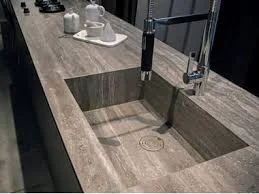
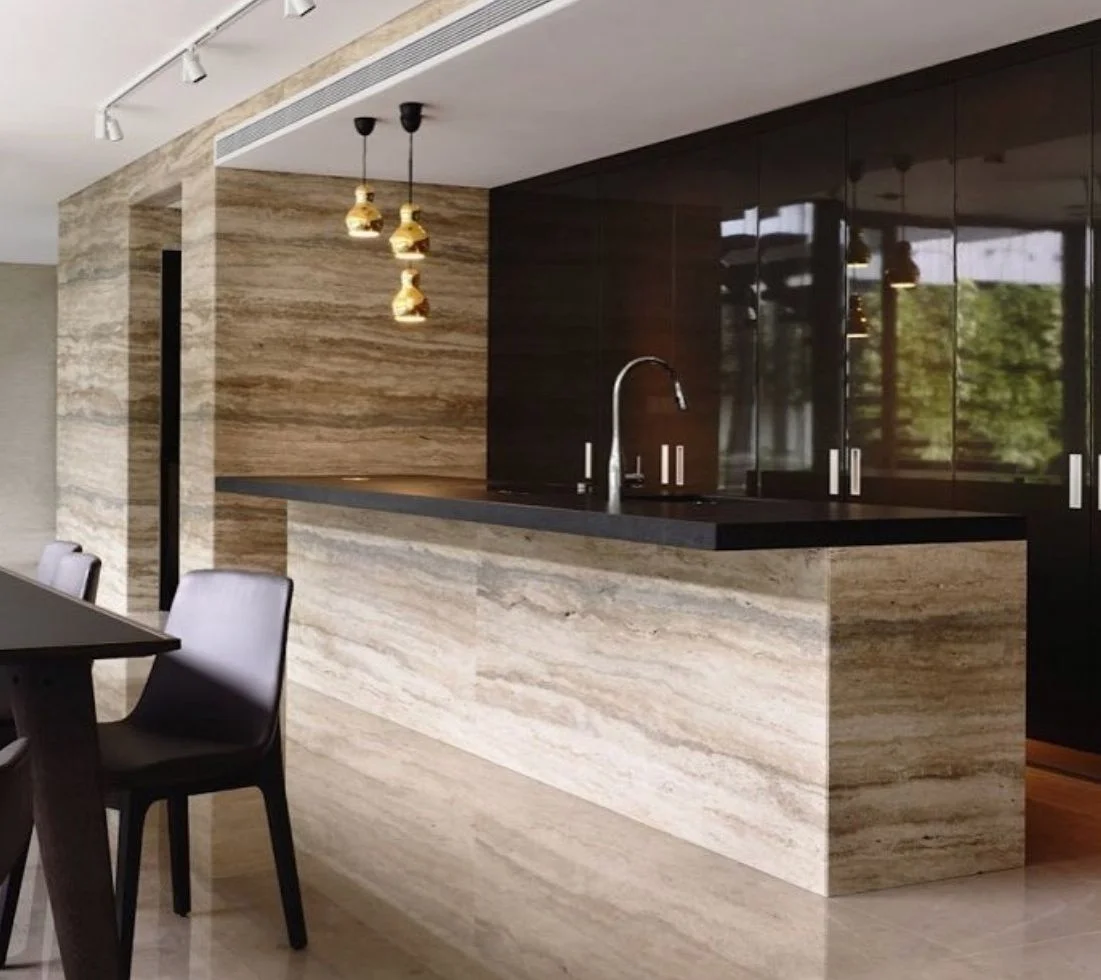
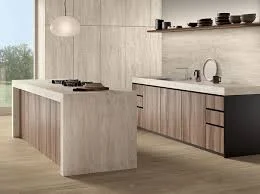
Travertine in UK kitchen settings. The warm, organic character suits island positions and feature zones where the natural material texture drives the design. Honed finish (left and right) is more practical for active kitchen use than polished — etch marks are less visible on a matt surface.
Key features.
Advantages and limits.
- Warm natural character. The cream and honey tones and organic layered texture give travertine a warmth that neither granite nor engineered surfaces replicate. Particularly effective in Mediterranean and classic kitchen schemes.
- Each slab is unique. Natural variation in banding, tone, and void pattern means no two travertine worktops look identical.
- Surface restoration is possible. A stone specialist can hone and re-polish accumulated etching and fine scratches after years of use to restore a fresh surface. This is a significant advantage over harder, less workable stones.
- Natural material with traditional credentials. Travertine has been used in architecture and interiors for thousands of years. It carries a genuine connection to traditional European building materials that manufactured surfaces cannot offer.
- Accessible entry price point. Standard travertine starts at a lower price per square metre than most premium engineered or natural stone options, though installation and long-term care costs affect the total picture.
- Ages with character. Travertine develops a patina through regular use. Buyers who accept this find the material ages with a natural warmth and authenticity that engineered surfaces do not develop.
- Etching from kitchen acids is unavoidable and permanent at the surface level. Lemon, vinegar, wine, tomato, and any non-neutral cleaner etch the calcite surface. Only professional re-polishing removes etch marks — they cannot be cleaned off.
- Softer than most kitchen stone alternatives. At 3–4 Mohs, travertine scratches more easily than granite, quartzite, quartz, and porcelain. Chopping boards are essential.
- Sealing required every 6–12 months. The seal provides stain resistance but requires periodic maintenance. Unsealed travertine absorbs liquid rapidly due to its high porosity.
- Trivets required permanently to protect the sealant and prevent thermal shock cracking. Not suited to casual, maintenance-free kitchen use.
- Narrow colour palette. Only warm cream and beige tones available. Does not suit kitchens with cooler, greyer, or darker design briefs.
- Not suited to high-activity primary cooking zones without very consistent immediate cleaning and maintenance habits. Best specified for lower-activity feature zones.
Travertine vs
other worktop materials.
This comparison covers practical kitchen performance across the materials most commonly compared with travertine. The original page compared travertine only with porcelain — the table below adds granite, marble, and quartz since these are the materials buyers most often shortlist alongside travertine in the same project.
| Aspect | Travertine | Marble | Granite | Quartz | Porcelain |
|---|---|---|---|---|---|
| UK price guide (supply + install) | £200–£500+ per m² | £400–£1,100+ per m² | £150–£600+ per m² | £250–£700+ per m² | £400–£950+ per m² |
| Hardness | 3–4 Mohs. Softest common kitchen stone. Scratches in normal use. | 3–4 Mohs. Similar to travertine. Also scratches in normal use. | 6–7 Mohs. Very good scratch resistance. | Good. Engineered surface resists everyday contact. | Very good. One of the hardest worktop surfaces available. |
| Acid / etching | Etches permanently with lemon, vinegar, wine, and tomato. Sealing does not prevent etching. | Etches permanently with all common kitchen acids. Same acid sensitivity as travertine. | Does not etch. Good acid resistance. | Does not etch. Resin surface is acid resistant. | Fully acid resistant. Does not etch under any kitchen conditions. |
| Heat and sealant | Stone tolerates heat. Sealant is damaged by hot pan contact. Thermal shock can crack surface. Use trivets permanently. | Stone tolerates heat. Sealant damaged by hot pan contact. Thermal shock risk. Use trivets. | Stone tolerates heat. Sealant damaged by hot pan contact. Thermal shock risk. Use trivets. | Low heat tolerance. Resin binders mark under sustained heat. Trivets always required. | Excellent heat resistance. No sealant to protect. No thermal shock from hot pans. |
| Maintenance | High. Sealing every 6–12 months. Immediate acid blotting. Periodic professional re-polishing for etching. Trivets permanently. | High. Sealing every 3–12 months. Immediate acid blotting. Periodic professional re-polishing. Trivets permanently. | Moderate. Sealing every 1–3 years. Daily cleaning simple. Trivets required. | Very low. No sealing. Wipe clean. Trivets required. | Very low. Wipe clean. No sealing. No special products needed. |
| Colour range | Narrow warm palette — cream, ivory, beige, honey. No cool or dark options. | Wide — white, grey, green, pink, gold. Dramatic veining in premium stones. | Wide — black, white, grey, gold, green, blue, brown. Broadest natural stone range. | Extensive engineered range including marble-effect, concrete, and solid colours. | Very wide including marble-effect, stone-effect, and solid colours. |
| Best specification for | Feature islands and lower-activity zones in warm, classic, or Mediterranean kitchen designs. | Statement islands and feature areas in design-led kitchens. Accepted patina and periodic restoration. | Primary worktop surface in busy kitchens where durability and heat performance matter. | Low-maintenance primary worktop in busy kitchens. Consistent pattern predictability. | Maximum durability and zero maintenance. Modern, clean kitchen aesthetics. |
Travertine vs marble. The two materials share the same hardness range and the same acid sensitivity — both etch permanently with common kitchen acids. Marble typically offers more dramatic veining and a wider colour range. Travertine offers warmer, earthier tones and a more casual texture. Both require the same maintenance approach and carry the same heat and sealing caveats. If etching concerns you, neither material suits an active kitchen without very consistent care.
Travertine vs porcelain. The most practical comparison for buyers who want a natural stone look with different maintenance requirements. Porcelain does not etch, does not scratch as easily, requires no sealing, and handles hot pans without sealant degradation. The trade is natural material character — travertine's organic warmth — versus manufactured reliability. Porcelain's appearance has improved significantly and marble-effect porcelain now reads convincingly in photography. Under the hand and at close range, the materials feel and look different.
Maintenance and care.
Travertine maintenance requires two separate ongoing habits: sealing to prevent staining from absorbed liquids, and immediate acid blotting to minimise etching from kitchen acids. Both are required throughout the life of the worktop. Neither eliminates all surface change — travertine develops a patina over time as part of its normal behaviour in a kitchen environment.
UK cost guide.
Travertine material pricing sits at the more accessible end of the natural stone market. However, the total cost of ownership — including installation, long-term sealing and cleaning products, and periodic professional restoration — brings the lifetime cost closer to the mid-range of comparable materials. Always obtain itemised quotes that specify the stone name, finish, thickness, and all cut-outs separately.
Long-term cost picture. Travertine's lower material entry price is partially offset by higher maintenance costs compared to quartz and porcelain. The periodic professional restoration cost — when etching has accumulated significantly — is a real budget consideration that does not apply to harder, non-reactive surfaces. Factor this into the total kitchen budget alongside the material and installation costs.
Who travertine suits.
- You want warm, natural stone character in cream and honey tones that suits a Mediterranean, classic, or warm contemporary kitchen scheme where earthier materials are part of the design brief.
- You accept that acid contact etches the surface permanently and you are prepared to blot spills immediately, use only pH-neutral cleaners, and plan for periodic professional restoration.
- You are planning travertine for a feature zone — an island, breakfast bar, or pantry — where the primary cooking and sink zones use harder, non-reactive surfaces. This split approach is the most practical way to incorporate travertine in a working kitchen.
- You prefer a surface that ages with gentle patina over one that maintains a uniform showroom appearance. Travertine's character develops over time in a way that manufactured surfaces do not.
- You value the ability to restore the surface professionally after years of use — travertine's softness makes professional honing and re-polishing feasible in a way that harder stones do not permit.
- Etching from kitchen acids concerns you. If permanent dull marks from lemon juice, vinegar, and wine are unacceptable, travertine is not suitable for any active kitchen zone. Granite, quartz, and porcelain are all acid-resistant alternatives.
- You want a surface that requires no sealing and minimal maintenance. Quartz and porcelain both deliver very low maintenance without the sealing schedule, acid management, and restoration costs of travertine.
- Your kitchen colour brief includes cool greys, blacks, dramatic veining, or a wide palette. Travertine's warm, narrow colour range does not suit these schemes.
- You want maximum heat resistance with no sealant degradation risk. Porcelain handles hot pans without any sealant concern — it is the only common worktop material with no heat-related maintenance requirement.
- The kitchen will see heavy daily use from children or a busy household where immediate spill response is not always realistic. Travertine in this context will etch and mark quickly and require restoration sooner than its maintenance schedule suggests.
Frequently asked questions.
See the Worktops hub to compare travertine with granite, quartzite, marble, quartz, and porcelain across the same practical criteria. The Marble guide covers the closest natural stone alternative with similar aesthetics and comparable maintenance requirements.