
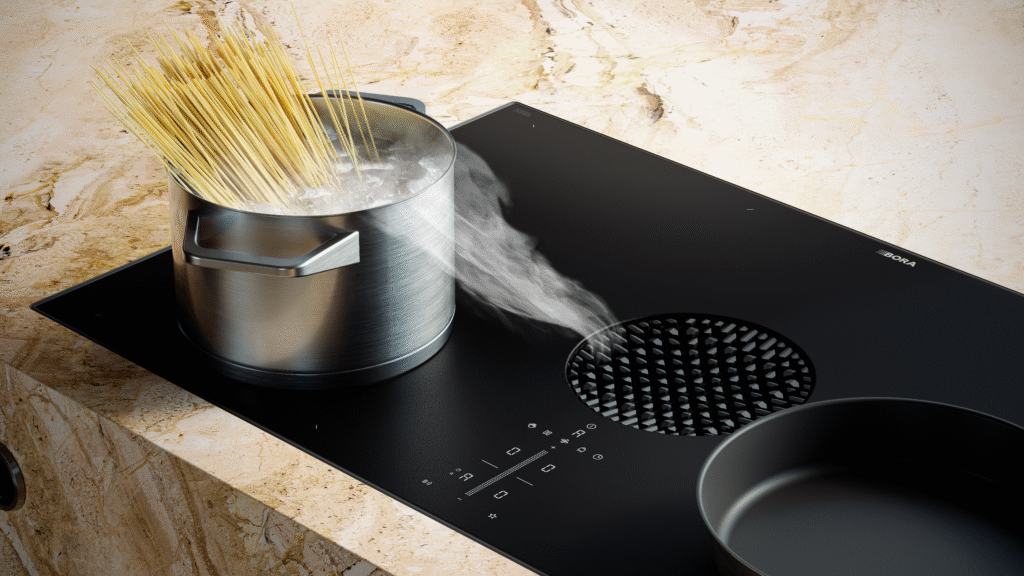
A clear guide to vented hobs for UK homes. Learn about installation, airflow, ducting routes and layout planning for modern renovations.
The Rise of Vented Hobs in 2026. A Clear Guide for Renovators
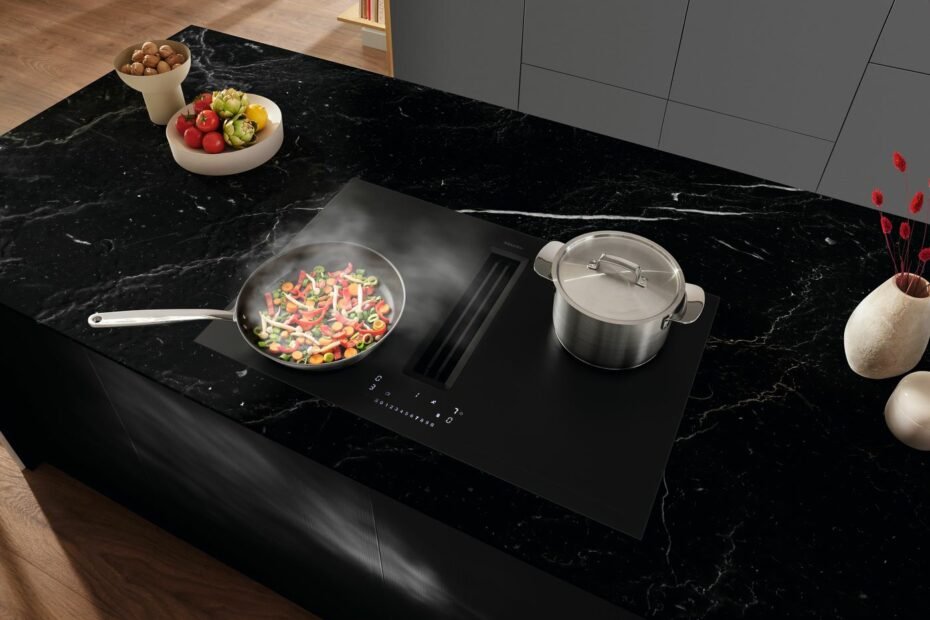
Vented hobs are continuing to grow in UK home renovations. Renovators want clean surfaces. They want better airflow. They want a modern layout without an overhead hood. A vented induction hob gives those advantages. Vented gas hobs has less demand. It combines a cooking surface and a built-in extraction system. It removes steam at its source. It keeps the room clear. It supports open plan living.
This expert guide will explain how vented induction works, covering installation rules, airflow planning, ducting choices, and layout options to help one avoid the most common design mistakes in UK homes. It suits anyone planning a new kitchen, island, peninsula, or full renovation.
Summary for Quick Readers
• A vented induction hob removes overhead extraction.
• It pulls steam downwards at the source.
• It suits open plan layouts.
• It improves safety in busy homes.
• It supports island and peninsula designs.
• It needs correct ducting or a recirculation kit.
• It needs a strong electrical supply.
• It needs accurate planning inside the cabinet below.
What a Vented Hob Does
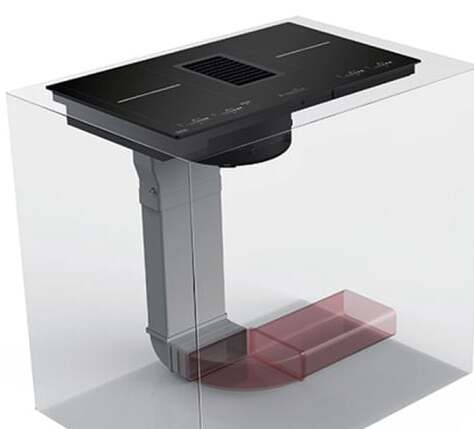
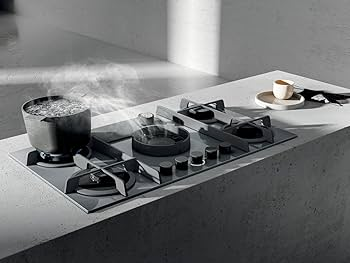
A vented hob performs dual functions within one unit. It heats saucepans by induction. The steam is sucked downwards by an integrated extractor. Air moves through a filter system or ducting route. This prevents vapour from rising. It reduces spread across the kitchen.
The hob surface can be flush with the worktop or top mounted. The extractor sits in the centre or rear of the hob. The ventilation unit then goes inside the base cabinet below, allowing space for the motor, filters, and pipework. The system removes the need for an overhead hood. This clears the ceiling line, improving the look of the room.
Vented Induction or Gas options
Why Vented Hobs will Increase in Popularity in 2026
Open Plan Living Drives the Trend
UK households continue to knock through walls. In many properties, kitchen, dining and living are combined in one space. A ceiling hood in the middle of the room can appear cumbersome. A vented hob removes this problem. It allows for clean lines. It opens up sight lines into and across the room. It is suitable for new extensions and loft conversions.
Low Noise Levels Improve Comfort
Vented systems often produce lower noise at low and medium settings. This suits open plan spaces. Many homeowners cook while others relax nearby. Lower noise creates a calmer atmosphere.
More Freedom in Layout Planning
A vented hobs will support more layouts. You can place the hob on an island without a ceiling hood, it can be placed under a low ceiling, and it can also be placed near feature lighting. You also avoid conflict with beams or sloped ceilings, giving you more freedom during design.
An Overall Cleaner Appearance
A vented hob removes a bulky hood, creating a simple, modern look. Many homeowners prefer this for long, clear sight lines; it also supports a minimalist finish.
Key Benefits for UK Homes
1. More Space Above the Hob
A vented hob frees the wall or ceiling above. This suits floating shelves, artwork, or feature lighting. It suits modern German layouts with tall units or open shelving. Also, it supports simple splashback designs without a hood interrupting the lines.
2. Better Safety for Families
Induction surfaces stay cooler than gas. The vent removes steam at the source. This reduces condensation near cabinets. It also reduces the chance of contact burns. This suits families with children.
3. Excellence in small kitchens
Most UK kitchens are small, with less space to provide for an overhead hood. A vented hob avoids this problem. It works well in L-shaped, U-shaped, and peninsula layouts. It also suits compact islands in smaller extensions.
4. Variable Airflow Options
You choose either ducting to the outside or use a recirculation kit. It suits most homes, including flats where there is no access to an external wall. Make the correct choice at the time of purchase.
5. Cleaner Air and Easier Maintenance
The system traps grease near the pot, preventing it from spreading across surfaces. It reduces cleaning time by keeping cabinets fresher longer.
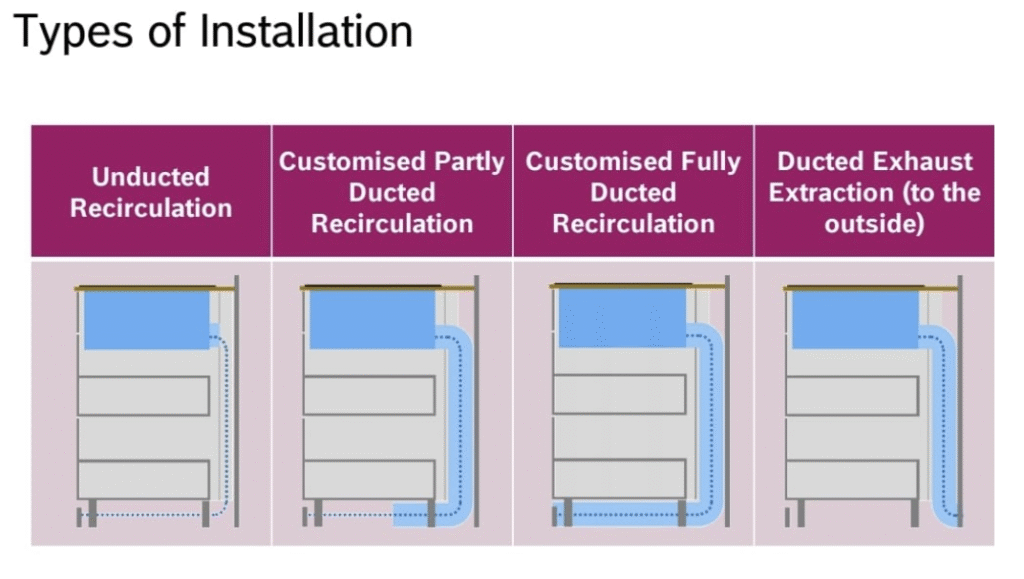
Ducted vs Recirculation Systems
You must choose one airflow method. This affects installation, performance and maintenance.
Ducted Systems
It is a ducted system that pushes air outside. This delivers the strongest performance for moisture removal. It is suitable for ground floors or extensions with easy access to an external wall.
Advantages
• Powerful flow of air
• Better moisture control
• Better steam removal
Disadvantages
It requires a predetermined route.
• Needs space for pipework
• Needs a contractor to create an external outlet
Action Steps for Ducted Planning
• Confirm space under cabinets or within the plinth area
• Select the shortest, straightest route for ducts
• Avoid sharp bends
• Plan the external outlet early
Recirculation Systems
A recirculation system recirculates filtered air back into the room. It’s ideal for flats/apartments or open plan kitchens without outside access.
Advantages
• No external ducting
• Easier installation
• Fewer structural changes
Disadvantages
• The charcoal filters need replacement.
• Moisture stays inside the room
• Slightly lower steam removal
Action Steps for Recirculation Planning
• Check filter size
• Leave space for easy access
• Clean grease filters frequently
• Replace charcoal filters on schedule
Note: Check if building regulations will get in the way of having recirculating option.
Comparing Features Before You Choose
Power Levels
You require fine control over a wide range of power settings. A good range supports boiling, simmering, and other precise cooking tasks.
Booster Functions
Booster functions give short bursts of maximum heat. These speeds help in boiling water or browning ingredients.
Flex Zones
Flex zones support bigger cookware. This suits skillets, large casseroles, or griddle plates. The hob will detect the cookware size and only heat that area.
Automatic Pan Detection
The hob detects the pot’s position. This improves efficiency, reducing waste heat.
Modular Options
Some vented systems make use of modular surfaces. These offer induction in one zone and alternative cooking surfaces in another. This suits homeowners that have specialist cooking habits.
Extraction Strength
Check the airflow rating; this should be in m3/h. Larger rooms require a higher rate. Open plan areas collect more steam, so you need a stronger level of extraction.
Noise Levels
Noise levels affect comfort, and lower noise levels at low/medium settings promote social cooking.
Automatic Fan Control
Some systems automatically adjust fan strengths according to rising steam, which would retain air quality throughout cooking without the need for manual changes.
Integrating a Vented Induction Hob Into Your Layout
Island Layouts
An island suits a vented hob. It keeps the room open and it supports social cooking. You face guests while preparing food. You need 1.2 m walkway around the island to maintain safe movement and space on both sides of the hob for prep tasks.
Peninsula Layouts
A peninsula suits small and medium rooms. A vented hob keeps the ceiling clear, creating a more open feel without an overhead hood.
L Shape Kitchens
Position the hob on the longer run. This supports efficient movement between cooking, prep and sink zones. No hood keeps the space lighter.
U Shape Kitchens
A vented hob adds comfort, in reducing the feeling of enclosure, and avoids any clash with the wall units.
Technical Planning for UK Homes
Cabinet Depth
The motor and filters need space. Many systems need deeper base cabinets. German carcasses at 780 mm height give more internal depth than traditional 715 – 720 mm UK units. This gives improved airflow routes and installation space. German carcasses can be 555mm 705mm deep.
Worktop Thickness
The worktop needs to support the hob cut-out. Most materials work, including quartz, porcelain, and solid surface. 6mm to 30mm worktop thickness would suit. It can be topmounted or flushmounted.
Electrical Supply
Induction hobs require a powerful electrical feed. Supply capacity must be confirmed by a qualified electrician. Many older UK homes need electrical upgrades during renovation.
Vent Position
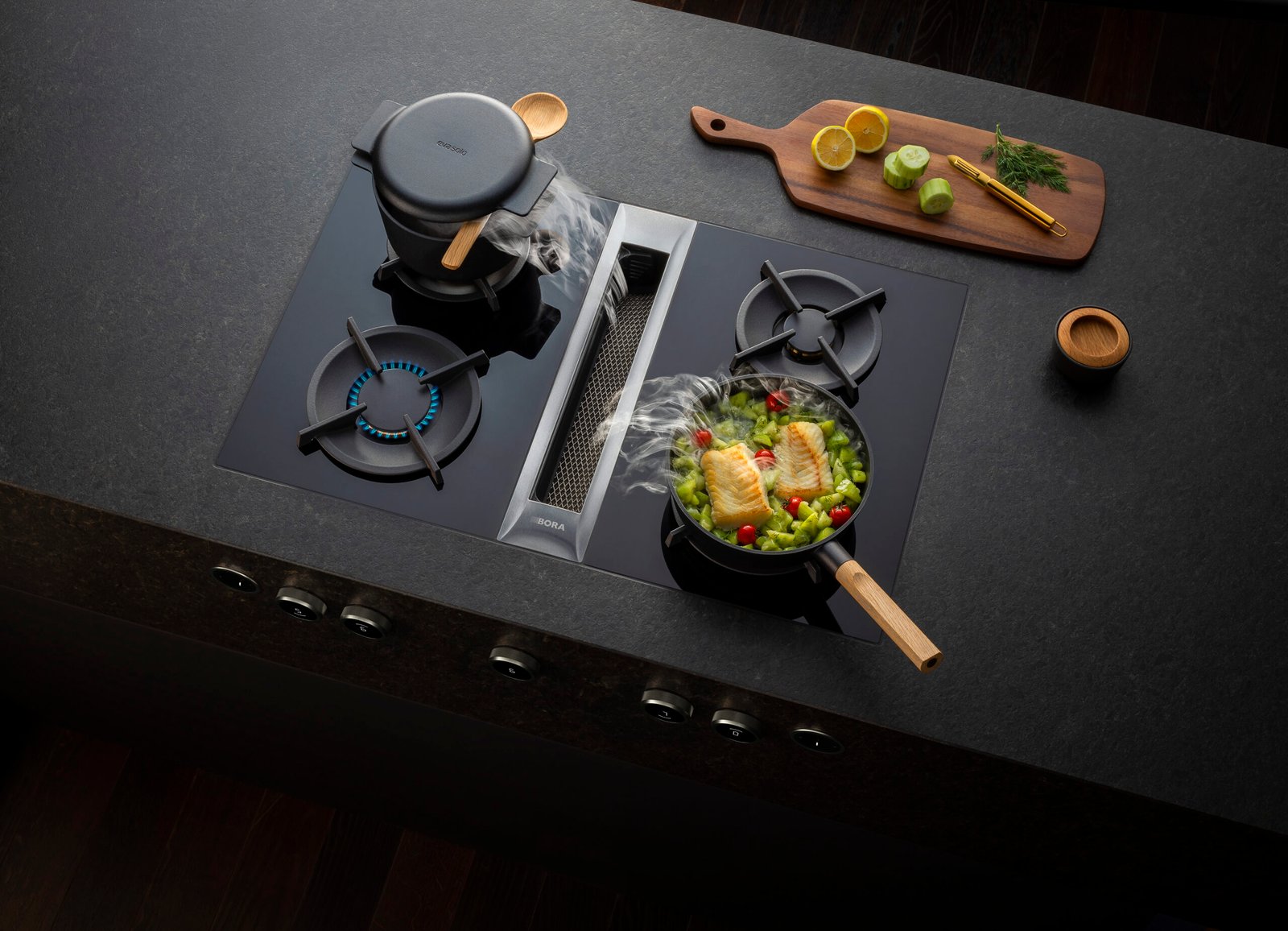
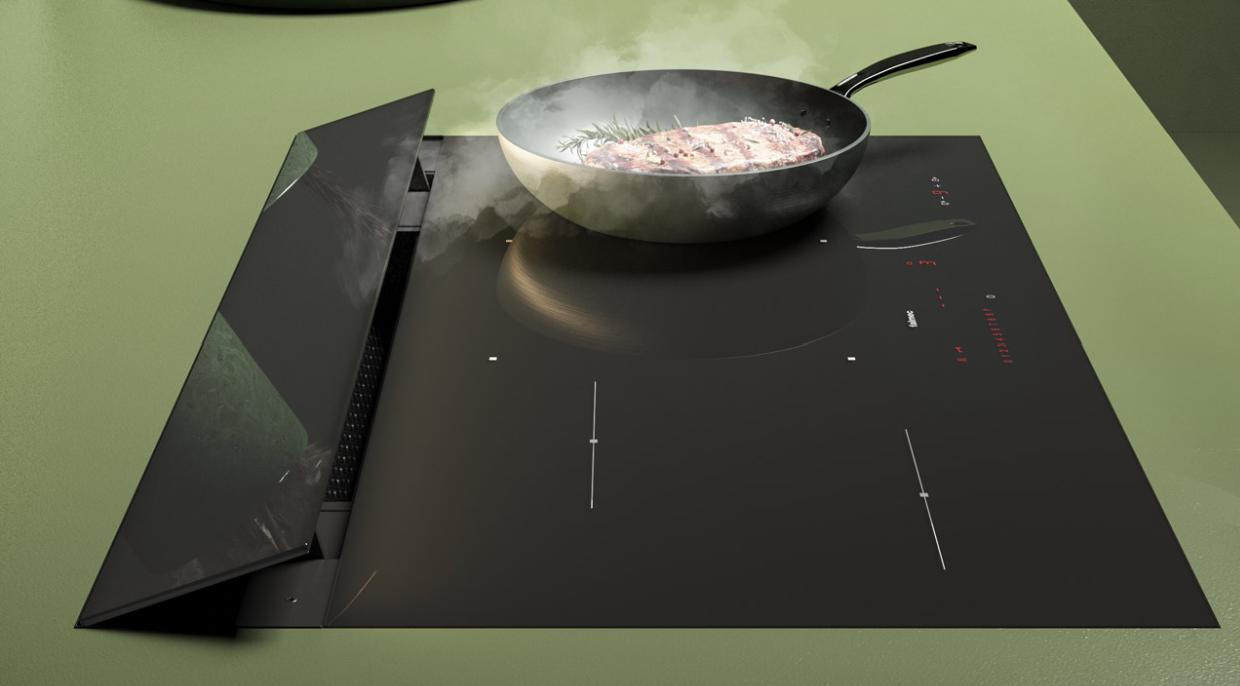
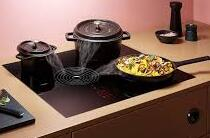
Centre vents are good for large pots. Rear vents provide a clearer cooking area. Both require planned clearance around cookware.
Ducting Routes
Shorter routes provide stronger performance. Straight paths reduce airflow loss. Visualize your route before ordering cabinets.
Common Mistakes and How to Avoid Them
Poor Ducting Design
Late duct planning reduces performance. Confirm the route before cabinet design.
Lack of Cabinet Space
The base unit under the hob must contain the system. You do lose some drawer depth. Plan for deep drawers in adjacent units if it’s in an island.
Incorrect Hob Position
Avoid having the hob against any tall units: The steam rises before it reaches the vent if the space is too tight.
Overlooking Moisture Levels
Recirculation retains moisture inside the room. But this is minimum. Support ventilation with an openable window or secondary extraction in the space. This depends on the hob manufacturer.
Ignoring Clearance Rules
Leave space around the hob for safe movement. 300mm either side. Confirm all measurements with your installer.
Why Vented Induction Suits German Kitchens
German kitchens use deeper cabinets, strong internal construction, and accurate modular sizing that supports vented hob systems.
Advantages
• More internal depth for motors and filters
• Smooth airflow routes behind drawers
• Strong support for wide hobs
• Clean alignment with island layouts
• Better integration with tall units
• More space for ducting behind the carcass
Note: If vented hob model is provided to the German manufacturer, drawers and units will be customised accordingly.
Future Trends Beyond 2026
• Improved automatic airflow sensors
• Smaller motors
• Wider zones of induction
• Quieter fan systems
• Slimmer ventilation units
• Better rear-vent placement
• More developed surface controls
These trends reflect increasing adoption within UK households.
Your Final Decision Checklist
• Ducted or recirculation airflow
• Available cabinet depth
• Worktop thickness
• Feasibility of duct route
• Electric supply strength
• Clearance around hob position
• Flex zones for larger pans
• Filter access for maintenance
Noise levels during daily use A vented induction hob would fit many UK kitchens. It works well with open layouts, islands, and modern designs. It improves safety and reduces clutter. This provides, with correct planning, a cleaner, more organized cooking area which suits long-term use.