
Which oven?
Pick the setup that fits your kitchen.
Start with how you cook. Then match the oven type to your space, your daily routine, and your budget. Most UK kitchens fall into four built-in choices: single oven, double oven, compact oven, or steam compact oven. Many new kitchen designs combine a single oven with a compact appliance in a tower to get two cooking zones without the compromises of a double oven.
Pick the format first. The format determines what cabinet space you need, how many temperatures you can use at once, and what features are realistically available. Then shortlist models and compare cavity dimensions against your actual trays and dishes. Litres alone do not tell you whether your largest roasting tin fits.
This guide covers all four oven types, a quick comparison table, six household scenarios with recommendations, a five-question decision tool, appliance tower configurations, a budget guide, and the pre-purchase checklist. Use it as a starting point. Then read the dedicated guide for the type you are leaning towards.
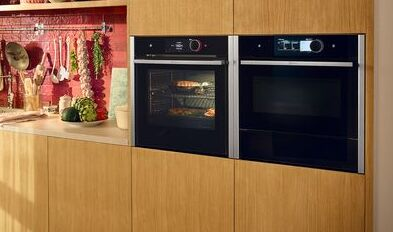
An appliance tower with a single oven, compact oven, and warming drawer stacked in a tall housing column. Each appliance operates independently at a different temperature or setting simultaneously.
Oven types
at a glance.
Most UK built-in kitchens use one of four oven formats. Each suits a different combination of cooking style, cabinet space, and budget. The type determines what is possible — no amount of features closes the gap if the format is wrong for your layout.
- Capacity typically 65–75 litres. Largest main cavity of any built-in format.
- Grill in the same cavity. Not usable simultaneously with oven cooking.
- Best choice for pyrolytic cleaning, modern cooking modes, and premium features.
- Fits a standard 60cm housing unit. Strong base for an appliance tower.
- Widest choice of models across all price points in the UK market.
- Top cavity 30–45 litres (grill and side dishes). Main cavity 45–65 litres (built-in format).
- Both cavities run independently at different temperatures simultaneously.
- Built-in niche height 88–90cm. Built-under niche height approximately 72cm. Not interchangeable.
- Narrower feature choice than single ovens. Pyrolytic cleaning and steam are rare.
- Main cavity is typically smaller than a full-size single oven.
- Cavity typically 32–45 litres. Suited to side dishes, baking trays, and second-cavity cooking.
- Stacks neatly with other 45cm compact appliances in a tall housing column.
- Compact microwave combination versions add flatbed microwave functionality.
- Widely available — most paired above or below a 60cm single oven.
- Clears the worktop of a standalone microwave in combined formats.
- Full steam, steam plus hot air combination, and regeneration reheating as core modes.
- Also runs as a standard oven with dry fan, conventional, and grill modes.
- 45cm height — fits any compact appliance niche in a tower. Most paired with a 60cm single oven.
- Tank water supply on most models. Plumbed connection on selected premium models.
- Limescale management is an essential maintenance routine. Filtered water strongly recommended in hard water areas.
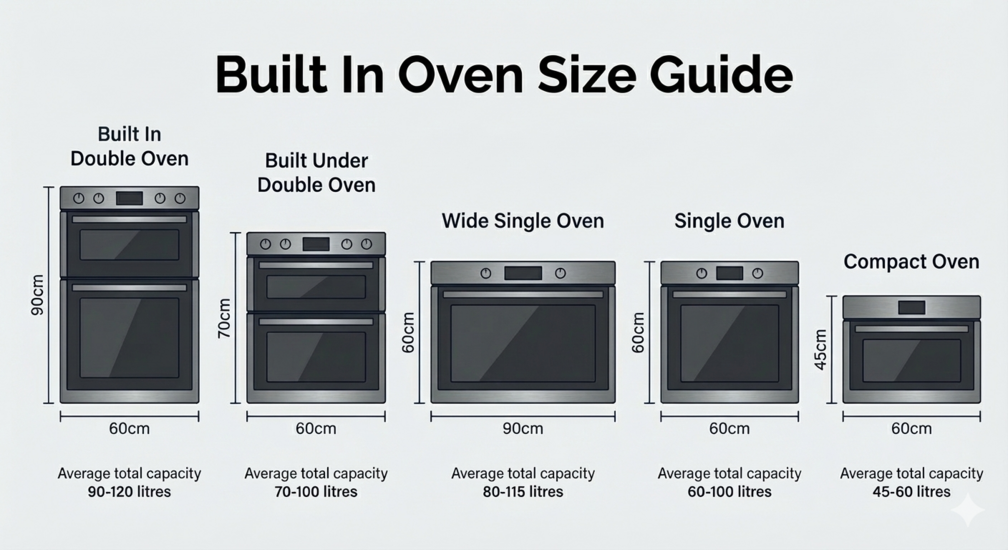
Oven format heights. Single oven: approximately 59cm. Double oven built-in: approximately 88–90cm. Double oven built-under: approximately 72cm. Compact oven: approximately 45cm. Confirm the exact cutout dimensions from the installation guide before ordering.
A simple rule. If you need two temperatures at the same time regularly, an appliance tower (single oven plus compact) beats a double oven for flexibility and feature access. If you want the largest possible single cavity and the widest feature choice, a 60cm single oven wins.
Quick comparison table.
Use this to narrow the choice quickly. Then check the internal cavity dimensions on any model you shortlist against your largest tray or roasting tin before ordering.
| Aspect | Single oven | Double oven | Compact oven | Steam compact |
|---|---|---|---|---|
| Typical capacity | 65–75 litres. Largest main cavity. | 85–110 litres total, split between two cavities. Main cavity 45–65 litres. | 32–45 litres. Second oven role. | 32–45 litres. Steam cooking in a compact format. |
| Niche height | Approximately 59–60cm | Built-in 88–90cm. Built-under approximately 72cm. | Approximately 45cm | Approximately 45cm |
| Two temperatures simultaneously | No. One cavity, one temperature. | Yes. Both cavities run independently. | No alone. Yes when paired with a single oven in a tower. | No alone. Yes when paired with a single oven in a tower. |
| Grill | Yes. Grill element in the main cavity. Not usable simultaneously with oven cooking. | Usually in the top cavity. Operates independently of the main cavity. | Yes in most standard models. | Varies by model. Check specification before ordering. |
| Microwave option | No | No | Yes — compact microwave combination versions available. | On a small number of premium models only. |
| Steam cooking | Steam assist available on some mid and premium single oven models. | No | No | Yes — full steam, steam plus hot air, and regeneration modes. |
| Pyrolytic cleaning | Common across mid and premium range models. | Very rare. Available on a small number of premium models. | Available on some models. Check the specification. | Very rare. |
| Best reason to buy | Largest cavity and widest feature and price choice in the UK market. | Two independent temperatures in one single appliance without a tower. | Second oven or combined microwave at eye level in an appliance tower. | Steam cooking, combination steam roasting, and superior reheating quality. |
| Typical UK price range | £250 to £2,500+ | £300 to £1,500 | £250 to £2,200+ | £800 to £3,000+ |
Do not buy by litres alone. Capacity figures vary by how manufacturers measure the cavity. Always check the internal width, height, and depth dimensions from the product specification sheet against your largest roasting tin, baking tray, and casserole dish before ordering.
Which setup
suits your household.
Match your daily cooking routine to a setup. Buying the wrong format means living with a compromise every time you use the oven. These scenarios cover the most common UK household situations.
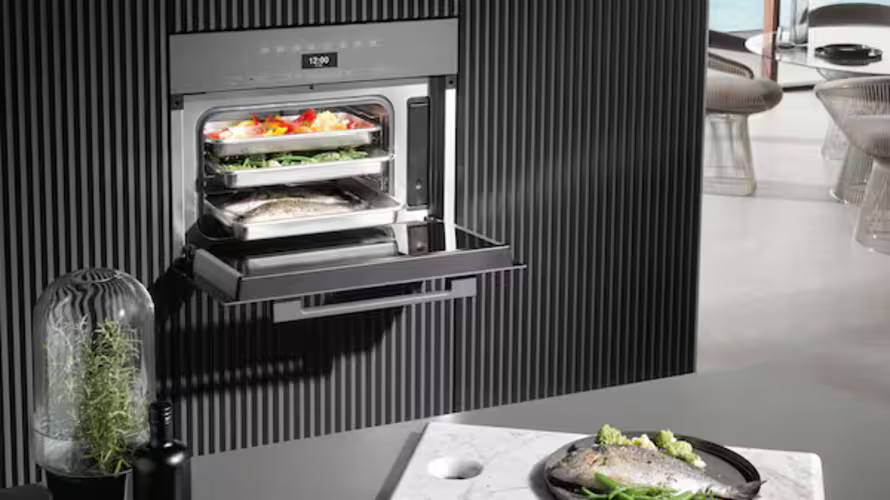
Steam compact oven in use. The steam mode delivers moisture control that a standard oven or microwave cannot replicate. Most useful for reheating, vegetables, fish, and bread — the three uses that demonstrate the difference immediately.
Decision tool.
Five questions. One clear answer.
Answer these five questions honestly based on your actual cooking habits rather than aspirational ones. How you cook now is the most reliable guide to what will serve you well for the life of the kitchen.
Appliance tower
configurations.
An appliance tower gives two cooking zones in a tall housing column with each appliance chosen independently for its specific function. Unlike a double oven — where the format determines both cavities — a tower lets you specify the primary oven and the secondary appliance separately. The result is typically better feature access, a larger main cavity, and more cooking capability for the same or similar budget.
The standard UK tower is a 60cm single oven below with a 45cm compact appliance above. The compact appliance is where the choice matters most: a compact oven adds a second cooking cavity, a compact microwave combination adds microwave speed and reheating, and a steam compact oven adds the full range of steam cooking modes.
- 60cm single oven as the primary cavity
- 45cm compact microwave combination above or below
- 60cm single oven for roasting, baking, and high-heat cooking
- 45cm steam compact for full steam, steam plus hot air, and regeneration
- 60cm single oven as the primary cavity
- 45cm compact oven or microwave combination
- 14–29cm warming drawer in the same column
- 60cm single oven for dry heat cooking and large loads
- 45cm steam compact for steam cooking and regeneration
- Warming drawer for holding, plate warming, and proving
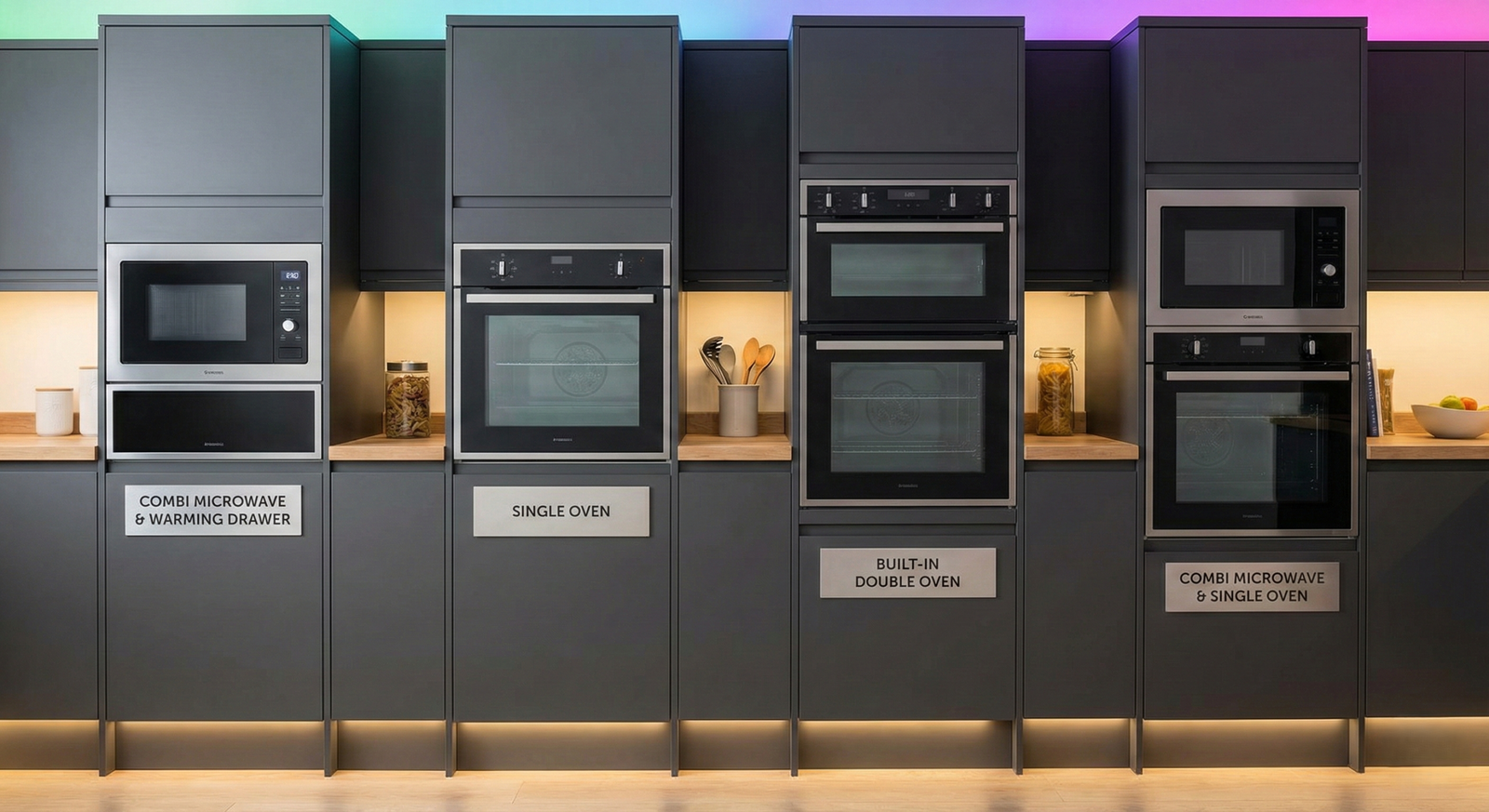
Four appliance tower configurations with indicative heights. Each tower uses a 60cm single oven as the primary appliance. The secondary appliance or drawer choice determines the total column height and the specific cooking capability the tower delivers.
Warming drawers. A warming drawer holds food at serving temperature (typically 30–80°C), warms plates before serving, and proves bread dough at low temperatures. They fit a 14–29cm niche and integrate into any appliance tower column. See the warming drawer guide for specifications and installation details.
Budget guide.
These ranges are indicative for 2025 and cover the oven unit only. Installation costs — electrical work, any plumbing for a steam compact, and cabinetry modifications — sit outside these figures. Budget separately for any electrician or plumber visits required.
Electrical and installation. Some ovens connect on a standard 13-amp plug. Many require hardwiring to a dedicated cooker connection unit with an isolation switch. A steam compact oven with a plumbed water supply also requires cold water pipework. Check the power rating and connection method in the specification sheet and confirm with your electrician before ordering any appliance. Include electrical and installation costs in the total project budget from the start.
Checklist before you buy.
These checks prevent the most common buying mistakes with built-in ovens: wrong-size purchases, fitting surprises, and features that do not match daily cooking needs.
- Primary cooking use is clear — family meals, baking, steam cooking, entertaining, like-for-like replacement
- Confirmed whether two simultaneous temperatures are needed regularly. This determines the format.
- Cabinet niche height, width, and depth measured and confirmed against the installation guide for the specific model
- Oven format chosen — single, double, compact, steam compact, or appliance tower combination
- Internal cavity dimensions checked against your largest roasting tin, baking tray, and casserole dish
- If double oven: confirmed built-in or built-under type. Not interchangeable. Measured the niche height.
- Must-have features listed: cleaning system (pyrolytic, catalytic, steam clean), steam modes, microwave, programmes
- Electrical connection type confirmed — 13-amp plug or hardwired cooker circuit. Electrician quoted if a new circuit is needed.
- Isolation switch position planned and accessible without moving the oven
- If steam compact: water tank access confirmed, limescale routine planned, water hardness in your area researched
- Total budget includes the oven unit, installation, electrical work, and any cabinet modifications
- Finish and handle style confirmed against the kitchen furniture, other appliances, and worktop material
Go deeper with the dedicated guide for the format you have chosen. Single oven guide. Double oven guide. Compact oven guide. Steam compact oven guide. Each covers sizes, installation, heating types, cleaning systems, finishes, UK costs, and the pre-purchase checklist for that specific format.