
Single ovens.
The complete UK guide.
A single oven is the most common oven specification in a UK kitchen. It fits into a housing column, under a worktop, or within a tall unit at eye height depending on the installation type. Most households choose a 60cm wide model — it fits standard housing dimensions and covers the full range of everyday baking, roasting, and grilling tasks.
The practical decisions in choosing a single oven are more specific than they look. Cabinet plan and electrical supply come first. The oven size, installation type (built-in or built-under), and cleaning system follow from those. Getting the sequencing right prevents the most common and expensive fitting mistakes.
This guide covers the eight decisions that matter: size, built-in versus built-under installation, hardwired versus plug-in connection, gas versus electric, heating types, cleaning systems, finishes, and the pre-purchase checks that prevent fitting problems. The guide covers single ovens only. Separate guides cover double ovens, compact ovens, and steam ovens.
60cm and 90cm ovens.
Most UK kitchens suit a 60cm oven. It fits standard housing dimensions, offers the widest choice of models at every price point, and provides sufficient capacity for the majority of household cooking including large roasts and batch baking. A 90cm oven suits larger kitchens, households who regularly cook for larger numbers, or buyers who want the additional cavity volume as a primary specification feature rather than as a step up from a standard size.
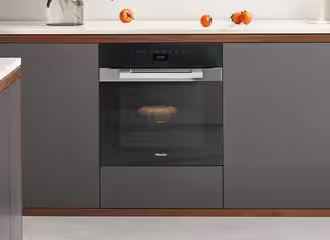
- Typical cavity capacity 65–80 litres
- Fits standard 600mm housing column
- Broadest model availability across all brands
- Easiest to match with other appliances in a column
- Sufficient for roasting a large bird or full batch baking
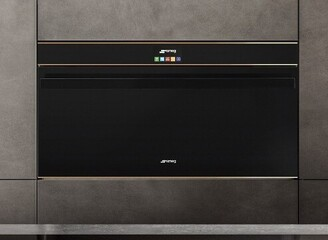
- Needs a wider housing unit and wider kitchen column
- Often a single larger cavity or two separate cavities side by side
- Higher purchase price than equivalent 60cm models
- Higher energy use if you heat the full cavity for small loads
- Fewer model options — confirm availability before specifying
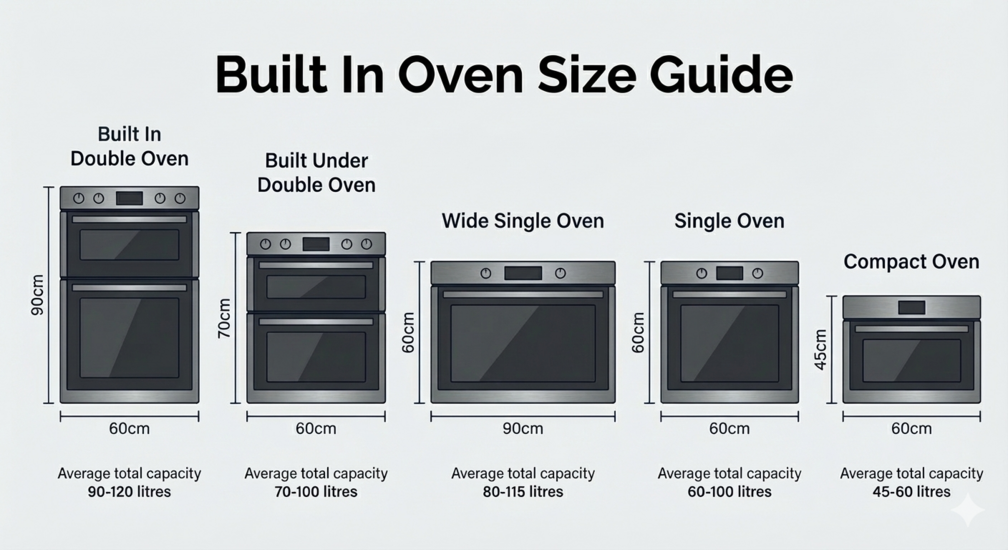
60cm and 90cm oven formats. The 90cm format requires a wider housing column and typically a different electrical supply specification. Confirm housing dimensions and electrical capacity before ordering.
Built-in vs built-under.
Built-in ovens sit in a tall housing column at a comfortable working height — typically eye or waist level. Built-under ovens sit below the worktop, often directly beneath the hob. The installation type is determined by the cabinet plan, not by preference alone. Not all oven models are approved for both installation types. Always check the installation instructions for the specific model before ordering.
| Aspect | Built-in | Built-under |
|---|---|---|
| Position | Tall housing column at eye or waist height. No bending to load or unload trays. | Below the worktop, often beneath the hob. Bending required to load and unload. |
| Best suited to | New kitchen layouts and tall appliance housing banks. The standard specification in most new German kitchen designs. | Replacing an existing under-counter oven with minimal cabinet changes. Budget-conscious renovations where the existing layout is retained. |
| Ventilation | The tall housing manages airflow around the oven carcass. Ventilation gaps above and below the unit are specified in the installation guide. | Front ventilation through the plinth area is more critical. Ensure plinth ventilation is not blocked after installation. |
| Electrical cable route | Cable typically runs down the housing side panel to a connection point below. Plan the cable route before housing installation. | Cable route more compact. Still requires a safe, accessible connection point. Isolation switch must be reachable without moving the oven. |
| Door clearance | Oven door drops forward. Confirm no clash with base unit drawer or door opposite when fully open. | Oven door drops forward at worktop height. Confirm clearance from worktop edge and any pull-out drawers or bins below. |
| Model approval | Most built-in ovens are approved only for tall housing installation. Check the installation guide for each model. | Some built-under ovens are specifically designed with front ventilation for this position. Do not assume a built-in oven suits built-under fitting. |
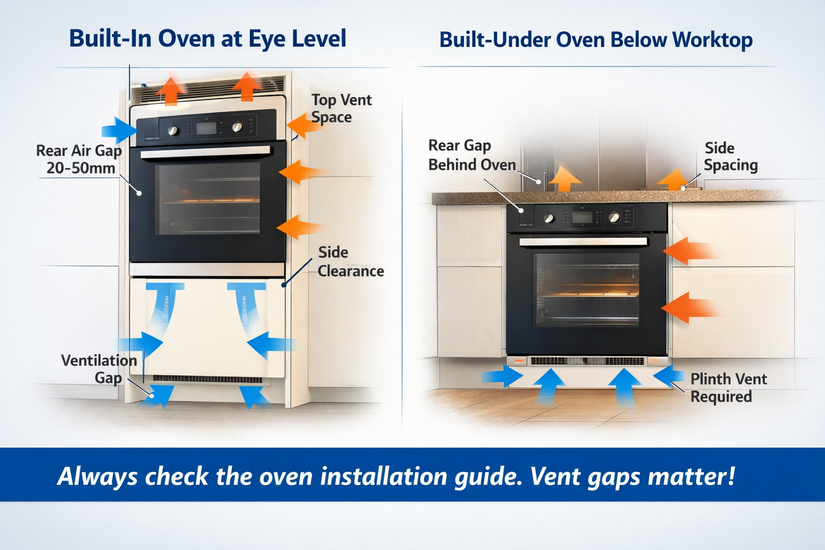
Airflow requirements differ between built-in and built-under installations. The tall housing manages airflow around the oven in built-in installations. Built-under installations rely more heavily on front plinth ventilation. Always follow the installation guide for the specific oven model.
Do not assume a built-in oven suits built-under fitting. Some ovens are approved for one installation type only. Using a built-in oven in a built-under position can void the warranty, overheat adjacent cabinetry, and in some cases creates a safety risk. Confirm the approved installation types from the model's installation instructions before ordering.
Hardwired vs plug-in.
The electrical connection method is determined by the oven's power rating. Lower-powered models connect on a standard 13-amp plug and socket. Higher-powered models — including most multifunction and pyrolytic ovens — require a dedicated hardwired cooker circuit connected by a qualified electrician.
This distinction matters for planning and budget. A plug-in oven needs only a socket in the right position. A hardwired oven needs a dedicated circuit run to a cooker connection unit with an isolation switch. If the kitchen does not already have this circuit, it must be installed by an electrician — ideally during any kitchen rewire rather than as a separate return visit.
Before ordering any oven, check three things: the power rating in the specification sheet, whether the oven arrives with a fitted plug or a bare cable, and the position of the nearest suitable outlet relative to where the oven will sit. A bare cable arriving with no socket within reach is a common and avoidable fitting-day problem.
- Common on single cavity models under approximately 2.5kW
- Easier and lower cost when a socket is already positioned correctly
- Cable routing and ventilation space still required even with a plug
- Requires a qualified electrician to install the circuit and connection unit
- Isolation switch must be positioned where it is accessible without moving the oven
- Best planned as part of a kitchen rewire — adding it later is more disruptive and costly
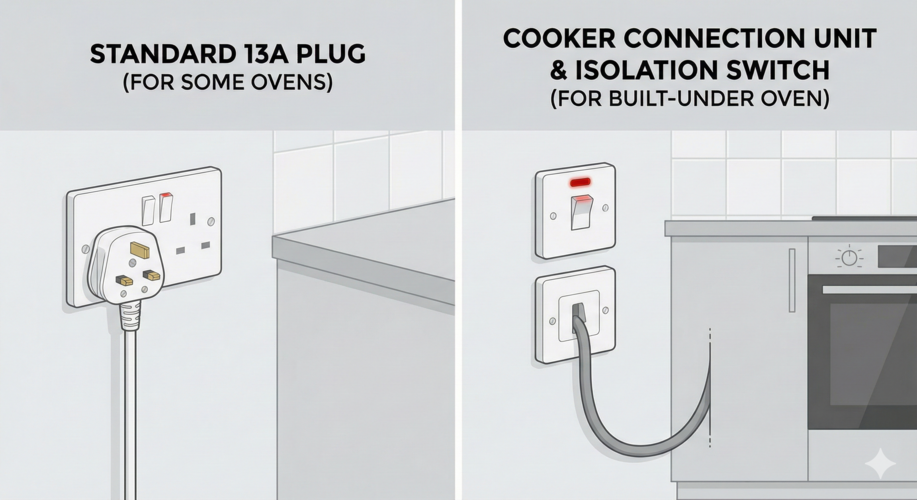
13-amp plug (left) versus cooker connection unit with isolation switch (right). Confirm which method applies to your specific oven model before the kitchen is installed.
Gas vs electric ovens.
Electric ovens dominate the UK market and have done so for many years. They offer more cooking modes, more consistent heat distribution, better self-cleaning options, and easier integration with other built-in appliances. Gas ovens exist and remain available, but the choice of models is significantly narrower than it was and continues to reduce as the UK market moves towards all-electric cooking.
| Aspect | Electric oven | Gas oven |
|---|---|---|
| Heat consistency | Even heat distribution across the cavity, particularly with true fan. Consistent temperatures on all shelf positions simultaneously. | Gas combustion produces moist heat. Temperature distribution is less even — typically hotter at the top of the cavity. |
| Cooking modes | Full range: conventional, fan assisted, true fan, fan grill, top heat, base heat, low temperature, and specialist modes depending on brand. | Limited to conventional heat and grill. Fan gas ovens exist but are uncommon. Fewer mode options overall. |
| Self-cleaning | Pyrolytic, catalytic, and steam clean options widely available across the range. | Limited self-cleaning options. Mainly manual cleaning or basic catalytic liners. |
| Installation | Electrical connection only. No Gas Safe work required for the oven itself. Standard kitchen renovation installation. | Requires a gas connection and a Gas Safe registered engineer for installation. More complex if re-routing pipework. |
| UK market direction | Growing. The standard specification in new builds and renovations. All new UK build properties from 2026 use electric cooking. | Reducing. Fewer models released by brands annually. Best suited to existing gas kitchens where the household has a strong preference for gas cooking. |
Market direction. There is no confirmed UK ban date for gas ovens in existing properties. The market direction favours electric cooking and most brands are reducing their gas oven ranges rather than expanding them. For a new kitchen planned to last 15 years or more, an electric oven keeps your options widest for future appliance replacement.
Heating types
that change cooking results.
Oven manufacturers use different names for the same functions across their ranges, which creates confusion when comparing models. The cooking result comes down to how the oven moves heat inside the cavity. Three modes cover most everyday cooking. Most mid-range and above ovens offer all three plus additional specialist modes.
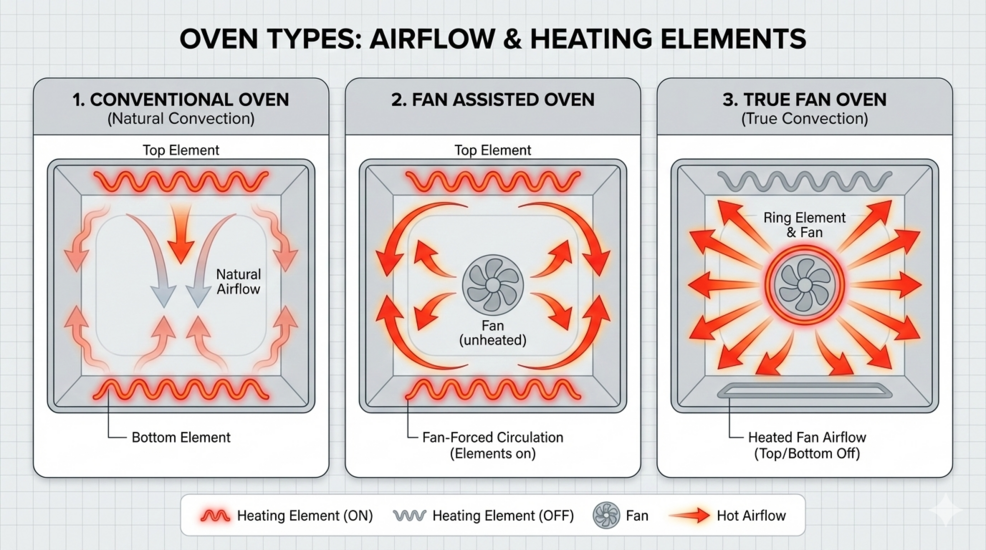
The three heating types. Conventional heat (left) uses top and bottom elements. Fan assisted (centre) adds a circulating fan to the same elements. True fan (right) uses a ring element behind the rear fan for the most even heat distribution across all shelf positions.
Recommended specification for most UK homes: a 60cm single electric oven with true fan as a minimum, at least 70 litres capacity, a clear digital timer, and either catalytic liners or pyrolytic cleaning if you roast regularly. Most mid-range ovens from German brands include all of these as standard.
Cleaning systems.
Choose based on how often you roast.
The cleaning system affects both the purchase price and the effort required after every cooking session. The right choice depends on how frequently you use the oven for high-fat cooking — roasting, grilling, and baking with dripping. An oven used mainly for baking and reheating requires far less cleaning system investment than one used for regular roasting.
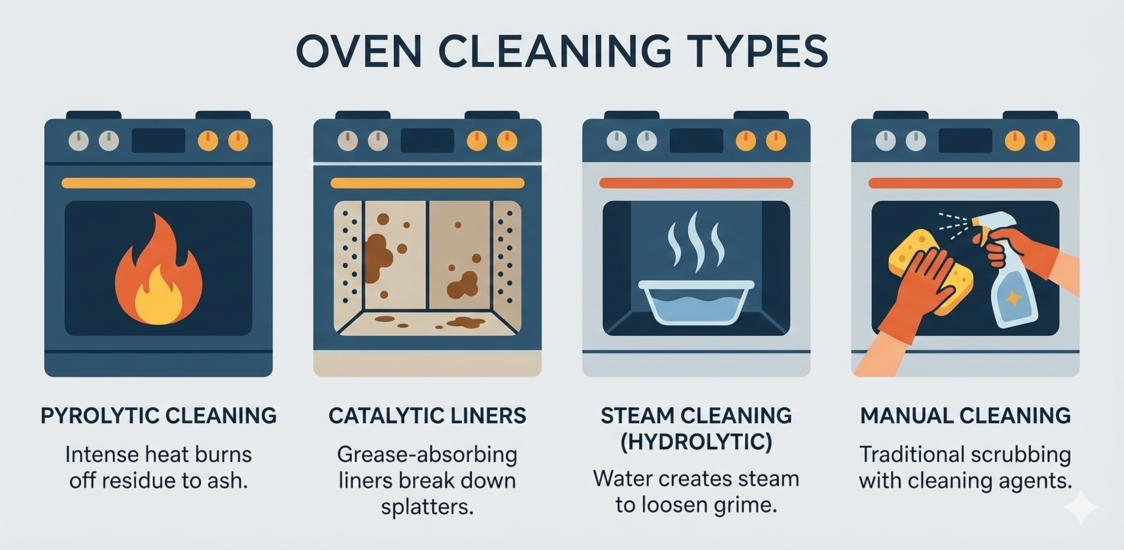
Pyrolytic burns residue to ash at 480°C. Catalytic panels break down grease during normal cooking. Steam cleaning loosens residue with moisture for wiping. Each system suits a different combination of cooking frequency and cleaning tolerance.
Colours and finishes.
The door and frame finish of the oven affects how the appliance integrates visually with the kitchen furniture, handles, and other built-in appliances. The three dominant finishes in the UK market each suit a different kitchen style and carry different daily maintenance implications.
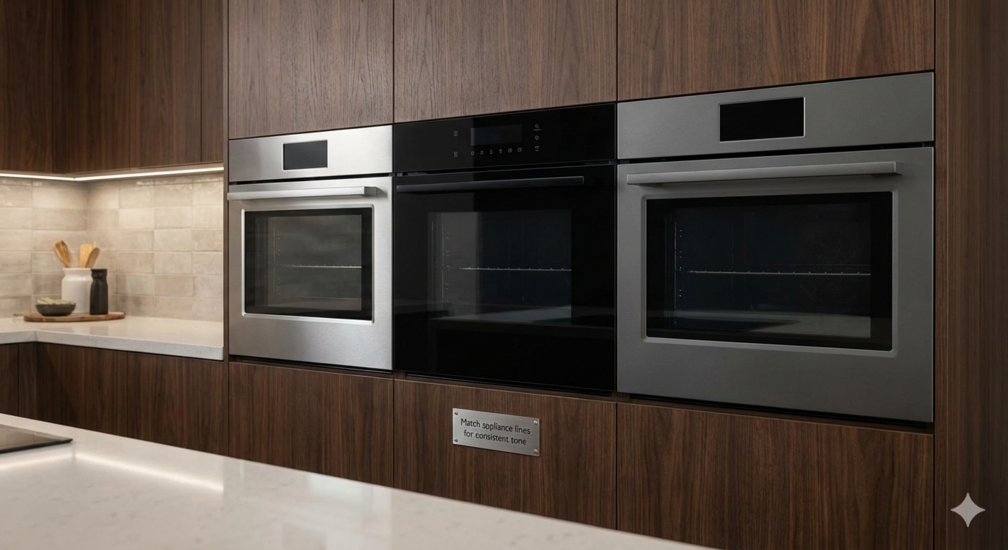
Stainless steel, black glass, and graphite finishes. The choice should be made in relation to the kitchen door colour, handle style, and other built-in appliances in the same column to ensure a consistent visual result.
Pre-purchase checks.
Prevent fitting problems before they happen.
The checks below address the most common fitting problems with single ovens. Most can be resolved easily before ordering. Discovering them after the oven has arrived and the kitchen is installed is significantly more disruptive.
| Check | Why it matters | Where to find it |
|---|---|---|
| Cutout dimensions | The oven's required cutout height, width, and depth must match the housing or under-counter space. Even a few millimetres difference means the oven will not fit or will not ventilate correctly. | Installation instructions — not the overall oven dimensions from the sales literature |
| Ventilation requirements | Every oven requires clearance gaps above, below, and around the carcass for airflow. Insufficient ventilation causes overheating, tripped circuit breakers, and in built-under positions can damage adjacent cabinetry. | Installation instructions — check required gaps at the top, sides, and rear of the housing |
| Electrical connection | Determines whether a socket or a dedicated cooker circuit is needed. Affects installation cost and whether an electrician visit is required. A hardwired oven arriving with no circuit in place means the oven cannot be connected on fitting day. | Specification sheet (power rating in kW) and the cable supplied with the oven (plug or bare cable) |
| Door clearance | The oven door drops forward when open. The door length and handle projection must not clash with adjacent base unit doors, kitchen island stools, or pull-out drawers that sit opposite the oven position. | Technical drawing — door drop dimension and handle projection from the product specification |
| Installation approval type | Confirms whether the oven is approved for built-in, built-under, or both. Installing in an unapproved position can void the warranty and create safety issues. | Installation instructions — first page typically states approved installation positions |
| Accessories included | Shelf count, tray types, and any optional rail kits supplied in the box affect daily practical use. Some ovens include only one shelf as standard. Confirm what is included versus what is a paid extra before ordering. | In-the-box list on the product page or specification sheet |
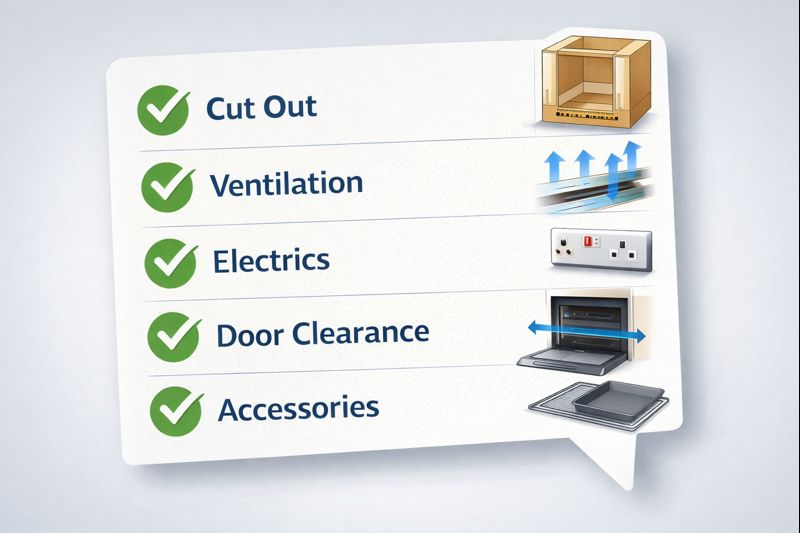
The pre-purchase checklist. Cutout dimensions, ventilation gaps, and electrical connection type are the three checks that prevent the most common fitting problems. All three are found in the oven's installation instructions, not the sales literature.
Recommended specification for most UK homes. A 60cm single electric oven with true fan as a minimum, at least 70 litres capacity, a clear digital timer, easy-clean door glass, and either catalytic liners or pyrolytic cleaning if you roast often. Confirm the cutout dimensions, ventilation requirements, and electrical connection type from the installation guide before finalising the kitchen cabinet plan.